What if the next great business idea didn’t start with making money?
What if it started with helping somebody?
Not building the next billion-dollar company. Not developing an invention that changes civilization. Not creating a revolutionary piece of technology that requires seventeen investors, three engineering degrees, and a small miracle to get off the ground.
Just helping someone.
Helping a frustrated beginner understand something that once seemed complicated. Helping a small business owner solve a problem that’s been costing them time. Helping someone make a better decision, learn a useful skill, avoid an expensive mistake, or finally accomplish something they’ve been putting off.
What if the first step toward building a meaningful online business was simply to create something that helps somebody?
It’s a remarkably simple idea. And in an online business world overflowing with complicated strategies, aggressive sales pitches, artificial intelligence tools, and promises of effortless income, perhaps it’s an idea worth bringing back to the center of the conversation.
Because somewhere along the way, we can become so focused on making money that we forget why anyone would willingly give us their money in the first place.
People aren’t searching the internet because they’re desperate to make another entrepreneur wealthy.
They’re searching because they need something.
An answer. A solution. A recommendation. A little guidance. A better way to accomplish a task. Sometimes, they simply need somebody who understands what they’re struggling with and can explain a possible solution without making the situation even more confusing.
And that creates an extraordinary opportunity for anyone willing to pay attention.
The Best Opportunities Often Begin With Ordinary Problems
Think about the last time you searched online for help.
Maybe you needed to figure out why your WordPress website wasn’t displaying correctly on a mobile phone.
Perhaps you wanted to learn how to build an email list, compare two marketing tools, write a better sales page, or understand why visitors weren’t clicking your carefully designed buttons.
You probably weren’t looking for somebody to impress you with a rented sports car and a screenshot of their latest bank deposit.
You wanted an answer.
And if you found an article, video, tutorial, or helpful resource that solved your problem, there’s a good chance you appreciated the person who created it.
Maybe you bookmarked their website. Perhaps you explored another article, subscribed to their updates, or remembered their recommendation the next time you needed help.
Not because they pressured you.
Because they provided something useful.
That’s how meaningful relationships between businesses and audiences can begin.
It doesn’t mean every helpful interaction will turn into a sale. It shouldn’t have to. Sometimes helping somebody is simply helping somebody.
But when a business consistently understands its audience and creates things that improve people’s lives, it gives those people a genuine reason to pay attention.
And that reason is far more valuable than another exaggerated promise.
You Don’t Have to Change the World to Make a Difference
One of the biggest obstacles facing aspiring entrepreneurs is the belief that their business idea must be extraordinary.
They imagine they need to invent something nobody has ever considered, discover a completely untouched market, or develop a solution so impressive that everyone immediately recognizes its brilliance.
That’s a tremendous amount of pressure to place on an idea that hasn’t even had its first cup of coffee.
The truth is that useful ideas don’t always arrive with fireworks.
Sometimes they arrive as a question.
“Why is this so complicated?”
“Why doesn’t somebody explain this in plain English?”
“Is there an easier way to do this?”
“What do beginners need to know before spending money on that?”
“Could I create something that makes this easier for the next person?”
Those questions are worth paying attention to.
A useful checklist can prevent a costly mistake. A detailed tutorial can save hours of frustration. An honest product comparison can help someone avoid purchasing software they don’t need. A well-organized resource can bring clarity to a subject that otherwise feels overwhelming.
None of these things necessarily requires a massive budget, sophisticated technology, or an enormous audience.
They require understanding a problem well enough to create something that makes it easier to solve.
And there’s another beautiful possibility here.
You don’t always need to be the world’s leading expert to help somebody who’s a few steps behind you.
You do need to be accurate, responsible, transparent about your experience, and willing to recognize what you don’t know.
But something you learned through trial and error yesterday might be exactly what another beginner needs to understand today.
Your experience could become a tutorial.
Your mistake could become a warning that saves someone money.
Your research could become a comparison that helps a reader make a more informed decision.
Your solution could become the beginning of a product, service, or resource that people genuinely appreciate.
And sometimes, that is enough to begin.
Why This Philosophy Matters to LaunchForge Studio
At LaunchForge Studio, we’re putting this principle into practice as we build our own online business.
We’re creating a WordPress website, developing educational content, working with marketing and lead-generation tools, learning about automation, and continually improving the systems behind our business.
Some things work the way we expect.
Other things require troubleshooting, research, revisions, and the occasional conversation that begins with, “Why on earth is this thing doing THAT?”
If you’ve ever spent an afternoon wrestling with a website layout that looked perfect on a desktop computer and completely ridiculous on a mobile phone, you know exactly what we’re talking about.
But those experiences give us something valuable to share.
When we learn how a tool works, we can explain it.
When we discover a limitation, we can discuss it.
When we make an improvement, we can show what changed and why.
And when something doesn’t produce the results we hoped for, we can be honest about that, too.
We’re not building LaunchForge Studio around the idea that we have discovered some secret formula for instant success.
We’re building it around something much more practical.
Learn something useful. Put it into practice. Share what you discover. Help somebody else move forward.
That approach reflects the philosophy behind The Go-Giver: genuine generosity, authenticity, integrity, and a commitment to creating value for others.
It also reminds us that successful entrepreneurship shouldn’t be measured exclusively by how much money somebody earns.
The value we create, the trust we build, the problems we help solve, and the people we serve matter, too.
Helping People and Earning Money Are Not Opposing Ideas
Now, before somebody gets the wrong impression, let’s address something important.
Creating something that helps somebody does not mean you must give away every product, every service, every hour of your time, or every useful idea for free.
A business needs to be sustainable.
People need to pay their bills. Entrepreneurs invest time, money, energy, and expertise into what they create. There is nothing wrong with earning fair compensation when the value you provide genuinely deserves it.
In fact, helping people and building a profitable business can support one another.
An educator can offer free tutorials while selling a more comprehensive course.
A designer can publish helpful advice while offering professional design services.
A software developer can share useful resources while charging for a product that solves a particular problem.
A content creator can explain how a tool works and earn an affiliate commission when someone chooses to purchase it through a clearly disclosed referral link.
The important distinction is the relationship between the value and the offer.
Are you recommending something because it genuinely helps the person you’re trying to serve? Or are you simply trying to sell whatever produces the biggest commission?
Are you creating a resource because it answers a meaningful question? Or because somebody told you that particular keyword might generate traffic?
Are you helping your audience understand their options? Or trying to manufacture urgency before they have time to think?
These questions matter.
And they’re worth asking long before designing a sales funnel, launching an advertising campaign, or choosing an affiliate program.
Because earning money should not require abandoning the very people who made your business possible.
What If You Started With Just One Person?
Imagine setting aside the pressure to attract thousands of visitors, generate hundreds of leads, or produce your first big sales month.
Just for a moment.
Instead, ask yourself one question:
“Who is one person I could genuinely help, and what could I create that would make something easier for them?”
Maybe it’s a beginner trying to launch a first website.
Maybe it’s someone overwhelmed by all the software choices available.
Maybe it’s a small business owner struggling to follow up with potential customers.
Maybe it’s a person facing a problem you’ve already solved in your own life or work.
You don’t need to know how to serve an entire marketplace yet.
Start by understanding one real problem.
Then create something useful.
Share it.
Listen to the response.
Improve it.
And if other people face that same problem, consider how your solution might help them, too.
That doesn’t guarantee a successful business. It doesn’t eliminate competition, financial risk, or the work required to reach an audience.
But it gives you something that many business ideas are missing from the beginning:
A clear reason for your business to exist beyond your own desire to earn money.
And that’s a foundation worth building on.
Throughout this article, we’re going to explore how to identify problems worth solving, turn ordinary knowledge and experiences into useful resources, create value without unnecessary complexity, earn trust through genuine service, and develop business opportunities around helping people.
We’ll also introduce a practical challenge you can try for yourself—one that doesn’t require an expensive subscription, a complicated marketing funnel, or an imaginary millionaire mentor posing beside a swimming pool.
Just an open mind, a willingness to listen, and the courage to create something useful.
Because your first great business idea might not change the world.
It might simply change somebody’s day.
And that’s a beautiful place to start.
Why Creating Value Should Come Before Chasing Profit
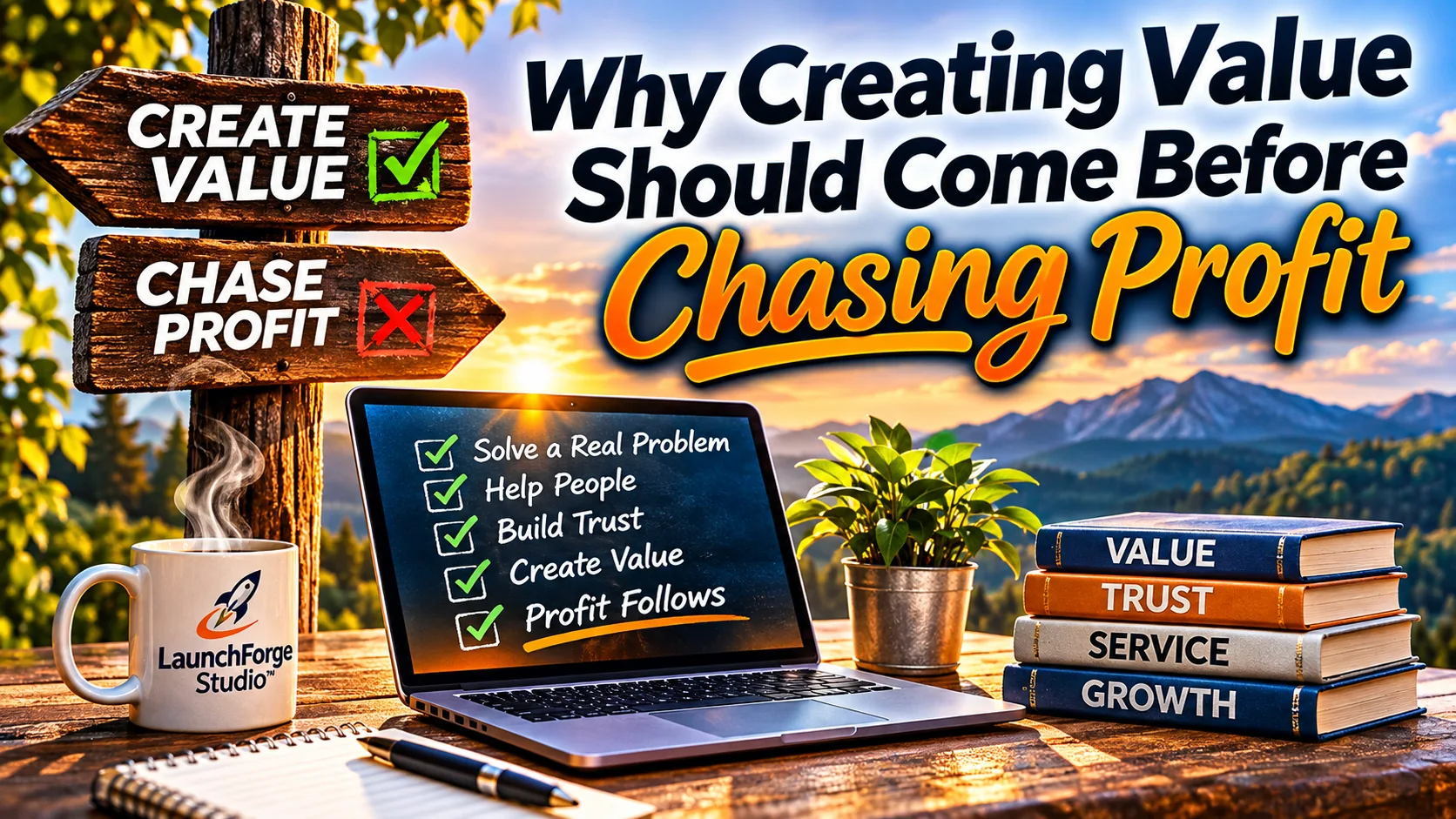
Build a meaningful online business by solving real problems, helping people, and earning trust before chasing profits.
There’s nothing wrong with wanting to make money.
For many people, earning additional income is the reason they begin exploring online business opportunities in the first place. They want financial breathing room, more independence, or the possibility of building something that gives them greater control over their future.
Those are legitimate motivations.
But here’s a question worth considering:
If your business disappeared tomorrow, what would somebody actually miss?
Would they miss a useful resource? A product that made their life easier? Honest recommendations that helped them avoid unnecessary expenses? A service that solved a frustrating problem?
Or would they simply stop receiving your promotional emails?
That question gets to the heart of value creation.
A business becomes meaningful to its audience when it provides something people consider worthwhile. Profit may follow, but the reason people care about the business needs to exist first.
Profit Is the Goal. Value Is the Reason Someone Pays.
Imagine two people starting online businesses.
The first spends most of their time searching for the highest-paying affiliate programs. They choose products based primarily on commission percentages, create promotional pages, and immediately begin looking for traffic.
Their central question is:
“How much can I make from this?”
The second person starts differently.
They identify a group of people struggling with a particular problem. They research possible solutions, compare tools, create helpful explanations, and recommend products when those products genuinely fit the reader’s needs.
Their central question is:
“How can I help someone solve this?”
Both entrepreneurs may eventually earn money. Neither approach guarantees success.
But the second has a clearer foundation for creating lasting value.
Instead of asking people to buy something simply because it exists, they’re helping potential customers understand why a particular solution might matter.
The commission isn’t the value. The problem you’re helping someone solve is the value.
This distinction can influence everything from the topics you write about to the products you recommend and the way you communicate with your audience.
The Difference Between Getting Attention and Earning Trust
Online marketing often emphasizes attracting attention.
More traffic. More clicks. More impressions. More subscribers.
Those measurements can be useful, but they don’t tell the entire story.
You can attract visitors with an exciting headline and still disappoint them with content that offers little substance.
You can persuade someone to click a promotional link without helping them understand what they’re purchasing.
And you can collect email addresses without giving subscribers a compelling reason to open your next message.
Attention brings someone to your door.
Value gives them a reason to appreciate what they find.
For example, consider a website that publishes an article about choosing email marketing software.
One version simply lists five products, praises every one of them, and fills the page with affiliate buttons.
Another explains which features beginners actually need, identifies potential costs, discusses limitations, and helps readers decide whether they need paid software at all.
The second article might even recommend that some readers start with a free option.
That recommendation may not produce an immediate commission.
But it demonstrates something important: the publisher is considering the reader’s needs instead of treating every visitor as a transaction.
Trust isn’t guaranteed by a single helpful article. It’s earned through consistent behavior, accurate information, reasonable expectations, and a willingness to acknowledge limitations.
And once that trust exists, people have a better reason to consider your future recommendations.
Creating Value Doesn’t Always Require Creating Something New
Here’s where many beginners make things harder than necessary.
They assume creating value means inventing a product nobody has ever seen.
But value isn’t always about originality. Sometimes it’s about clarity, convenience, accessibility, or a better experience.
Suppose dozens of tutorials already explain how to build a WordPress landing page.
Could another tutorial still be useful?
Absolutely.
Perhaps existing tutorials move too quickly for beginners. Maybe they use outdated screenshots, assume technical knowledge readers don’t have, or leave out common troubleshooting steps.
You could create a practical walkthrough that addresses those gaps.
You haven’t invented landing pages.
You’ve made the process easier for a particular audience.
The same principle applies to product comparisons, downloadable checklists, beginner guides, templates, consulting services, and countless other forms of online business.
The opportunity isn’t necessarily to create something completely different.
It’s to identify something people already need and find a responsible way to make it more useful.
Start With Their Problem, Not Your Product
Before deciding what to sell, write, design, or promote, try answering three questions:
Who am I trying to help?
Be specific enough to understand their situation. “Everybody who wants to make money online” is an enormous audience with vastly different needs. “Beginners trying to launch their first WordPress website” gives you a clearer starting point.
What problem are they experiencing?
Look beyond broad desires such as wanting success or growth. What is actually stopping them? Are they confused about choosing tools? Struggling to create a landing page? Unsure how to attract visitors? Afraid of wasting money?
What could I create that makes the next step easier?
Your answer might be an article, a video, a comparison chart, a downloadable worksheet, a service, or a product recommendation.
The format matters less than whether it genuinely addresses the problem.
And before investing heavily in an idea, test your assumptions. Speak with potential users, observe recurring questions, and seek feedback rather than assuming people need what you’ve decided to create.
This won’t eliminate business risk, but it can help you avoid building something based entirely on guesswork.
A Better Question to Ask Every Morning
At LaunchForge Studio, we’re learning that creating a useful online business involves more than publishing content and installing marketing tools.
It requires continually asking whether what we’re producing actually helps the people we’re trying to reach.
Not every article will attract significant traffic.
Not every recommendation will lead to a sale.
And not every experiment will work.
But when we approach each project with the intention of solving a real problem, we have a clearer way to evaluate our work.
Did we explain something that was previously confusing?
Did we help somebody make a more informed decision?
Did we save someone time, effort, or unnecessary expense?
Did we make the next step easier?
Those questions don’t replace revenue, conversion rates, or other business measurements. A sustainable business still needs to understand its economics.
They simply remind us that behind every meaningful business metric is a person making a decision.
And that brings us back to our original idea.
You don’t have to begin by asking how to make a fortune.
Start by asking how to make yourself useful.
Because before people have a reason to buy from you, they need a reason to value what you provide.
How to Find Problems Worth Solving

Discover meaningful business opportunities by listening to people’s frustrations, identifying unmet needs, and creating practical solutions.
Great business ideas don’t always begin in a brainstorming session.
Sometimes they begin with a frustrated customer, a confusing website, a task that takes longer than necessary, or somebody asking a question nobody seems willing to answer clearly.
You’ve probably encountered dozens of these situations without recognizing them as potential opportunities.
Maybe you’ve watched someone struggle with software you already understand. Perhaps you’ve searched for a straightforward answer and found nothing but complicated explanations. Or maybe you’ve noticed people repeatedly complaining about the same inconvenience.
Those moments deserve a second look.
Everyday frustrations can reveal opportunities to create something genuinely useful.
The challenge isn’t simply finding problems. There are plenty of those.
It’s identifying problems you understand, people genuinely care about, and solutions you might realistically be able to provide.
Pay Attention to Questions People Keep Asking
One of the simplest ways to discover useful ideas is to listen.
Not just to conversations about business, but to the ordinary questions people ask when they’re trying to accomplish something.
You might notice recurring questions in online communities, customer support conversations, blog comments, product reviews, or discussions with coworkers.
For example:
- “Which website builder is easiest for someone who has never built a website?”
- “Why does my landing page look terrible on mobile?”
- “Do I really need another monthly subscription?”
- “How do I follow up with people who request information?”
- “What’s the difference between these two marketing tools?”
Each question reveals something about the person asking it.
They have a goal, but something is standing between them and the result they want.
Your opportunity may be to help remove that obstacle.
A beginner confused about website builders might appreciate a comparison written in plain English.
Someone struggling with mobile layouts might benefit from a visual troubleshooting guide.
An entrepreneur overwhelmed by subscriptions might need a worksheet that separates essential tools from optional upgrades.
The best starting point is often a question someone is already trying to answer.
You don’t have to manufacture demand for a problem people are actively discussing.
However, hearing a question repeatedly doesn’t automatically mean there’s a profitable market. It tells you there’s something worth investigating.
Look for Frustration, Confusion, and Wasted Time
Not every opportunity announces itself with the words “I need help.”
Sometimes people express their problems through frustration.
“This takes forever.”
“I can’t figure this out.”
“Why is this so expensive?”
“I wish somebody had told me that before I bought it.”
Those comments can be surprisingly informative.
Consider someone spending several hours trying to connect a website subscription form to an email notification service.
The technical process might be manageable for an experienced user, but intimidating for a beginner.
A clear walkthrough could turn hours of confusion into a manageable series of steps.
Or imagine a small business owner who repeatedly forgets to follow up with people who requested quotes.
They might benefit from a simple follow-up checklist, a basic customer tracking system, or an explanation of how email automation works.
Notice that neither example requires inventing groundbreaking technology.
The value comes from making an existing task easier.
Saving somebody time, reducing confusion, or helping them avoid a mistake can be a meaningful form of problem-solving.
Use Your Own Experiences as a Starting Point
Here’s another place to look for useful ideas: your own journey.
Think about something you’ve recently learned.
What confused you at the beginning?
What mistake did you make?
Which explanation finally helped you understand?
What would you tell somebody starting the same process tomorrow?
Those questions can reveal subjects you’re well-positioned to discuss.
At LaunchForge Studio, for example, we’re continually working through practical challenges involving WordPress, Divi 5, search engine optimization, lead generation, and email marketing.
When something doesn’t behave as expected, we investigate.
And that process often reveals information another website owner might appreciate.
A difficult mobile header adjustment could inspire a troubleshooting guide.
A confusing software pricing structure might inspire a clearer comparison.
An underperforming article might lead us to explain how we evaluate search performance and decide what to improve.
There’s an important distinction, though.
Your experience is a starting point for useful content, not automatic proof that your solution will work for everybody.
Be clear about what you tested, what you observed, and which details might differ for other users.
That honesty makes firsthand information more valuable.
Find the People You Actually Want to Help
Once you’ve identified a problem, think carefully about who experiences it.
A solution becomes easier to develop when you understand the intended audience.
For instance, “helping businesses with marketing” is broad.
“Helping first-time affiliate marketers understand how landing pages and email follow-up work together” is much more focused.
That narrower audience gives you clearer questions to answer.
What does a beginner already know?
Which terms need explaining?
What tools can they reasonably afford?
What mistakes are they most likely to make?
What would meaningful progress look like for them?
You don’t need to exclude everyone outside that audience forever.
You’re simply choosing a starting point where your content, products, or services can be more relevant.
Trying to help everybody simultaneously often results in generic information that doesn’t address anybody’s situation particularly well.
Validate the Problem Before Building the Solution
Now comes the part enthusiastic entrepreneurs sometimes skip.
You’ve discovered a problem. You’ve imagined a solution. You’re excited.
Fantastic.
But before spending weeks building something, find out whether your assumptions are correct.
Start with a small experiment.
If you’re considering a tutorial, publish a short explanation and ask readers what remains confusing.
If you’re thinking about a downloadable checklist, share a basic version with a few people who actually face the problem.
If you’re exploring a paid service, speak with potential customers about what they’re currently doing, what they find difficult, and whether they’ve tried solving it before.
Pay close attention to their behavior, not just their compliments.
Someone saying “That’s a great idea!” is encouraging.
Someone using your resource, describing how it helped, and asking for something more specific provides stronger evidence of usefulness.
For a paid offering, willingness to spend money is another important signal—but it shouldn’t be assumed simply because people appreciate free information.
Validation means learning from real people before making a large commitment.
You might discover your original idea needs simplifying.
Perhaps the audience has a different problem than you expected.
Or maybe the proposed solution isn’t useful enough to justify the time or expense required to create it.
That’s valuable information, too.
A small experiment that changes your direction can save you from a much larger mistake.
A Simple Exercise: Your Problem-Solving Notebook
Here’s something practical you can do today.
Open a notebook, spreadsheet, or document and create three columns:
Problem: What difficulty, frustration, or unanswered question have you noticed?
Person: Who experiences this problem, and under what circumstances?
Possible Help: What could you create that makes the situation easier?
Don’t worry about perfect business ideas yet.
Write down five problems you’ve personally encountered, observed, or heard people discuss.
Then choose one and investigate it.
Can you find evidence that other people experience the same difficulty?
Do you understand the problem well enough to help responsibly?
Could you produce a small, useful resource without taking on unreasonable costs?
Is there an audience that would benefit from the solution?
And most importantly:
Would solving this problem make someone’s experience meaningfully better?
If the answer is yes, you may have found an idea worth exploring.
You haven’t necessarily discovered a business yet.
But you’ve found something much more useful than a random product to promote.
You’ve found a person with a problem—and a possible way to help.
You Don’t Need a Revolutionary Idea to Create Something Useful
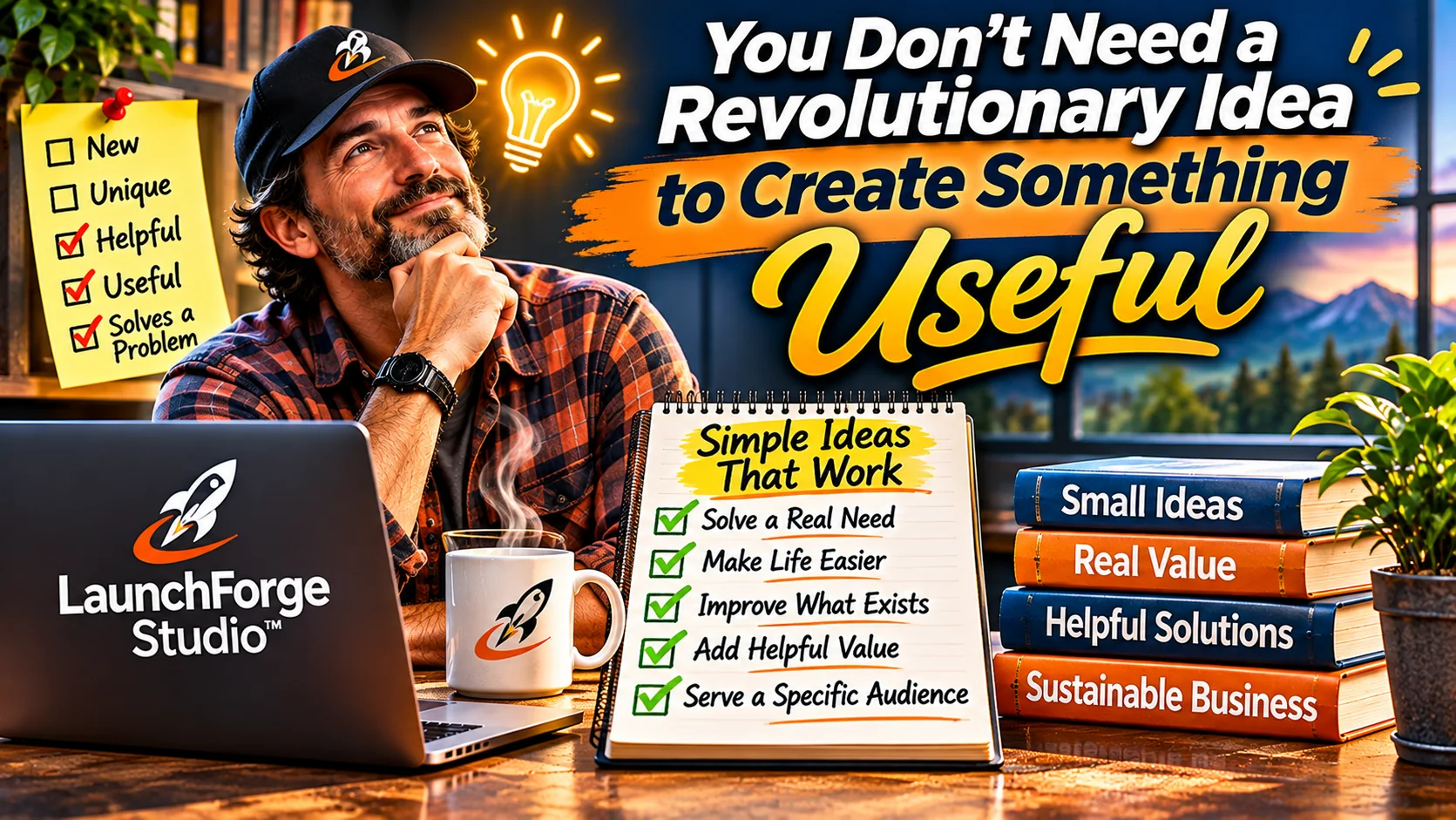
Small ideas can create real value. Focus on solving everyday problems and making life easier for the people you want to help.
Somewhere right now, an aspiring entrepreneur is staring at a blank notebook, waiting for the next billion-dollar idea to appear.
They’re imagining revolutionary software, groundbreaking inventions, or a business concept so original that nobody has ever attempted anything remotely similar.
Meanwhile, somebody else is creating a simple checklist that helps beginners avoid making an expensive mistake.
Guess which person has actually created something useful?
The second person may never become a household name. Their checklist probably won’t attract venture capital investors or earn a standing ovation at a technology conference.
But if it genuinely helps someone, it has already accomplished something meaningful.
Creating value doesn’t require reinventing the wheel. Sometimes it simply means making the wheel easier for somebody else to use.
And for beginners exploring online business opportunities, that’s an incredibly encouraging place to start.
Simple Solutions Can Make a Significant Difference
Think about the resources you’ve appreciated most throughout your life.
Were they always complicated?
Probably not.
Sometimes a short explanation helped you understand a confusing subject. A well-organized list saved you time. A practical recommendation prevented you from purchasing something unnecessary.
Perhaps someone showed you a shortcut that transformed a frustrating task into something manageable.
None of these experiences required revolutionary technology.
They required somebody to understand what you needed and communicate a useful solution.
Consider a few examples of things an aspiring online entrepreneur could create:
- A beginner’s checklist: Help someone prepare for launching their first website without overlooking important steps.
- A step-by-step tutorial: Walk readers through a process they find confusing, using clear instructions and relevant screenshots.
- An honest comparison: Explain the differences between two tools, including pricing considerations, advantages, and limitations.
- A simple template: Provide an organized starting point for planning content, tracking expenses, or following up with potential customers.
- A troubleshooting guide: Help someone diagnose common problems without spending hours searching for answers.
Each example addresses a practical need.
And each could potentially become part of a larger business, depending on audience demand, how the resource is distributed, and whether people find enough value in related paid offerings.
But even before any money changes hands, a genuinely useful resource has a purpose.
It helps somebody accomplish something.
Your Knowledge May Be More Valuable Than You Realize
Here’s something interesting about experience.
Once you’ve learned how to do something, it’s easy to forget how confusing it felt before you understood it.
You become familiar with the terminology. The steps feel natural. Problems that once required hours of research become easier to recognize.
And eventually, you might assume everybody knows what you know.
They don’t.
Imagine someone who has spent years helping customers understand complicated products.
That person may have developed excellent communication and problem-solving skills without ever considering those abilities part of an online business opportunity.
But those skills could support clear product explanations, customer education resources, comparison guides, or practical training materials.
Someone experienced in organizing information might create templates that help other people manage complicated tasks.
A person who has learned to build WordPress websites might create beginner-friendly tutorials explaining common design problems.
And someone who has researched different marketing platforms could share what they’ve learned, provided they’re transparent about which tools they’ve actually tested.
Knowledge becomes more useful when you can translate it into something another person can understand and apply.
You don’t need to pretend to know everything.
In fact, acknowledging the limits of your experience can make your work more trustworthy.
If you’ve tested a particular feature, say so.
If you’re still learning, explain that.
And when a topic requires professional qualifications or specialized expertise you don’t possess, recognize those boundaries rather than presenting yourself as an authority.
Being helpful and being honest should always work together.
Make Something Better, Clearer, or Easier to Use
Sometimes the opportunity isn’t to create an entirely new solution.
It’s to improve how an existing solution is presented.
Let’s say you discover ten articles explaining how to start an email list.
That might initially seem discouraging.
Why write another one?
But after reading them, you notice something important.
Some assume beginners already understand email automation. Others recommend expensive software without explaining the alternatives. A few skip important steps or use outdated screenshots.
You could create a resource that addresses those specific shortcomings.
Perhaps you explain the terminology more clearly.
Maybe you organize the process into smaller steps.
You could include practical examples that help readers understand what happens after someone subscribes.
Your contribution isn’t that nobody has ever discussed email marketing before.
Your contribution is making the information more useful for a particular person.
That’s an important distinction.
Originality can be valuable, but usefulness doesn’t disappear just because a topic already exists.
The goal isn’t to copy somebody else’s work or repackage their information without adding anything meaningful.
It’s to bring genuine understanding, firsthand experience, clearer explanations, or a better solution to the problem.
Don’t Let Technology Become Another Obstacle
There’s a temptation in online business to believe that every promising idea requires an impressive collection of software.
Before creating anything, beginners sometimes start shopping for website builders, artificial intelligence platforms, automation systems, design subscriptions, analytics tools, and complicated sales funnels.
Suddenly, the project has seventeen moving parts.
And nobody has actually helped anybody yet.
Technology can be tremendously useful. We work with website-building tools, email systems, automation platforms, and AI as part of developing LaunchForge Studio.
But those tools should support a clear purpose.
They shouldn’t become the purpose themselves.
If your goal is to help beginners understand a particular task, you might start with a well-written tutorial.
If your goal is to help people organize a process, a simple spreadsheet might be enough.
If you’re testing whether an audience needs a particular resource, you may not need an elaborate marketing system before gathering initial feedback.
Start with the smallest practical solution that can genuinely help someone.
Then let actual needs guide decisions about additional tools.
A complicated system isn’t automatically more valuable than a simple one.
And paying for more software doesn’t mean you’re making more progress.
Let the First Version Be Useful, Not Perfect
Perfection can become another obstacle.
You might spend weeks adjusting colors, rewriting headlines, redesigning a logo, or researching features that have little effect on whether your solution actually helps someone.
There’s nothing wrong with caring about quality.
But there comes a point when endless preparation prevents you from learning what real users need.
Suppose you’re creating a downloadable checklist for people launching their first online business.
Your first version might contain ten carefully chosen steps and a few practical explanations.
Share it with several people who fit the intended audience.
Ask whether the instructions are understandable.
Find out which steps are missing.
Observe where readers become confused.
Then improve the resource.
You don’t need to release something careless, inaccurate, or incomplete merely to move quickly.
You need a version that’s useful enough to test responsibly.
Quality matters. Perfection isn’t a prerequisite for learning.
A modest resource that helps someone today can teach you more about your audience than a grand project that never moves beyond the planning stage.
The Real Opportunity Is Often Closer Than You Think
Before searching for the next revolutionary business trend, take inventory of what you already know.
What questions do people ask you?
What problems have you solved repeatedly?
What subjects have you spent time learning?
What mistakes could you help somebody avoid?
What process could you explain more clearly than the explanations you’ve encountered?
You might discover that your starting point isn’t some extraordinary invention waiting to be discovered.
It could be a skill you’ve developed, an experience you’ve gained, or a frustrating problem you’ve learned how to overcome.
That doesn’t mean every skill will become a profitable business.
You’ll still need to understand demand, competition, distribution, and whether there’s a viable way to sustain the work.
But those questions become easier to investigate once you’ve identified something useful you could offer.
Your first creation doesn’t need to impress the entire internet. It needs to help someone with a real problem.
And once you’ve created something useful, the next challenge is learning how to share it with the right people and earn their trust.
How to Earn Trust by Helping People First
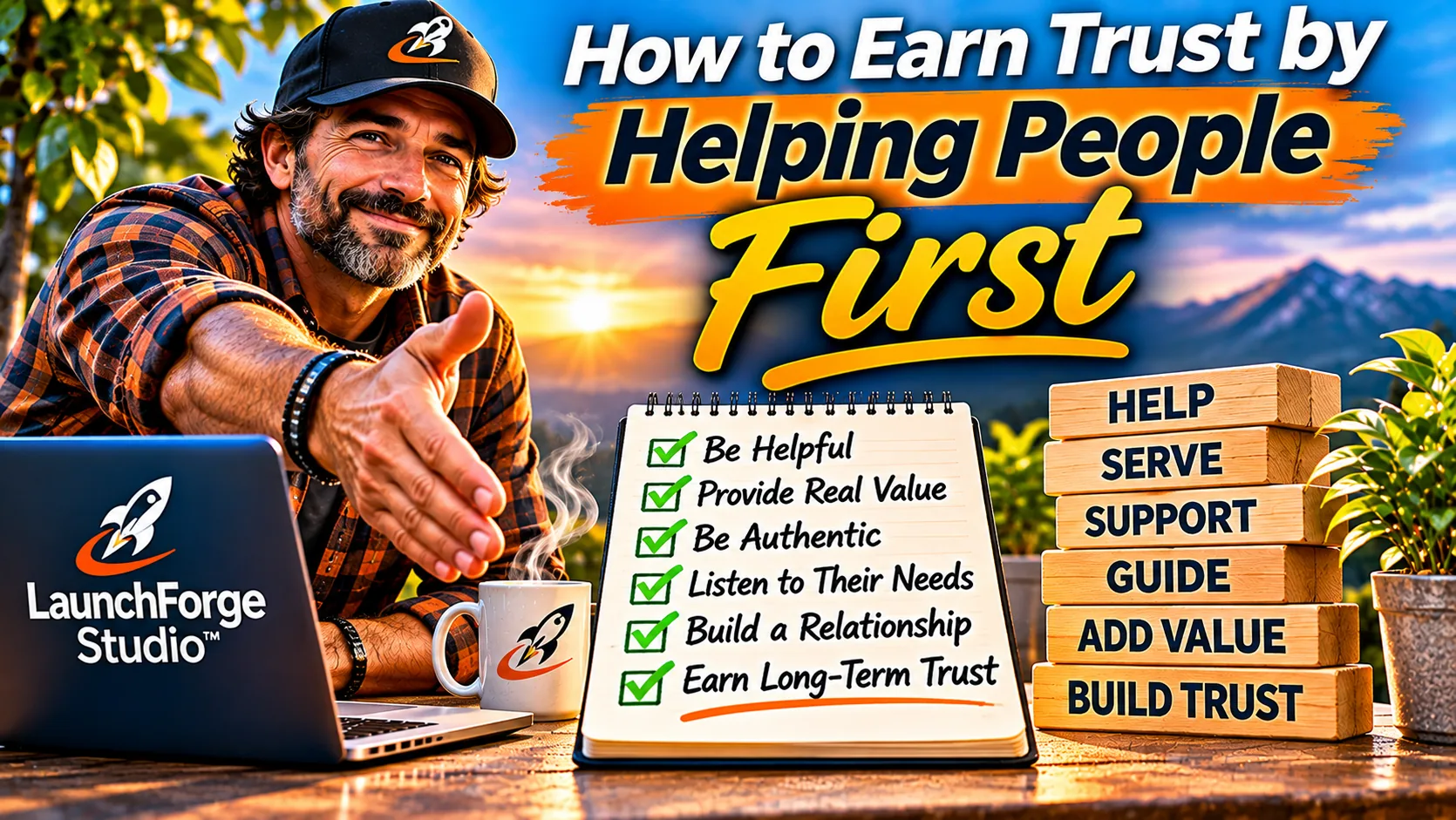
Lasting trust begins with genuine generosity, honest guidance, and a commitment to helping people before asking for a sale.
There’s an important difference between getting someone to notice your business and giving them a reason to trust it.
A clever headline might attract attention. An advertisement might generate a click. A compelling offer might persuade someone to visit your website.
But what happens after they arrive?
Do they find useful information? Do your recommendations make sense? Are you honest about limitations, costs, and what someone can realistically expect?
Or does every paragraph lead to another sales pitch?
Trust begins when people realize you’re genuinely interested in helping them make a good decision.
And that trust can become one of the most valuable foundations of a meaningful online business.
Give People a Reason to Return
Think about a website you regularly visit because its information is helpful.
You probably don’t return simply because the owner has excellent marketing software.
You return because you expect to find something worthwhile.
Maybe the articles answer your questions. Perhaps the tutorials are easy to follow. You might appreciate honest product reviews that discuss disadvantages alongside benefits.
Over time, those positive experiences can build confidence in the source.
That’s the relationship we want to develop at LaunchForge Studio.
We’re not expecting every visitor to become a customer or purchase something through an affiliate link.
Our goal is to provide useful resources that make the process of building an online business easier to understand.
When readers find those resources helpful, they have a reason to explore more of our content.
Be Willing to Recommend Less, Not More
Here’s a powerful way to demonstrate that your audience matters.
Sometimes the most helpful recommendation is telling somebody they don’t need to buy anything yet.
Imagine a beginner researching expensive email marketing software.
If they’re just launching their first website and have no subscribers, an elaborate automation platform might be unnecessary.
Rather than immediately recommending the most expensive option, you could explain what they actually need to get started.
That might mean choosing a simpler tool, using a free plan, or delaying the purchase until their business requires additional features.
You may sacrifice an immediate commission.
But you’ve helped someone avoid an unnecessary expense.
And you’ve demonstrated that your recommendations aren’t based exclusively on what benefits you financially.
That’s how a service-first philosophy becomes something readers can actually experience.
Show Your Work, Including the Imperfections
One of the easiest ways to weaken trust is to pretend every experiment produces outstanding results.
Real businesses encounter challenges.
Marketing campaigns underperform. Tools have limitations. Websites need revisions. Some content attracts visitors while other articles struggle to gain visibility.
There’s nothing shameful about acknowledging those realities.
At LaunchForge Studio, we’re learning through actual website development, content creation, software evaluations, and ongoing improvements.
We can share what we’ve implemented without claiming results we haven’t established.
Experience becomes more credible when we’re willing to discuss both the useful discoveries and the unresolved challenges.
Readers deserve enough context to decide whether our experiences are relevant to their own circumstances.
Let Generosity and Sustainability Work Together
Helping people first doesn’t mean ignoring the financial needs of your business.
You can create excellent free resources while offering paid products, professional services, or clearly disclosed affiliate recommendations.
The important thing is maintaining a genuine connection between what you’re offering and what your audience needs.
Don’t manufacture problems just to sell solutions.
Don’t exaggerate results to create excitement.
And don’t treat generosity as a clever trick for extracting money later.
Help because the help itself has value. Build a sustainable business around the problems you’re genuinely equipped to solve.
That approach won’t guarantee rapid growth or financial success.
But it can give your audience something worth remembering.
Not just what you sell.
How you made their experience better.
Turning Helpful Ideas Into a Sustainable Online Business
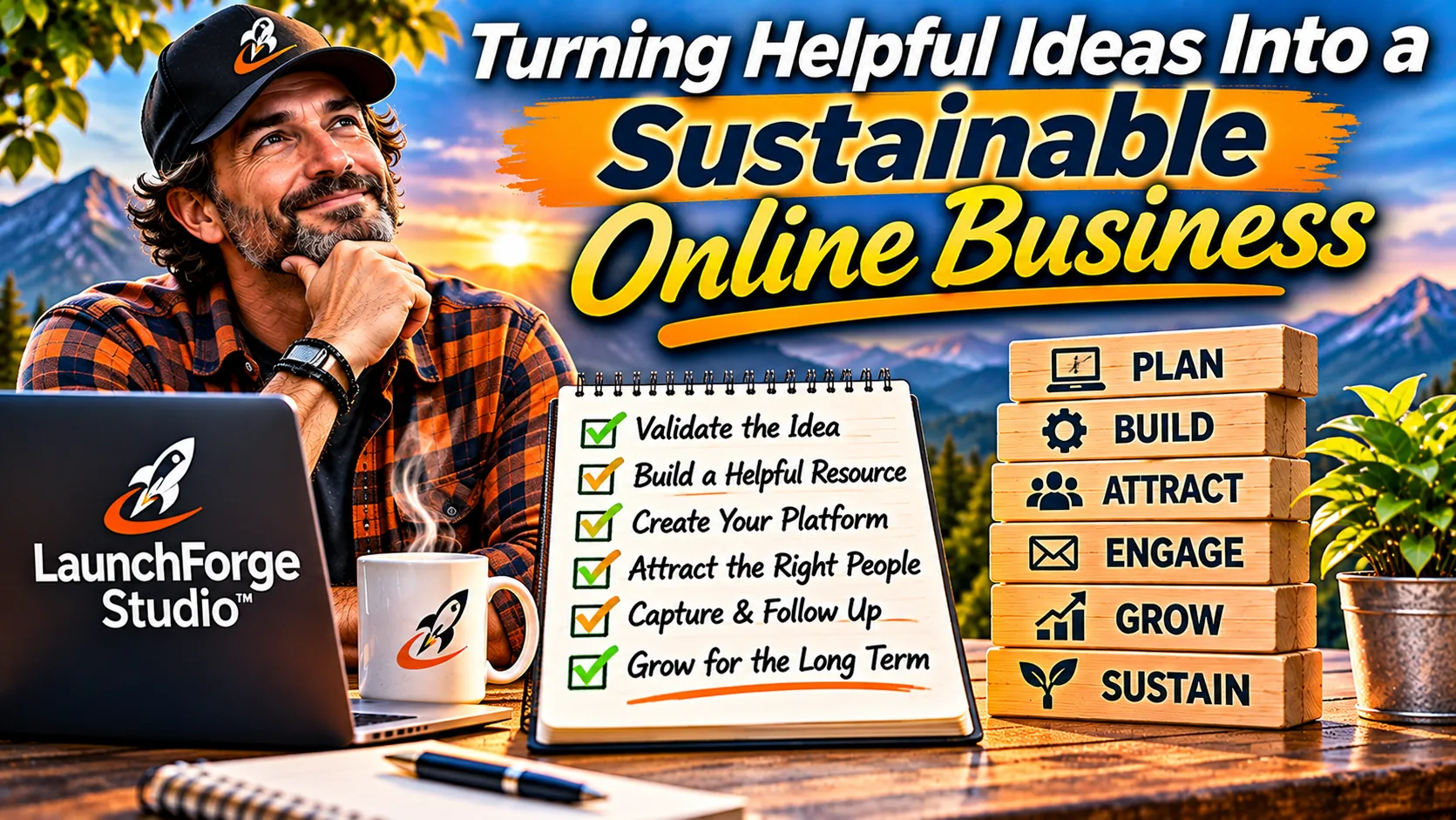
Build a sustainable online business by turning helpful ideas into practical resources, meaningful relationships, and solutions people genuinely need.
Creating something useful is a wonderful beginning.
But if you want to build an actual business around that idea, there’s another question worth asking:
How can you continue helping people while earning enough to sustain the work?
Generosity and profitability aren’t enemies. A business can provide genuine value, treat customers fairly, and earn reasonable compensation.
The challenge is choosing a business model that supports the people you’re helping rather than taking advantage of their needs.
Start With Free Value, but Have a Purpose
Free resources can introduce people to your work.
A helpful article might answer an important question. A downloadable checklist might simplify a difficult process. A tutorial could help someone accomplish a task without purchasing additional software.
These resources can establish credibility and help you learn what your audience needs.
However, free content alone isn’t a business model.
You still need to consider operating expenses, the time required to produce quality work, and whether there’s a realistic path toward earning revenue.
The goal isn’t to give everything away. It’s to create a fair relationship between the value people receive and what they may choose to purchase.
Choose a Business Model That Fits the Problem
There are several ways to build revenue around genuinely useful work.
Affiliate marketing: Recommend relevant products and earn commissions when readers purchase through disclosed referral links. Your responsibility is to explain benefits, costs, and limitations rather than promoting products solely for their commissions.
Digital products: Turn specialized knowledge into templates, workbooks, courses, or other resources that help customers accomplish a specific goal.
Services: Offer assistance with tasks you’re qualified to perform, such as website setup, content organization, or technical troubleshooting.
Subscriptions: Provide continuing value through educational resources, support, or other benefits that justify an ongoing payment.
None of these approaches guarantees profitability.
Each requires an audience with a real need, a useful offering, and a practical way to reach potential customers.
Connect the Offer to the Help You’ve Already Provided
Imagine publishing a detailed guide about creating a WordPress landing page.
A beginner might use that free tutorial and complete the entire project independently.
Wonderful. You’ve helped somebody.
Another reader might appreciate the explanation but want a downloadable planning template.
Someone else may decide they need software with additional features.
Those different needs could support different offers, provided each recommendation is relevant and clearly explained.
A good offer should feel like a logical next step, not an unexpected sales ambush.
And sometimes the best next step is simply another free resource.
Measure What Matters Without Forgetting the People
Once you’ve introduced a product or service, pay attention to more than revenue.
Are people using the resource?
Do they understand what they’re buying?
Are customers satisfied?
Which questions or problems keep appearing?
And after accounting for expenses and your time, is the business financially sustainable?
At LaunchForge Studio, we’re continuing to develop our content, lead-generation systems, and marketing processes while learning from what we observe.
That doesn’t mean every experiment produces immediate results.
It means we’re trying to make informed improvements rather than assuming that installing another tool will magically create a successful business.
Build Something Worth Continuing
A sustainable online business isn’t simply one that generates a sale.
It’s one that can continue providing worthwhile solutions while meeting its financial obligations.
That takes thoughtful pricing, realistic expectations, responsible marketing, and a willingness to improve.
Create value people appreciate. Offer solutions that genuinely fit their needs. Earn fairly for the work you provide.
When those principles work together, helping people becomes more than a generous gesture.
It can become the foundation of a business worth building.
The One-Person Challenge: Create Something That Helps Somebody This Week
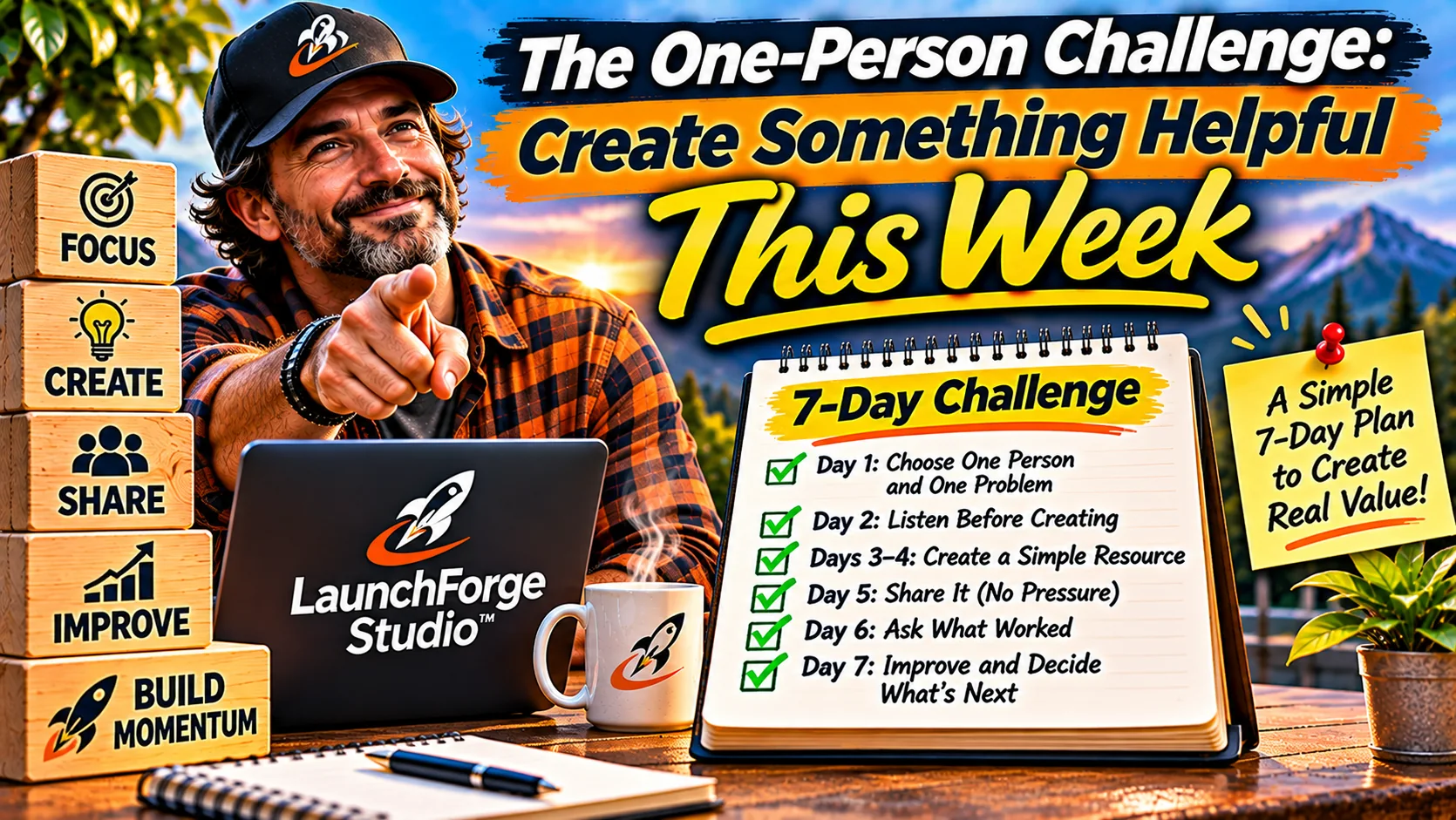
The One-Person Challenge: Find one problem, create something useful, share it without pressure, and improve it through real feedback in seven days.
We’ve talked about creating value, recognizing problems, earning trust, and building a sustainable business.
Now it’s time to put those ideas into action.
Not next year. Not after you’ve completed another expensive course. Not when your website is perfect or you’ve finally figured out every marketing tool on the internet.
This week.
Here’s your challenge:
Find one person experiencing a problem you understand, create something that could genuinely help, and learn from their response.
That’s it.
You don’t need a thousand followers, an elaborate sales funnel, or a revolutionary business concept.
You need a willingness to listen and enough initiative to turn an idea into something useful.
Day 1: Choose One Person and One Problem
Start with someone whose situation you understand.
It could be a friend learning a new skill, a small business owner struggling with a task, or a beginner asking questions in an online community.
Identify one specific difficulty.
For example, imagine somebody who wants to create a simple website but doesn’t know which steps to take first.
Rather than offering to solve every aspect of their business, focus on the immediate obstacle.
What would help this person take their next step?
If you’re learning from public discussions, respect community guidelines and people’s privacy. You don’t need to approach strangers with unsolicited sales pitches.
Day 2: Listen Before Creating
Ask questions or review what the person has already shared.
What have they tried?
Where do they become confused?
What result are they hoping to achieve?
Sometimes your original assumption will be wrong.
Perhaps the person doesn’t need another tutorial. Maybe they need a checklist that organizes information they’ve already found.
Understanding the problem is more important than showing off your proposed solution.
Days 3–4: Create the Smallest Useful Resource
Now make something.
Keep it manageable.
A one-page checklist, short tutorial, simple spreadsheet, comparison guide, or clearly written set of instructions might be enough.
Don’t add unnecessary features simply to make the project look impressive.
For our website beginner, a useful resource could be a checklist covering domain registration, hosting, WordPress installation, essential pages, and basic website testing.
Explain each step accurately, identify important limitations, and avoid making promises you can’t support.
The goal isn’t to create a finished business empire in two days.
The goal is to produce something another person can actually use.
Day 5: Share It Without Pressure
Offer your resource to the person or audience it was created to help.
Explain what it does and why you thought it might be useful.
Don’t immediately demand an email address, testimonial, purchase, or public endorsement.
Let the person decide whether they want it.
If you’re sharing in an online community, follow its promotional rules.
Your purpose is to discover whether you’ve created something helpful—not to disguise a sales pitch as an act of generosity.
Day 6: Ask What Worked and What Didn’t
This is where the learning begins.
Did the resource answer their question?
Was anything confusing?
Did they actually use it?
What would make it more helpful?
Be willing to hear criticism.
Someone explaining that your checklist overlooked an important step is giving you information you can use.
And if nobody finds the resource useful, that’s worth understanding too.
Feedback isn’t a verdict on your worth as a creator. It’s information about the solution.
Day 7: Improve It and Decide What Comes Next
Review what you’ve learned.
Correct mistakes. Simplify confusing explanations. Add something important that you overlooked.
Then consider whether the same problem affects other people.
If it does, you might turn the resource into a blog article, downloadable guide, video, or service.
You could eventually explore a paid offering if there’s genuine demand and you’re equipped to deliver the promised value.
But don’t force every useful idea into a business opportunity.
Sometimes the outcome of this challenge will simply be that you’ve helped somebody.
And that’s still worthwhile.
What Success Looks Like After Seven Days
You may not earn a single dollar during this challenge.
You might not gain a subscriber or generate meaningful website traffic.
That’s okay.
The purpose is to practice an approach to entrepreneurship that begins with understanding people and creating value.
By the end of the week, you should have a better understanding of one problem, a resource you’ve created, and feedback you can learn from.
Those are real accomplishments.
And they give you a foundation for deciding whether to continue, improve, or try a different idea.
Don’t measure your first week by how much money you made. Measure it by whether you created something that genuinely helped somebody.
Because one useful creation can be the beginning of a much bigger journey.
And even if it never becomes a business, you’ve still done something meaningful.
You’ve made somebody’s next step a little easier.
Final Thoughts: Build Something That Matters

A meaningful online business begins with helping others, creating genuine value, and making a positive difference—one person at a time.
Somewhere out there, somebody is struggling with a problem you’ve already learned how to solve.
Maybe they’re overwhelmed by technology. Perhaps they’re trying to start a business but don’t know where to begin. They might be frustrated, discouraged, or simply looking for someone who can explain something in a way that finally makes sense.
And you might be able to help them.
Not because you have all the answers.
Not because you’ve built a million-dollar company.
And certainly not because you’ve mastered every business tool, marketing strategy, or technological advancement available.
But because you’ve learned something useful, gained valuable experience, or developed a skill that could make somebody else’s journey a little easier.
That’s where meaningful value creation begins.
Your Business Doesn’t Have to Start With a Sale
There’s a tremendous amount of pressure in the online business world to monetize everything immediately.
Every website needs a funnel. Every visitor needs a conversion. Every piece of content needs to generate revenue.
But there’s something worth remembering.
Before someone becomes a customer, they’re a person.
A person with questions, concerns, goals, and challenges.
When we focus exclusively on what we can earn from that person, it’s easy to overlook what they actually need.
Instead, imagine building a business where helpfulness is part of every decision.
Your articles answer meaningful questions.
Your recommendations explain both advantages and limitations.
Your products solve problems worth solving.
And your marketing respects people’s ability to make informed choices.
That doesn’t mean abandoning profitability.
It means pursuing profitability through genuine value rather than empty promises.
Small Beginnings Can Lead to Meaningful Opportunities
A helpful checklist might become a popular resource.
A tutorial could inspire an entire collection of educational guides.
An honest product comparison might introduce someone to a tool that genuinely improves their workflow.
A solution created for one person could reveal a problem shared by hundreds of others.
None of those outcomes is guaranteed.
But creating something useful gives you a foundation for learning, improving, and discovering what people genuinely appreciate.
At LaunchForge Studio, that’s the journey we’re taking.
We’re building, testing, learning, making improvements, and sharing the experiences that might help someone else move forward.
We don’t claim to have every answer.
We believe in doing the work, sharing what we learn, and treating the people we serve with honesty and respect.
Your Next Step Starts Today
If you’ve reached the end of this article wondering whether you have something valuable to offer, here’s a simple suggestion.
Don’t begin by asking whether your idea could make you rich.
Ask whether it could help somebody.
Find a problem you understand.
Create something useful.
Share it with someone who needs it.
Listen to their experience.
And keep improving.
If you’re ready to explore the practical side of building an online business, visit our LaunchForge Studio guides and resources. We share tutorials, tool evaluations, and lessons from our ongoing journey to help make your next steps easier to understand.
You don’t have to build something extraordinary to begin.
You just have to create something that helps somebody.
Because your first great idea might not change the world.
It might simply change somebody’s day.
And that, my friend, is a beautiful reason to begin.