Getting someone to subscribe to your email list is an important milestone. But what happens immediately afterward can influence whether that person becomes an engaged reader, a future customer, or someone who forgets they ever signed up.
That’s where a welcome email sequence comes in.
A welcome email sequence is a series of automated emails sent to new subscribers after they join your list. Rather than leaving someone wondering what happens next, these messages help you deliver what you promised, introduce your business, provide useful information, and build a relationship over time.
And here’s the good news: you don’t need a massive audience, expensive software, or years of marketing experience to create one.
You need a clear purpose, a few helpful messages, and an email marketing tool that can send them automatically.
In this beginner-friendly guide, you’ll learn how to create a welcome email sequence from scratch, including what to write, when to send each message, how to set up automation, and how to measure whether your emails are helping subscribers.
We’ll also walk through five practical welcome email examples you can adapt to your own online business.
Whether you’re building your first email list, promoting a lead magnet, or trying to improve the experience for new subscribers, the goal is the same:
Make every new subscriber feel like joining your list was a worthwhile decision.
What Is a Welcome Email Sequence?
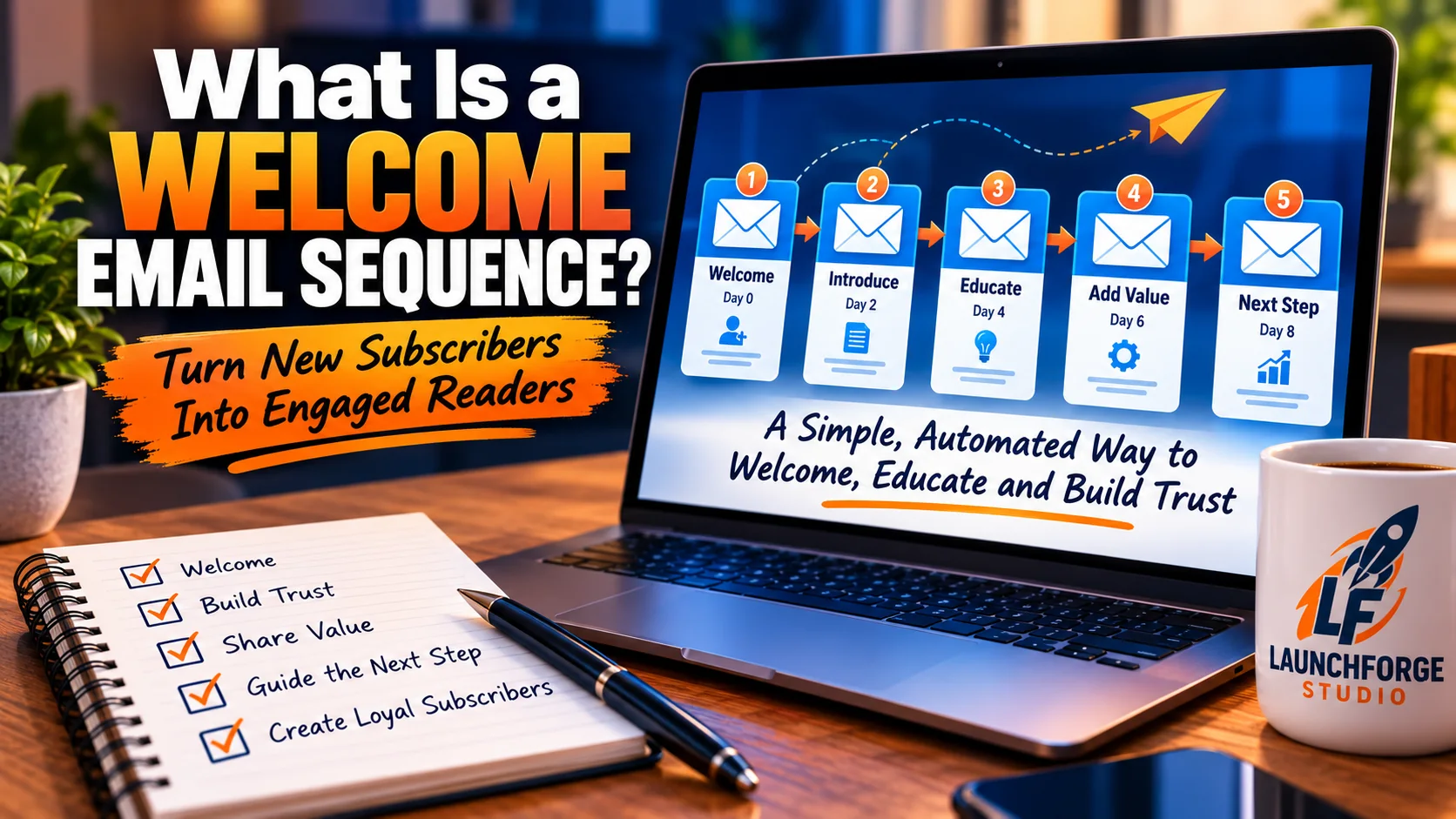
A welcome email sequence helps turn new subscribers into engaged readers through timely, helpful messages.
A welcome email sequence is a planned series of messages automatically delivered to someone after they subscribe to an email list.
The sequence typically begins with an immediate welcome message. Additional emails follow over the next several days, introducing the sender, sharing valuable resources, and helping subscribers understand what they can expect.
Think of it as a friendly introduction rather than a sales presentation.
Imagine someone downloads a free beginner’s guide from your website. They provide their email address because they believe the guide will help them solve a problem.
If they receive the guide and never hear from you again, the relationship may end before it begins.
But suppose they receive a helpful series of emails:
- The first delivers the guide and welcomes them.
- The second introduces your business and explains how you help people.
- The third shares a practical tip related to the guide.
- The fourth addresses a common challenge.
- The fifth introduces another useful resource or an appropriate next step.
Now the subscriber has multiple opportunities to become familiar with your business and discover whether your content is relevant to their goals.
That’s the purpose of a welcome email sequence.
Welcome Email vs. Welcome Email Sequence
Although the terms sound similar, they describe two different approaches.
A welcome email is one message sent when someone subscribes.
A welcome email sequence, sometimes called a welcome email series, includes multiple messages delivered according to a predetermined schedule.
A single welcome email can work well when your only goal is to confirm a subscription or deliver a promised resource.
A sequence becomes more useful when you want to introduce several topics, explain your business, or help someone progress through a learning experience without overwhelming them in one message.
Neither approach is automatically better for every business.
What matters is whether the communication matches what subscribers expected when they signed up.
If you’re still working on building an email list from scratch, start by creating a simple signup process that gives visitors a clear reason to subscribe. Once people join, your welcome email sequence helps you begin the relationship.
How Automated Welcome Emails Work
Automated welcome emails use an email marketing platform to send messages based on a specific action.
The process usually looks like this:
- A visitor signs up through a website form or landing page.
- The email marketing platform adds the subscriber to a list or audience.
- A predefined automation is triggered.
- The first welcome email is sent.
- Additional messages are delivered according to the configured schedule.
- The subscriber may eventually transition into regular newsletters or other relevant email communications.
Once the sequence is configured and tested, the platform handles delivery without requiring you to manually send each message.
This is especially useful for beginners managing an online business alongside other responsibilities.
Instead of writing the same introductory emails repeatedly, you can build a reusable system that provides a consistent experience for new subscribers.
The key is remembering that automation should make communication more helpful, not less personal.
An automated email can still sound natural, thoughtful, and relevant.
In fact, the best welcome sequences often feel less like automated marketing and more like a series of helpful conversations.
Why Your First Emails Matter
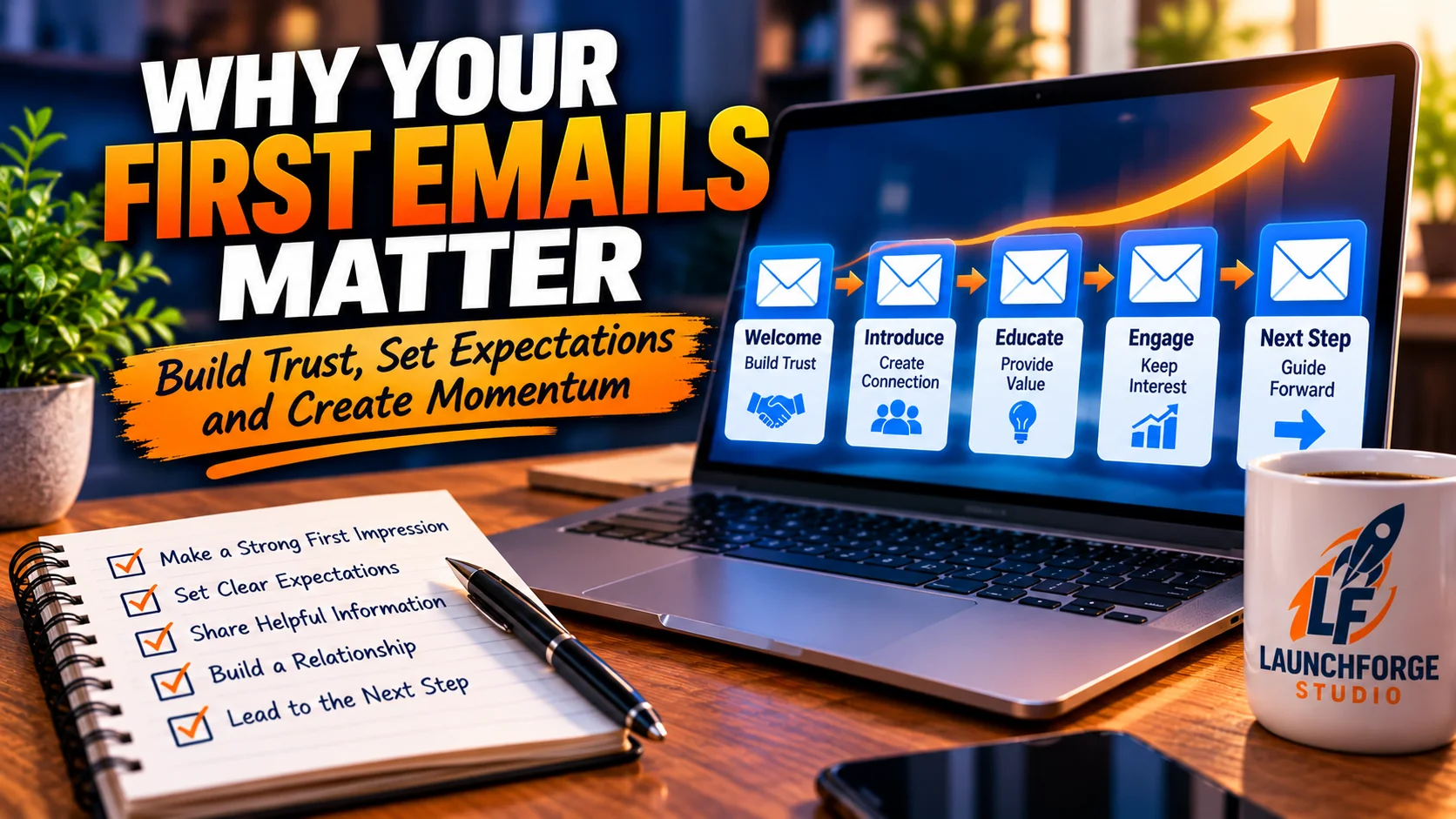
Your first emails set the tone for trust, engagement, and a lasting subscriber relationship.
When someone subscribes to your email list, they’ve taken a small but meaningful action.
They’ve decided that something you offer is worth receiving in their inbox.
That doesn’t automatically mean they trust your business, want to purchase something, or intend to read every email you send.
It means you’ve earned an opportunity to demonstrate value.
Your welcome email sequence helps you make the most of that opportunity.
1. You Can Deliver What You Promised
If someone signed up to receive a checklist, blueprint, template, or other lead magnet, the first priority is delivering that resource.
Don’t make subscribers search through multiple messages to find what they requested.
Provide a clear download link or access instructions in the first email, subject to any required email confirmation.
The easier you make the experience, the more likely subscribers are to feel that your business respects their time.
2. You Can Establish Clear Expectations
New subscribers should understand what kind of emails they’ll receive.
Will you share beginner tutorials?
Marketing tips?
New articles?
Product recommendations?
A combination of educational resources and occasional promotional offers?
Explain this early.
Clear expectations reduce confusion and help subscribers decide whether your emails are relevant to them.
3. You Can Introduce Your Business Naturally
People don’t necessarily know much about the person or business behind a signup form.
A welcome sequence gives you room to explain who you help, what you believe in, and why you created your resources.
You don’t need to write an autobiography.
A short, relevant introduction is usually enough.
Focus on how your experience, perspective, or resources connect to the subscriber’s needs.
4. You Can Provide Value Before Asking for a Sale
One of the biggest mistakes beginners make is treating every subscriber like someone who’s ready to buy immediately.
Some subscribers are simply researching a topic.
Others are comparing options.
Some may not have decided what they need yet.
A helpful welcome sequence acknowledges these differences.
Instead of sending five consecutive sales pitches, provide useful guidance that helps people make informed decisions.
When a relevant offer appears later, it has context.
5. You Can Create a More Consistent Subscriber Experience
Without a welcome sequence, your communication may depend on when you happen to have time to send an email.
One subscriber might receive a helpful introduction.
Another might receive nothing for two weeks.
A third might join just before a promotional campaign and immediately receive an offer without knowing anything about your business.
Automation helps reduce that inconsistency.
Every subscriber can receive the same essential introduction, while your regular email campaigns continue separately.
That creates a more organized foundation for your email marketing.
How Many Welcome Emails Should You Send?
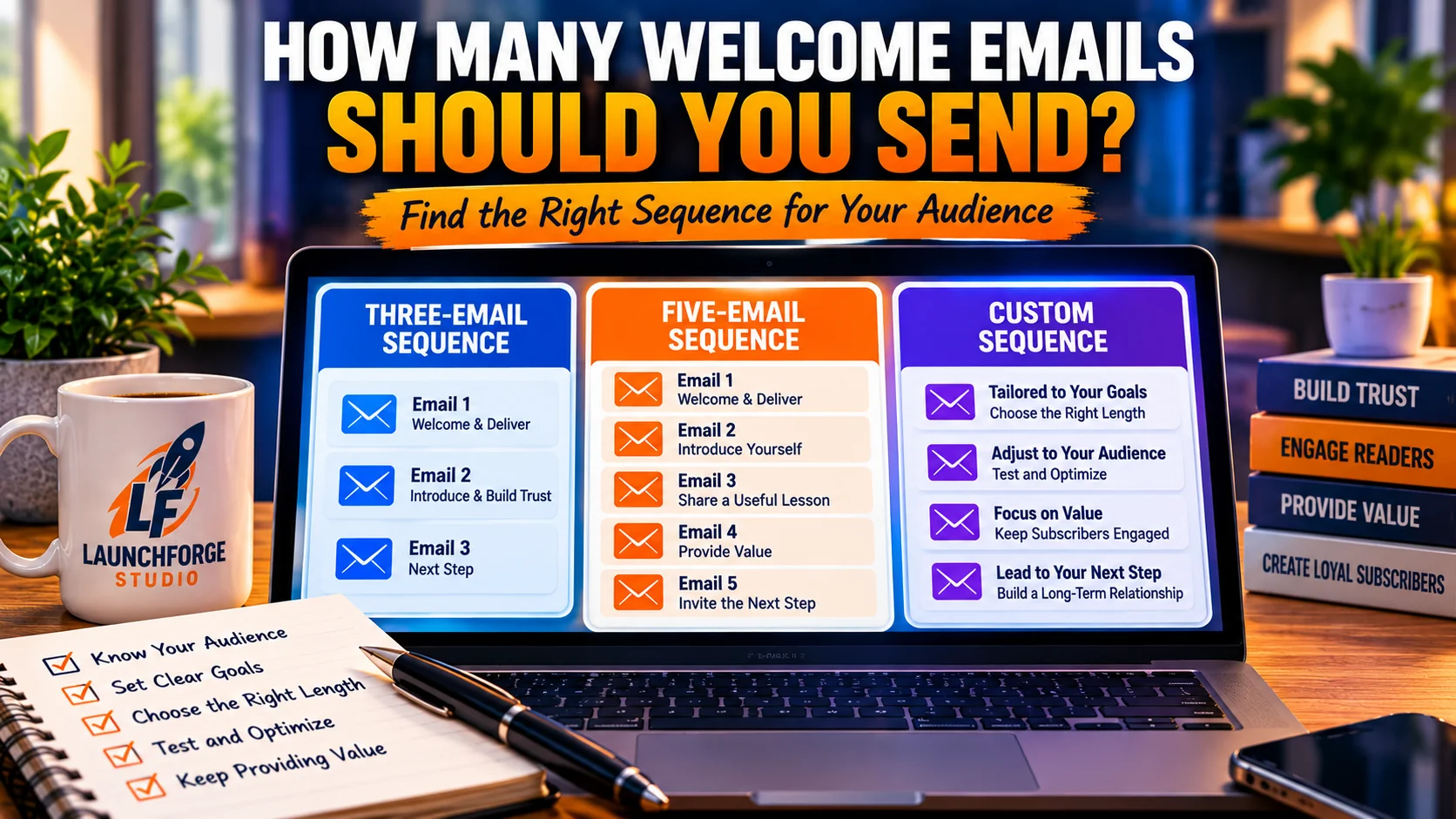
Three emails or five? Choose a welcome sequence that matches your subscribers’ needs and your business goals.
One of the first questions beginners ask when creating a welcome email sequence is surprisingly simple:
How many emails should I send to someone who just joined my list?
Should you send two emails? Three? Five? Ten?
The answer depends on what your subscribers signed up for, how much information you want to share, and what you hope to accomplish during those first interactions.
There is no universal number of welcome emails that works perfectly for every online business.
However, a sequence of three to five emails is a practical starting point for many beginners.
This gives you enough room to introduce yourself, deliver useful information, and establish expectations without immediately overwhelming subscribers.
The goal isn’t to send as many emails as possible.
The goal is to make each email worth opening.
The Three-Email Welcome Sequence: A Simple Starting Point
If you’re building your first email list or just getting comfortable with email automation, a three-email sequence can be an excellent place to begin.
Here’s how it might work:
Email 1: Welcome and Deliver Your Promise
Send this message immediately after someone subscribes, or after they confirm their subscription if confirmation is required.
Thank them for joining, deliver the resource they requested, and explain what they can expect from future emails.
If they signed up for a free guide, make the download link easy to find.
Email 2: Introduce Yourself and Provide Value
Send this message approximately two days later.
Briefly explain who you are, why you created your business, and how your content can help subscribers.
Include one useful tip or educational resource related to the reason they subscribed.
Email 3: Help Them Take the Next Step
Send this message another two or three days later.
Address a common problem your audience faces and point readers toward a helpful next step.
That might be another beginner’s guide, a tutorial, a checklist, or a relevant product or service.
The next step should feel like a natural continuation of what they’ve already learned, not an unexpected sales pitch.
This three-email structure is straightforward, manageable, and easy to improve as you learn more about your audience.
The Five-Email Welcome Sequence: Building a Deeper Connection
A five-email sequence gives you additional opportunities to introduce your business and provide useful information.
Instead of squeezing everything into three messages, you can spread the experience across several days.
For example:
Email 1: Welcome and Resource Delivery
Thank subscribers for joining and deliver what they requested.
Email 2: Your Introduction and Mission
Explain who you help, what your business stands for, and why your resources may be useful.
Email 3: A Practical Tip or Helpful Tutorial
Share something subscribers can use immediately to make progress toward their goals.
Email 4: Solve a Common Beginner Problem
Discuss an obstacle your audience frequently encounters and provide practical guidance for overcoming it.
Email 5: Introduce a Relevant Next Step
Invite subscribers to explore another educational resource, learn about a solution, or take an appropriate action based on their interests.
A five-email sequence can work particularly well for educational websites, content-driven businesses, and online marketing platforms where visitors may need time to understand their options.
However, more emails do not automatically produce better results.
Five genuinely helpful emails are more valuable than ten messages that repeat the same sales pitch.
How Often Should Welcome Emails Be Sent?
Timing is another important consideration.
Sending every message within a few hours may overwhelm subscribers, especially if they weren’t expecting frequent communication.
On the other hand, waiting several weeks between introductory emails may make it harder for subscribers to remember why they joined your list.
A reasonable starting schedule for a five-email welcome sequence might look like this:
- Day 0: Welcome email and promised resource.
- Day 2: Introduction to your business.
- Day 4: Helpful educational content.
- Day 6: Common problem and practical solution.
- Day 8: Relevant next step or additional resource.
These intervals are examples, not mandatory rules.
Some audiences may appreciate more frequent communication, while others may respond better to additional time between messages.
Pay attention to what subscribers were told during signup and adjust your schedule based on their engagement and feedback.
Also consider whether your email marketing platform allows you to prevent subscribers from receiving overlapping automated and promotional messages.
You don’t want someone receiving three unrelated emails on the same day simply because several campaigns happen to be running.
Should Every Subscriber Receive the Same Welcome Sequence?
Not necessarily.
Imagine two people visiting your website.
One subscribes to receive a beginner’s guide about creating a website.
The other downloads a resource about generating traffic.
Both subscribers are interested in building an online business, but their immediate needs may be different.
Sending them exactly the same educational messages might overlook those differences.
As your email list grows, you can consider creating separate welcome sequences based on:
- The lead magnet someone downloaded.
- The signup form or landing page they used.
- The topic they expressed interest in.
- Their experience level or business goals.
- Preferences they voluntarily shared.
This approach is commonly called email segmentation.
For beginners, segmentation doesn’t need to be complicated.
You might start with one general welcome sequence and create more targeted versions only when you have a clear reason to do so.
The important thing is to avoid making assumptions about subscribers that their signup information doesn’t support.
What Happens After the Welcome Sequence Ends?
Your welcome sequence should have a clear ending.
Once subscribers complete their introductory emails, they can transition into your regular email communication, provided it matches the consent and expectations established when they signed up.
A welcome sequence is only the beginning. Learning how to build a simple follow up system can help you continue sharing useful information, maintain contact with subscribers, and introduce relevant solutions after those first emails have ended.
That might include:
- New educational articles.
- Practical marketing tips.
- Occasional newsletters.
- Relevant tools and resources.
- Product or service recommendations that align with their interests.
Avoid restarting the same welcome sequence every time someone fills out another form unless there’s a specific reason to do so.
Your automation should also account for subscribers who unsubscribe or no longer qualify for a particular sequence.
Think of your welcome emails as the beginning of a relationship, not the entire relationship.
For most beginners, the best approach is to start with a manageable sequence, make each message useful, and improve the experience over time.
You can always expand from three emails to five later.
What matters most is creating a welcome experience that respects your subscribers’ attention and gives them a reason to stay connected.
Step 1: Decide What Your Welcome Sequence Should Accomplish
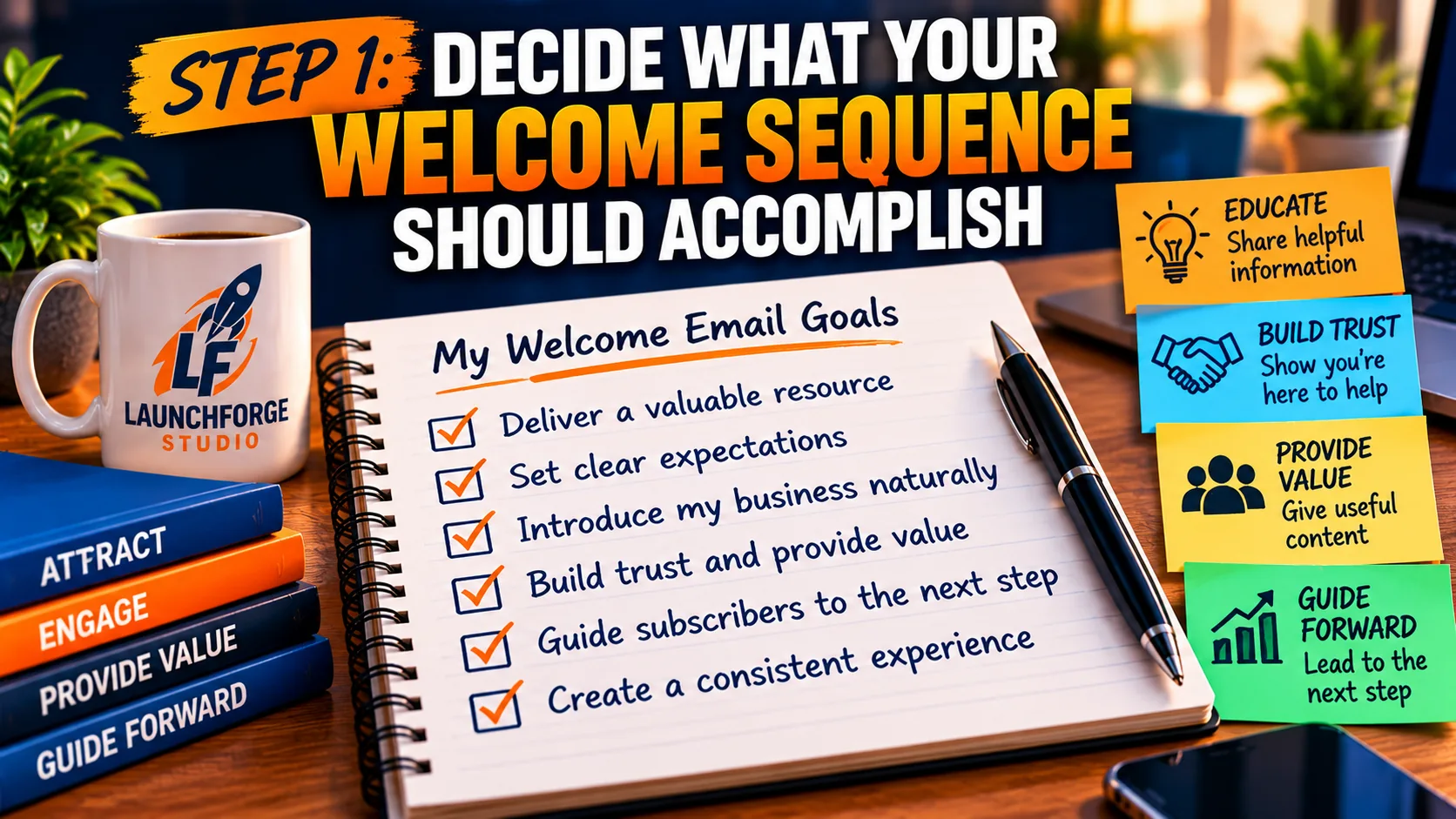
A successful welcome email sequence starts with a clear purpose. Decide what subscribers should learn, receive, and do next.
Before writing your first welcome email, there’s an important question you need to answer:
What do you want new subscribers to understand, experience, or accomplish after receiving your welcome sequence?
It’s tempting to open your email marketing platform, create a few messages, and start scheduling them immediately.
But without a clear purpose, even a beautifully written welcome email sequence can feel disconnected.
One email might introduce your business.
Another might promote a product.
A third might link to an unrelated article.
Individually, those messages may be perfectly reasonable. Together, however, they might not create a helpful experience for someone who just joined your list.
That’s why your first step should be defining a clear goal.
Start With the Reason Someone Subscribed
Your welcome sequence should begin with the promise that encouraged someone to join your email list.
If you’re still deciding what to offer new subscribers, learning how to create a lead magnet can help you develop a useful resource that gives visitors a clear reason to join your email list.
Think about the moment a visitor entered their email address.
What were they hoping to receive?
What problem were they trying to solve?
What information attracted their attention?
For example, imagine you operate a website that teaches beginners how to start an online business.
Someone downloads your free Online Business Starter Blueprint.
That person probably isn’t looking for an advanced lesson on managing a large marketing department.
They’re more likely interested in understanding where to begin, what tools they need, and how to avoid common beginner mistakes.
Your welcome sequence should reflect those interests.
You might introduce resources about choosing a business idea, creating a simple website, understanding lead generation, and taking the first practical steps toward launching an online business.
The closer your emails match the subscriber’s original reason for signing up, the more relevant the experience becomes.
This is also why the first email should deliver any promised resource promptly and clearly.
Before introducing new topics, fulfill the expectation that brought the subscriber to your list.
Choose One Primary Goal for Your Welcome Sequence
A welcome sequence can support several business objectives, but trying to accomplish everything at once can make your emails feel scattered.
Instead, identify one primary goal.
For a beginner-focused educational website, that goal might be helping new subscribers become familiar with your resources and understand how your business can support their progress.
Other possible goals include:
- Helping subscribers successfully use a free guide or template.
- Introducing the most useful beginner tutorials on your website.
- Encouraging subscribers to complete an initial setup task.
- Helping readers understand a particular product or service.
- Building familiarity with your brand and communication style.
- Inviting subscribers to explore an appropriate next step.
You can still include secondary goals.
For example, your primary goal might be helping subscribers use a free guide, while a secondary goal is introducing them to related educational articles.
The important thing is establishing a logical priority.
Your welcome emails should also support your broader business goals. Our guide to creating a digital marketing strategy for beginners explains how to connect individual marketing activities to a clear, manageable plan.
When you know what the sequence is supposed to accomplish, deciding what belongs in each email becomes much easier.
Think About What Subscribers Need Before They’re Ready for the Next Step
Not everyone who joins your email list is at the same stage.
Some subscribers are exploring possibilities.
Others have already started building a website.
Some may have an existing online business but struggle with traffic, leads, or organization.
Your welcome sequence doesn’t need to solve every possible problem.
Instead, focus on helping subscribers make progress from the point where they entered your email list.
For example, a beginner who downloaded a business startup guide might benefit from understanding:
- How to choose a realistic starting point.
- Which tools are essential and which can wait.
- Why a website or landing page needs a clear purpose.
- How visitors eventually become subscribers or customers.
- Where to find additional guidance when they’re ready.
Notice that this progression doesn’t immediately push the subscriber toward a purchase.
Understanding the customer journey can help you create messages that match each subscriber’s stage, from discovering your business to considering their next step.
It helps them understand the process.
When you eventually introduce a relevant solution, the recommendation can connect to something they’ve already learned.
That creates a more useful experience than presenting an unfamiliar offer without context.
Define the Action You Want Readers to Take
Every welcome email should have a purpose, but that doesn’t mean every message needs an aggressive sales-oriented call to action.
Sometimes the most appropriate action is simply downloading the resource someone requested.
Other times, you might invite subscribers to:
- Read a related beginner’s tutorial.
- Complete one exercise from a downloaded guide.
- Explore a helpful resource page.
- Reply with a question about their biggest challenge.
- Watch an educational demonstration.
- Review a relevant tool when they’re ready.
Choose an action that naturally follows the information in the email.
For instance, if you’re explaining how to choose a business niche, linking to a detailed niche-selection tutorial makes sense.
Linking to an unrelated traffic offer probably doesn’t.
A useful rule is to give each message one clear primary call to action.
That doesn’t mean every email must contain only one link. A resource delivery email may need both a download link and a support link.
However, readers should easily understand what you’d most like them to do next.
Avoid presenting several competing offers that pull attention in different directions.
Establish Your Communication Style Early
Your welcome sequence also introduces the personality behind your business.
You don’t need to sound like a large corporation to appear professional.
In fact, a straightforward, conversational approach may be more appropriate for a website designed to help beginners.
Write the way you would explain something to a real person who asked for your help.
Use clear language.
Keep your promises realistic.
Avoid unnecessary technical jargon.
And don’t manufacture urgency where none exists.
If your business focuses on helping people build an online business without unnecessary complexity, your emails should reflect that philosophy.
Subscribers should recognize the same helpful approach whether they’re reading your articles, downloading a resource, or opening an email.
Consistency between your website and your emails helps people understand what your business stands for.
Create a Simple Welcome Sequence Goal Statement
Before moving on, write a short statement describing what your welcome sequence should accomplish.
It doesn’t need to be complicated.
Here’s an example for a beginner-focused online business website:
“My welcome email sequence will deliver the promised resource, introduce new subscribers to my business, help them take their first practical steps, and guide them toward additional educational resources that match their interests.”
That’s enough to give your sequence direction.
You can use this statement to evaluate every email you write.
Ask yourself:
Does this message help accomplish the goal?
Is it relevant to the reason someone subscribed?
Does it provide something useful?
Is the next step clear?
If the answer is no, reconsider whether the message belongs in your welcome sequence.
Remember, you’re not trying to impress subscribers with how many emails you can automate.
You’re creating a thoughtful introduction that makes it easier for people to learn from you, understand your business, and decide what to explore next.
With your goal established, you’re ready to plan the individual messages that will make up your welcome email sequence.
Step 2: Plan Your Welcome Email Sequence
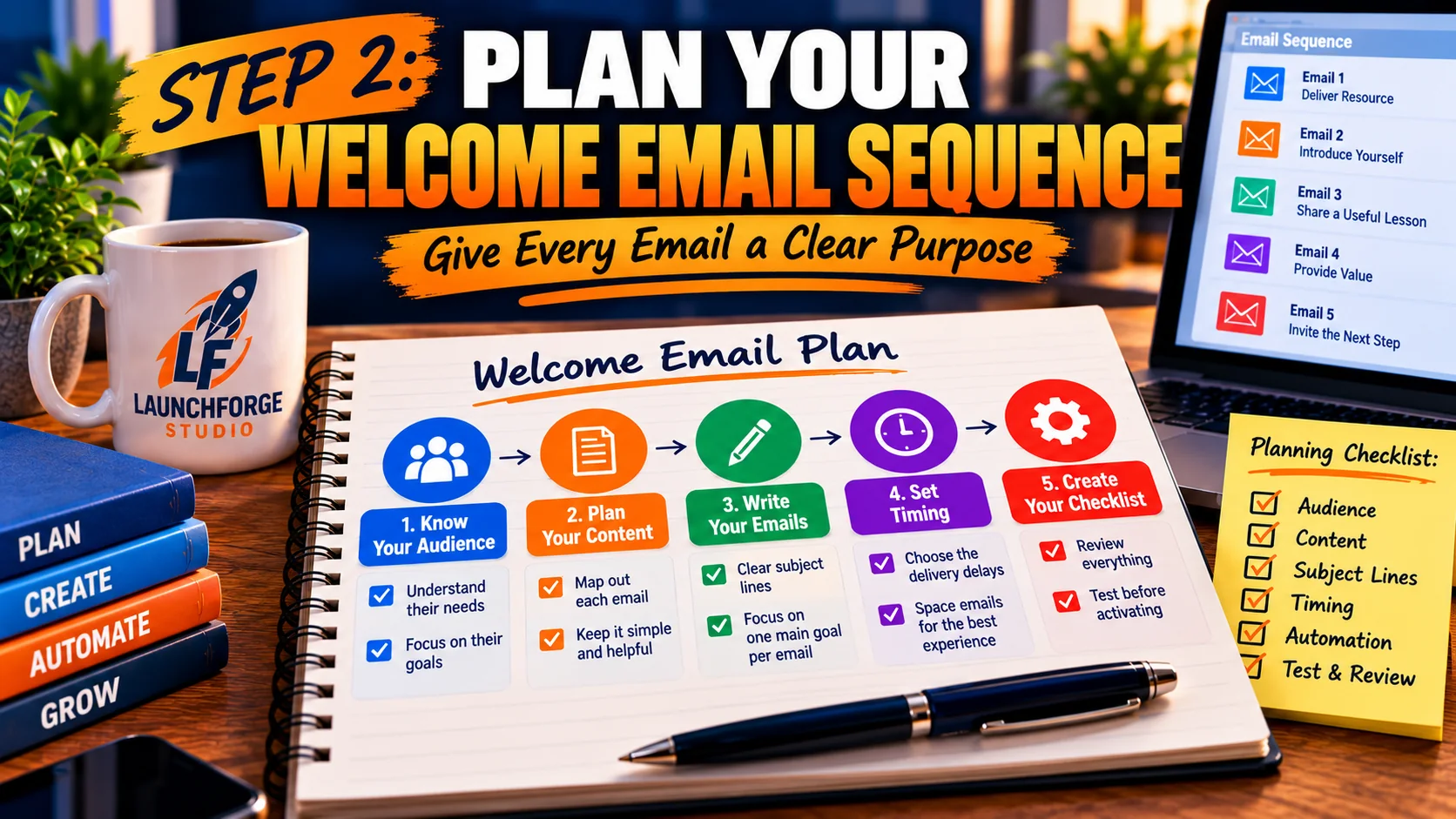
Give every welcome email a clear purpose by planning your content, subject lines, delivery schedule, and subscriber experience.
Now that you know what your welcome email sequence should accomplish, it’s time to organize your messages into a clear, logical plan.
This is where many beginners make an avoidable mistake.
They start writing emails without deciding how those messages should work together.
The first email might be helpful. The second might repeat the same information. By the third, they’re struggling to think of something new to say.
A better approach is to plan the entire welcome email sequence before writing individual messages.
Think of it like planning a short educational journey.
Each email should have its own purpose while naturally connecting to the next.
Your subscribers shouldn’t feel as though they’re receiving five unrelated messages. They should feel like they’re being introduced to your business in a thoughtful, organized way.
Fortunately, creating this plan doesn’t require complicated marketing software or an elaborate spreadsheet.
A simple outline is enough to get started.
Map Out the Subscriber’s First Experience
Before deciding what each email should contain, imagine the experience from your subscriber’s perspective.
Someone has just visited your website, discovered a helpful resource, and decided to subscribe.
A well-organized lead generation system helps connect those steps, guiding visitors from discovering your content to subscribing and receiving helpful follow-up emails.
What happens next?
Do they immediately receive the resource they requested?
Do they understand who sent the email?
Do they know what kind of information you’ll share?
Does each additional message provide something useful?
These questions help you evaluate your sequence as a complete experience rather than a collection of individual emails.
This is also where understanding how to create a customer journey becomes useful. By considering what visitors experience before subscribing and what happens afterward, you can make your welcome emails feel like a natural continuation of their experience with your business.
For example, imagine someone subscribes to receive a free guide about starting an online business.
Their first experience might look like this:
Day 0: Receive the promised guide.
The subscriber gets immediate access to the resource and a brief explanation of what to expect.
Day 2: Meet the person or business behind the guide.
They learn why the website exists and how its educational resources can help beginners.
Day 4: Discover one practical action they can take.
They receive a useful tip or tutorial that helps them apply something from the guide.
Day 6: Learn how to overcome a common obstacle.
They receive advice about a challenge that often prevents beginners from making progress.
Day 8: Explore a relevant next step.
They receive an invitation to continue learning through another resource, tutorial, or suitable solution.
Notice how each message serves a different purpose.
The sequence begins by fulfilling a promise, continues by building familiarity and providing value, and concludes with a helpful invitation.
That’s the kind of progression you want to create.
Give Every Email One Main Job
One of the easiest ways to improve your welcome email sequence is to assign each message a single primary responsibility.
This prevents individual emails from becoming overloaded with competing information.
For example, your first email doesn’t need to explain your entire business history, introduce every product you recommend, and link to fifteen different articles.
Its main responsibility is welcoming the subscriber and delivering what you promised.
You can save your introduction for the next message.
Likewise, an email designed to teach one useful lesson doesn’t need to become a lengthy product presentation.
Here’s a simple five-email planning framework:
Email 1 — Welcome and Delivery
Primary purpose: Welcome the subscriber and fulfill the signup promise.
Main content: A short thank-you, the promised resource, and clear expectations.
Primary action: Access or download the resource.
Email 2 — Introduction and Connection
Primary purpose: Help subscribers become familiar with your business.
Main content: Who you help, why your business exists, and what readers can expect.
Primary action: Explore a relevant introductory resource or reply with a question.
Email 3 — Education and Early Progress
Primary purpose: Help subscribers accomplish something useful.
Main content: One practical tip, beginner-friendly lesson, or relevant tutorial.
Primary action: Apply the advice or read the supporting resource.
Email 4 — Problem Solving
Primary purpose: Address a challenge your audience commonly experiences.
Main content: A relatable problem, an explanation of why it happens, and a manageable solution.
Primary action: Take one practical step toward solving the problem.
Email 5 — The Next Step
Primary purpose: Help subscribers continue their journey.
Main content: A brief recap of what they’ve learned and a relevant opportunity to explore further.
Primary action: Visit a useful guide, resource page, or appropriate offer.
This structure gives you a foundation without forcing every business to follow exactly the same formula.
You can adjust the sequence based on what subscribers signed up for and what would genuinely help them.
Choose Your Content Before Writing Your Emails
Once you’ve assigned a purpose to each message, decide what information you’ll share.
You may already have everything you need.
If your website contains educational articles, tutorials, videos, checklists, or downloadable resources, those materials can become valuable components of your welcome sequence.
You don’t need to create an entirely new resource for every email.
If you want to organize your existing articles and tutorials into a more consistent publishing strategy, learning how to create a content marketing system can help you develop useful resources that support your welcome emails.
For example, a website focused on helping beginners build an online business might connect its welcome emails to existing articles about:
- Choosing a realistic online business idea.
- Building a beginner-friendly website.
- Understanding how landing pages work.
- Creating a simple lead generation system.
- Developing a practical digital marketing strategy.
The important thing is selecting resources that fit the subscriber’s interests.
Someone who downloaded a guide about choosing a business niche may appreciate a related tutorial about evaluating business ideas.
Someone who subscribed for website-building advice may prefer a tutorial about creating their first landing page.
Relevance matters more than the number of resources you include.
And remember, your email doesn’t need to reproduce an entire article.
Introduce the problem, share one useful insight, and invite readers to explore the complete resource if they want more detail.
This makes your emails easier to read while giving subscribers a natural reason to visit your website.
Your welcome emails should also support your broader business goals. If you’re still developing your overall approach, learning how to create a digital marketing strategy for beginners can help you connect email marketing with your website, content, traffic, and lead generation efforts.
Plan Your Subject Lines Around the Email’s Purpose
Your subject line is often the first part of your message that subscribers notice.
It should give readers a clear, compelling reason to open the email without misleading them about what’s inside.
For a welcome sequence, clarity is especially important.
Subscribers are still becoming familiar with your business, so exaggerated promises and confusing headlines can create the wrong impression.
Consider these examples:
Email 1: Welcome! Here’s Your Free Guide
Email 2: A Quick Introduction (And Why I’m Here)
Email 3: One Simple Step You Can Take Today
Email 4: Feeling Overwhelmed? Start Here.
Email 5: Ready for Your Next Step?
Each subject line introduces a different purpose while maintaining a friendly, conversational tone.
You can experiment with curiosity, questions, and different wording later.
For now, focus on matching the subject line to the content of the email.
If your subject promises a free download, make sure the message clearly provides that download.
If your subject promises a practical tip, deliver a useful tip.
A subject line should earn attention, not borrow it through deception.
Decide Where Each Email Should Send Readers
Before writing your messages, identify the destination for each primary call to action.
This small planning step can prevent problems later.
For example, you don’t want to finish writing your first email only to discover that the download link hasn’t been created.
Likewise, you shouldn’t invite subscribers to read an article that hasn’t been published yet.
For each message, ask:
- What action should the subscriber take?
- Where will the link send them?
- Is the destination relevant to the message?
- Does the page work properly on mobile devices?
- Will the subscriber understand what to do after arriving?
For a resource delivery email, the destination might be a downloadable PDF or a dedicated access page.
For an educational email, it might be a related tutorial.
For a final welcome message, it might be a beginner’s resource hub or a relevant solution page.
Make sure each destination is available and working before activating your sequence.
Also avoid adding unnecessary links simply because you have room for them.
One clear primary destination is usually easier for beginners to understand than several competing calls to action.
Account for Your Regular Email Campaigns
Your welcome sequence may not be the only email communication your subscribers receive.
You might also send newsletters, new article announcements, educational tips, or occasional promotional campaigns.
Without coordination, a new subscriber could receive several messages close together.
For example, someone might receive their welcome email in the morning, a scheduled newsletter in the afternoon, and another automated message that evening.
Even when each email is useful, the combined experience may feel overwhelming.
Before activating your welcome sequence, review how it interacts with your other email campaigns.
Depending on your email marketing platform, you may be able to:
- Delay regular promotional emails until the welcome sequence is complete.
- Exclude new subscribers from selected campaigns temporarily.
- Adjust automation delays to reduce overlapping messages.
- Use tags or subscriber groups to manage different communications.
- Prevent duplicate enrollment in the same welcome sequence.
Not every platform provides the same controls, so use the features available in your chosen tool.
The goal is simple: create a coordinated subscriber experience instead of several disconnected email campaigns.
Create a Welcome Email Sequence Planning Checklist
Before moving into the actual writing process, review your plan.
You should be able to answer these questions:
- Signup promise: What did subscribers expect when they joined?
- Primary goal: What should the sequence help them accomplish?
- Number of emails: Will you begin with three or five messages?
- Schedule: When will each email be delivered?
- Email purpose: Does every message have one clear responsibility?
- Educational value: What useful information will subscribers receive?
- Call to action: What is the main next step in each message?
- Destination: Are all download links and website pages ready?
- Consistency: Does the sequence match your business’s communication style?
- Coordination: Will subscribers receive too many overlapping emails?
If you can answer these questions, you’re ready to start writing.
Don’t worry about creating the perfect sequence on your first attempt.
Your initial plan is a starting point that you can improve as you learn what subscribers find useful.
A well-organized welcome email sequence doesn’t need to be complicated. It simply needs to deliver what you promised, provide meaningful value, and make the next step clear.
With your plan in place, it’s time to turn that outline into actual emails your subscribers can read, understand, and act on.
Step 3: Write Your Welcome Emails — Five Practical Examples
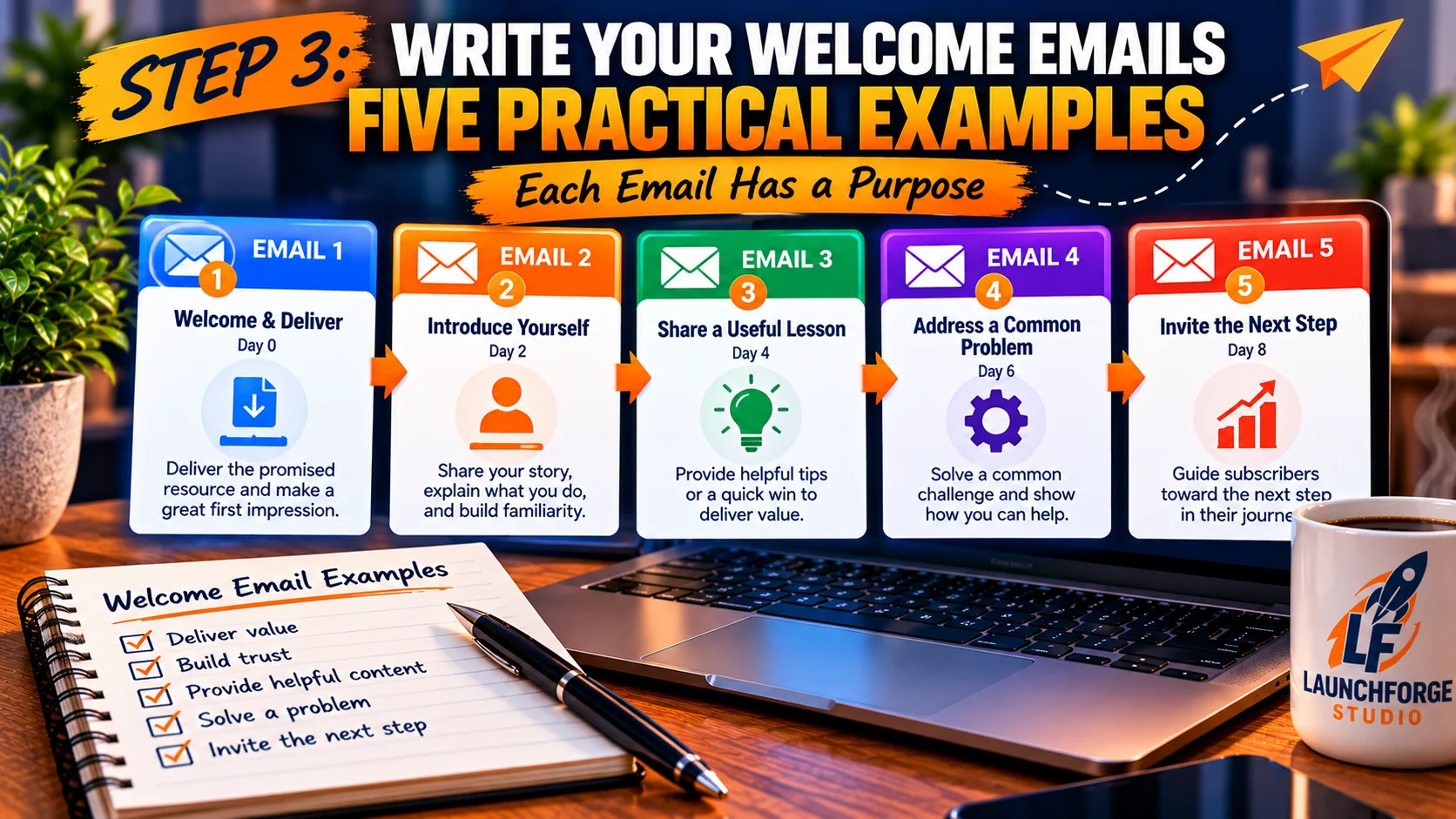
Five welcome emails, five clear purposes. Build subscriber relationships by delivering value before introducing the next step.
You’ve established your goals, planned your messages, and decided what your subscribers should receive.
Now it’s time to write your welcome email sequence.
For many beginners, this is where the process starts feeling intimidating.
What should you say?
How long should each email be?
Should you introduce yourself immediately?
When is it appropriate to recommend a product or service?
The good news is that effective welcome emails don’t require complicated writing techniques.
They need to be clear, relevant, helpful, and consistent with the expectations established when someone subscribed.
Below are five complete welcome email sequence examples designed for a beginner-focused online business.
Each example includes a subject line, a message you can customize, and a primary call to action.
These examples assume someone subscribed to receive a free online business starter guide. If your business serves a different audience, replace the references to online business education with information relevant to your subscribers.
Important: These are templates, not messages to copy without reviewing. Replace placeholder links, confirm your claims, and make sure every email reflects what you actually offer.
Welcome Email #1: Deliver the Resource and Make a Great First Impression
Suggested timing: Immediately after signup, or after any required subscription confirmation.
Primary goal: Welcome subscribers and deliver what they requested.
Subject Line: Your Free Guide Is Here — Let’s Get Started!
Hi [First Name],
Welcome aboard!
I’m glad you’re here.
Starting an online business can feel overwhelming, especially when you’re trying to figure out which tools you need, where to begin, and what steps actually matter.
That’s exactly why I created this free guide.
Your Online Business Starter Guide is ready!
Download your guide here: [Your Guide Download Link]
Inside, you’ll find practical information designed to help you understand the basics and begin moving forward without unnecessary confusion.
Over the next several days, I’ll also share a few helpful tips and resources to make your journey a little easier.
No complicated jargon. No unrealistic promises.
Just useful information you can apply at your own pace.
For now, download your guide and take a look at the first section.
You don’t need to accomplish everything today.
One step at a time is a perfectly good place to start.
Talk soon,
[Your Name]
[Your Business Name]
Primary CTA: Download the free guide.
Why this email works: It immediately fulfills the signup promise, sets expectations, and gives subscribers one simple action.
Avoid turning this first message into a lengthy sales presentation. The subscriber came for a specific resource, so delivering that resource should remain the priority.
Welcome Email #2: Introduce Yourself and Build Familiarity
Suggested timing: Approximately two days after the first email.
Primary goal: Help subscribers understand who you are and why your business exists.
Subject Line: A Quick Introduction (And Why I’m Here)
Hi [First Name],
I wanted to take a moment to introduce myself.
I’m [Your Name], the person behind [Your Business Name].
I started this business because I believe learning how to build an online business shouldn’t require a technical background or an enormous budget.
There is so much information available online that figuring out where to begin can sometimes feel harder than actually getting started.
My goal is to make that process easier to understand.
Here, you’ll find practical resources about building websites, creating landing pages, attracting visitors, generating leads, and developing a more organized approach to online marketing.
You don’t have to master everything at once.
And you certainly don’t need to buy every tool someone recommends.
Start with the fundamentals. Learn what matters. Build from there.
If you’d like a helpful place to begin, I’ve put together this resource:
[Your Beginner Resource Link]
Take a look whenever you have a few minutes.
And if there’s one part of starting an online business that feels particularly confusing, feel free to reply and tell me.
I’d be interested to hear what you’re working on.
Talk soon,
[Your Name]
[Your Business Name]
Primary CTA: Read a beginner-friendly resource or reply with a question.
Why this email works: It introduces the person behind the business, communicates a clear mission, and gives subscribers a reason to explore further.
Notice that the message focuses on the subscriber’s challenges rather than listing personal accomplishments.
Welcome Email #3: Share One Useful Lesson
Suggested timing: Approximately four days after signup.
Primary goal: Help subscribers make practical progress.
Subject Line: One Simple Step You Can Take Today
Hi [First Name],
Here’s something worth remembering as you begin building your online business:
You don’t need to do everything at once.
One of the easiest ways to become overwhelmed is to start working on too many things before you’ve established a clear direction.
A website.
Social media accounts.
Email marketing.
Advertising.
Sales funnels.
Automation.
Each of these can serve a purpose, but trying to build everything simultaneously can make progress difficult to measure.
Instead, choose one immediate goal.
Maybe you want to publish your first website page.
Maybe you want to create a simple landing page.
Or perhaps your next step is understanding how to attract your first visitors.
Whatever you choose, focus on completing that step before adding another major project.
Here’s a useful exercise:
Write down the ONE thing that would make the biggest difference in your business right now.
Then identify one small action you can take toward it today.
That’s your starting point.
If you’d like additional guidance, this beginner-friendly tutorial can help:
[Your Relevant Tutorial Link]
Small, consistent actions can create a stronger foundation than constantly chasing the next shiny tool.
Keep moving forward,
[Your Name]
[Your Business Name]
Primary CTA: Complete one small action or explore the related tutorial.
Why this email works: It gives subscribers a practical takeaway they can use immediately.
It also demonstrates that your emails provide educational value rather than existing solely to promote offers.
Welcome Email #4: Address a Common Beginner Problem
Suggested timing: Approximately six days after signup.
Primary goal: Help subscribers overcome a familiar obstacle.
Subject Line: Feeling Overwhelmed? Start Here.
Hi [First Name],
Can I share something that catches a lot of beginners off guard?
Starting an online business often feels complicated because there are so many different things competing for your attention.
Someone tells you to build a website.
Someone else says you need a funnel.
Another person insists you should focus entirely on social media.
Before long, you’re looking at a dozen tools and wondering how everything fits together.
If that sounds familiar, here’s a simple way to think about it.
Most beginner online marketing systems involve a few basic activities:
1. Create a place where people can learn about what you offer.
That might be a website, landing page, or another suitable online destination.
2. Give interested visitors a reason to connect with you.
A helpful resource, newsletter, or relevant offer can provide that reason.
3. Follow up with useful information.
Email marketing can help you continue the conversation after someone leaves your website.
4. Improve your approach as you learn.
Pay attention to what people find useful and make adjustments over time.
You don’t need to build an elaborate system overnight.
Start with something manageable and expand when you have a clear reason.
Remember, a more complicated business isn’t automatically a better business.
Sometimes the most useful improvement is removing something you don’t actually need.
You’ve got this,
[Your Name]
[Your Business Name]
Primary CTA: Encourage subscribers to simplify their approach and focus on one manageable next step.
Why this email works: It acknowledges a real beginner challenge and provides a simple framework subscribers can apply without feeling overwhelmed.
The message helps subscribers feel understood without using fear or exaggerated promises.
Welcome Email #5: Invite Subscribers to Take Their Next Step
Suggested timing: Approximately eight days after signup.
Primary goal: Help subscribers continue learning or explore a relevant solution.
Subject Line: Ready for Your Next Step?
Hi [First Name],
Over the past several days, we’ve covered a few important ideas about getting started online.
We’ve talked about keeping things simple, focusing on one goal at a time, and building a foundation before worrying about every advanced marketing strategy.
Now I’d like to leave you with one question:
What’s the next step that makes the most sense for YOU?
Maybe you’re still researching online business ideas.
Maybe you’re ready to build your first website.
Or perhaps you’ve already started and want to improve your traffic, lead generation, or email marketing.
Wherever you are, there’s no need to compare your progress with someone else’s.
The important thing is choosing a direction that fits your goals and available resources.
If you’re ready to continue learning, I’ve organized some helpful resources here:
[Your Resource Page Link]
And if you’re exploring tools that can help bring different parts of your online business together, you can also review the solutions discussed on the website.
Take your time, compare your options, and choose what makes sense for your situation.
Building something worthwhile is a process, not a race.
Thanks again for being here.
I hope the resources I’ve shared have helped you feel a little more confident about your next steps.
Talk soon,
[Your Name]
[Your Business Name]
Primary CTA: Explore a relevant resource page or beginner-friendly next step.
Why this email works: It closes the introductory sequence without pressuring subscribers to make a purchase.
It also gives readers a clear opportunity to continue exploring resources that match their interests.
How to Customize These Welcome Email Examples for Your Business
These five examples provide a starting framework, but your actual messages should reflect your audience, your signup promise, and your communication style.
Before using them, make the following adjustments:
Replace the placeholders. Add your business name, sender name, and verified resource links.
Match the lead magnet. If subscribers signed up for a website checklist, don’t tell them they downloaded a business startup blueprint.
Use your natural voice. Friendly and conversational doesn’t mean every business needs to sound identical.
Check your promises. Only mention resources, benefits, and services you actually provide.
Keep the next step relevant. Link to content that genuinely supports the subject of the email.
Review the timing. Adjust delivery intervals to match subscriber expectations and avoid overlapping campaigns.
Test the messages. Send yourself the complete sequence before activating it for real subscribers.
Also remember that email marketing requirements vary by location and the type of messages being sent. Use appropriate consent practices, accurate sender information, and working unsubscribe options where required.
Finally, don’t judge your entire welcome sequence by whether someone immediately makes a purchase.
A subscriber who downloads your resource, reads a helpful tutorial, and remains interested in your emails may still be benefiting from the relationship.
The purpose of your welcome sequence is to begin that relationship with clarity, usefulness, and trust.
Once your messages are written, the next step is configuring your email marketing platform to deliver them automatically.
Step 4: Set Up Your Automated Welcome Sequence
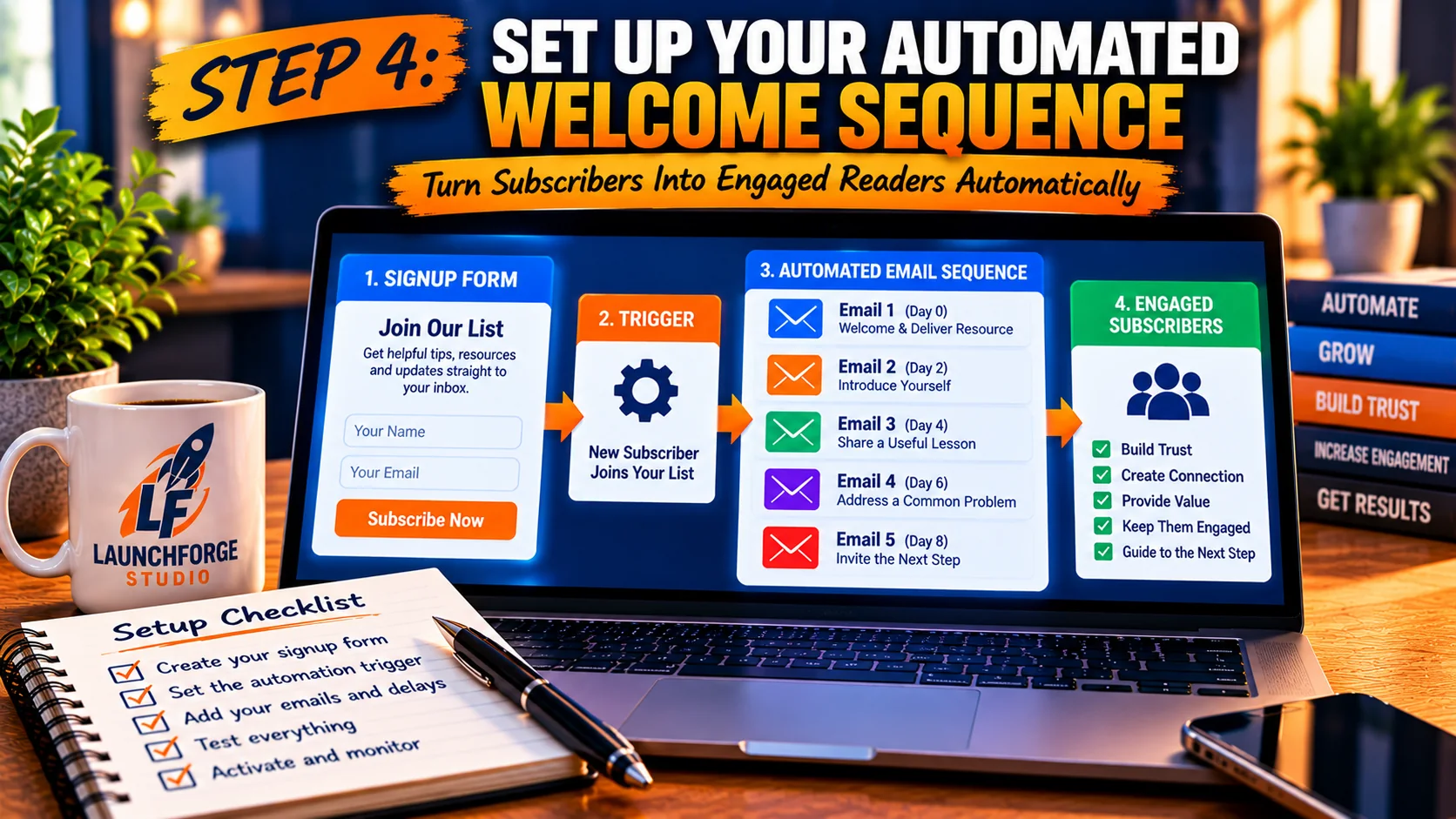
Turn a new subscription into a helpful email experience with automated triggers, scheduled messages, and consistent follow-up.
You’ve written your welcome emails. Now it’s time to make sure subscribers receive them automatically.
Email automation allows you to deliver a series of messages based on a specific action, such as someone joining your email list.
Instead of manually sending each email, your email marketing platform follows the schedule you’ve created.
The exact setup varies between platforms, but the basic process is similar.
Choose Your Email Marketing Platform
You’ll need an email marketing tool that supports automated sequences or autoresponders.
Popular options include Mailchimp, MailerLite, Brevo, and other platforms offering email automation features.
LeadsLeap also provides email list management and autoresponder functionality.
Before choosing a platform, confirm that your plan supports the number of messages, subscribers, and automation features you need.
You don’t necessarily need the most expensive software to create a simple five-email welcome sequence.
Create Your Subscriber List and Signup Form
Start by identifying where new subscribers will enter your email system.
This might be through a website signup form, a landing page, or a lead magnet download.
Your signup form is only one part of the process. Understanding how to build a simple lead generation system can help you connect the steps between attracting visitors, encouraging subscriptions, and following up with useful emails.
If you’re still working on getting visitors to subscribe, our guide on turning website visitors into leads explains how to create a clearer path from someone discovering your website to joining your email list.
Make sure the form clearly explains what subscribers are signing up to receive.
If your platform uses tags or groups, you can organize subscribers based on their interests or the resource they requested.
For example, someone downloading a website-building checklist might receive a different sequence from someone requesting a traffic generation guide.
Set the Automation Trigger
An automation trigger tells your email platform when to begin sending messages.
For a welcome email sequence, the trigger is typically a new subscription, a completed confirmation, or the addition of a specific subscriber tag.
For example:
Trigger: Subscriber joins your Online Business Starter Guide list.
Action: Send Welcome Email #1.
Delay: Wait two days.
Action: Send Welcome Email #2.
Continue adding delays and messages until your sequence is complete.
If you use a confirmation process, make sure your promised resource is delivered at the appropriate point.
Add Your Emails and Delivery Delays
Copy your completed messages into the automation editor.
Using our five-email example, your schedule would be:
- Day 0: Welcome and resource delivery.
- Day 2: Business introduction.
- Day 4: Practical educational tip.
- Day 6: Common problem and solution.
- Day 8: Relevant next step.
Check whether your platform measures delays from the previous email or from the original signup.
That distinction matters when scheduling messages.
Also review any sending-day or sending-hour restrictions that could change the delivery schedule.
Test Everything Before Activating
Never assume an automated sequence works simply because you’ve saved the settings.
Email deliverability matters just as much as writing useful messages. Google’s email sender guidelines explain important practices involving email authentication, subscriber consent, and reducing the chances of messages being marked as spam.
Subscribe using a test email address and check the experience.
Verify that:
- The correct automation starts.
- The promised resource is accessible.
- Emails appear in the intended order.
- Personalization fields display correctly.
- Links open the correct pages.
- Messages are readable on mobile devices.
- Unsubscribe options function properly.
- Subscribers don’t repeatedly enter the same sequence by mistake.
If your platform offers a preview or test mode, use it. Remember that a preview alone may not verify the complete automation trigger and delivery process.
A few minutes of testing can prevent confusing experiences for your first real subscribers.
Activate Your Sequence and Review It Periodically
Once everything is working, activate your automation.
New subscribers who meet the trigger conditions can now receive your welcome messages without you sending each one manually.
However, automation doesn’t mean you should forget about the sequence.
Review your emails periodically to confirm that links still work, information remains accurate, and recommended resources are still available.
The best automated welcome sequence feels helpful and personal to the subscriber, even though the delivery happens automatically.
Step 5: Measure and Improve Your Welcome Emails
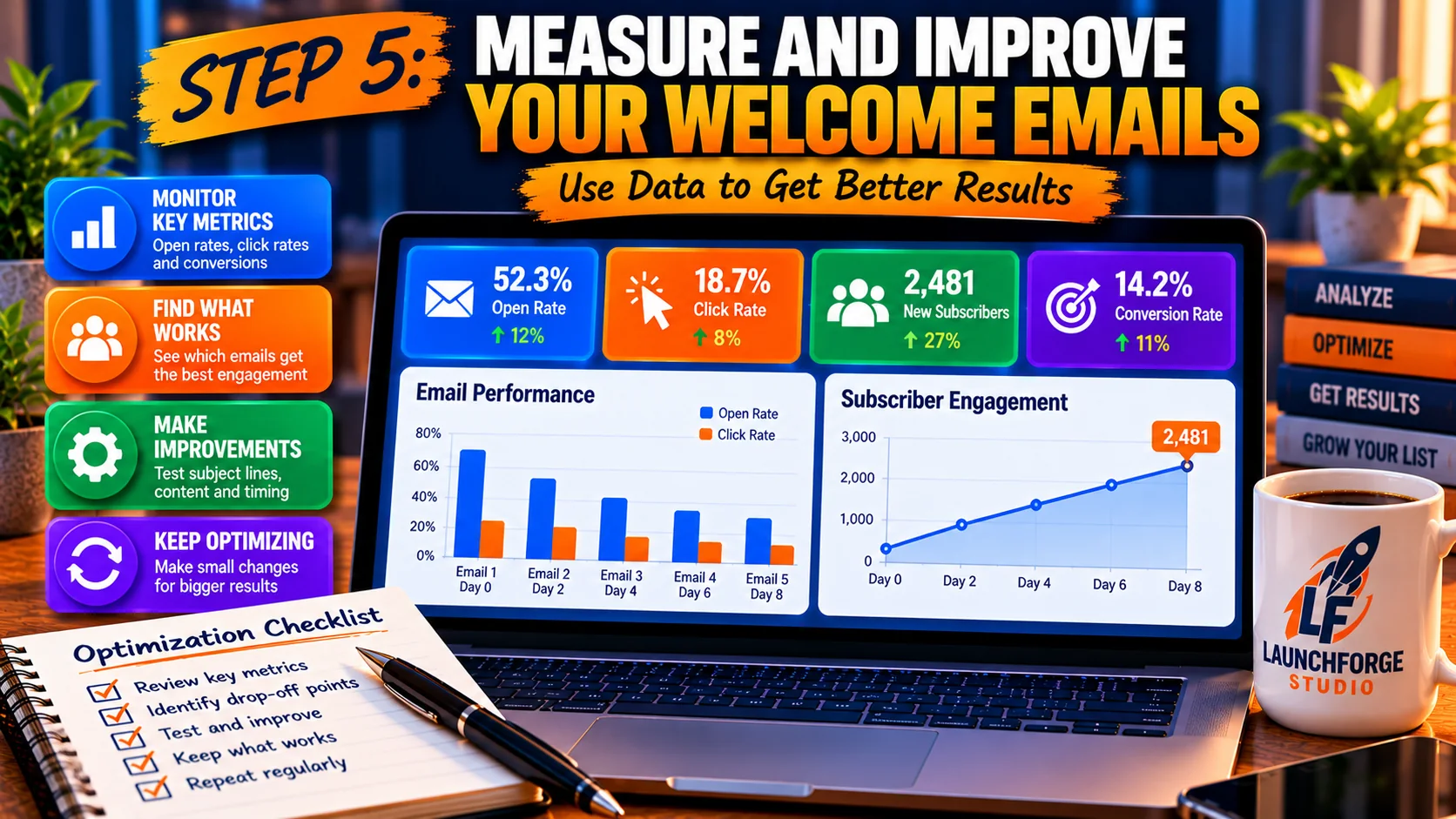
Monitor subscriber engagement, identify opportunities for improvement, and refine your welcome email sequence using meaningful performance data.
Once your welcome email sequence is running, how do you know whether it’s working?
The answer isn’t simply counting how many emails you’ve sent.
The real goal is understanding whether subscribers are receiving useful information and taking meaningful next steps.
Most email marketing platforms provide basic performance reports to help you evaluate your sequence.
Monitor the Metrics That Matter
Start with these measurements:
Delivery and Bounce Rates: Check whether your messages are reaching subscribers. High bounce rates may indicate outdated addresses, signup quality problems, or technical delivery issues.
Click-Through Rates: Track how often subscribers click your resource links or calls to action. This can help identify which topics and recommendations generate interest.
Unsubscribe Rates: Watch for unusual increases after particular messages. These may suggest that your content, frequency, or expectations need adjusting.
Conversions: Depending on your goal, a conversion might mean downloading a resource, completing a tutorial, registering for a webinar, or making a purchase.
Open Rates: These can provide directional information, but they’re not completely reliable. Email privacy features and automated image loading can inflate or distort reported opens.
Don’t evaluate your entire sequence using one metric.
For example, an email might generate relatively few clicks because its primary purpose is delivering an important explanation rather than sending readers to another page.
Identify Where Subscribers Lose Interest
Compare the performance of individual emails.
Does your first message generate engagement while later emails receive fewer clicks?
Does one particular message produce an unusual number of unsubscribes?
Are subscribers clicking your educational resources but ignoring unrelated offers?
Look for patterns rather than drawing conclusions from a handful of responses.
If your list is small, give yourself time to collect enough information before making major changes.
Make One Improvement at a Time
You don’t need to rebuild your entire welcome sequence whenever performance changes.
Start with manageable adjustments.
You might:
- Rewrite an unclear subject line.
- Simplify an email that’s difficult to scan.
- Replace an outdated resource link.
- Make the primary call to action more visible.
- Adjust the time between messages.
- Improve the relevance of a recommended article.
Whenever possible, change one meaningful element at a time so you can better understand its effect.
Remember that a welcome email sequence is something you improve through experience, not something you must perfect before launching.
Focus on delivering useful information, respecting subscriber expectations, and making thoughtful adjustments as you learn.
Common Welcome Email Mistakes to Avoid
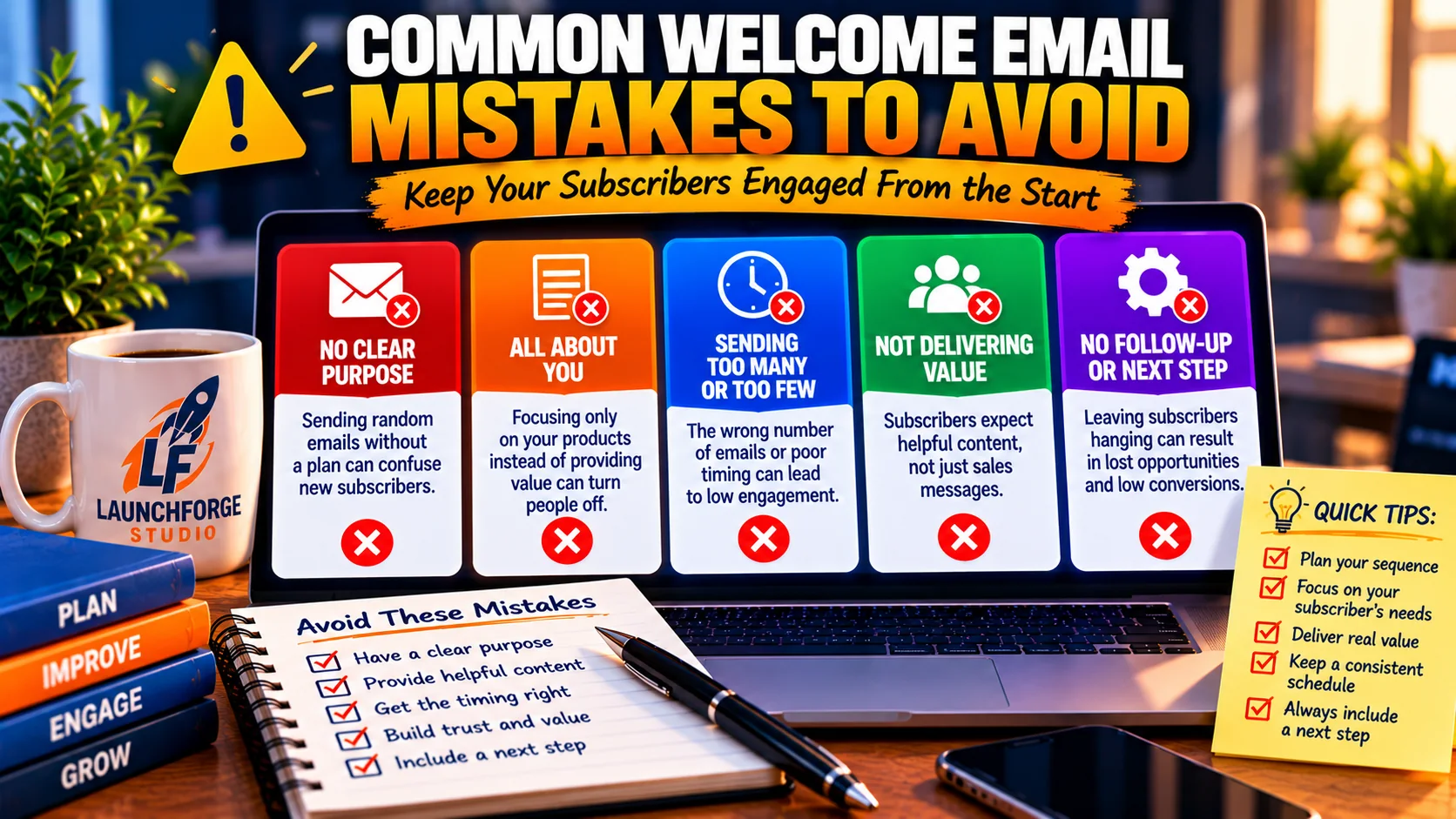
Avoid common welcome email mistakes by focusing on subscriber needs, delivering genuine value, and maintaining a clear communication strategy.
Even a well-planned welcome email sequence can lose its effectiveness when small mistakes create confusion or frustration for new subscribers.
Fortunately, most of these problems are easy to prevent.
Here are some common mistakes to watch for.
1. Failing to Deliver What You Promised
If someone subscribes to receive a free guide, checklist, or other resource, make sure they can access it.
Don’t bury the download link beneath a lengthy introduction or redirect subscribers through unnecessary steps.
Deliver the promised resource promptly and make it easy to find.
2. Trying to Sell Too Much, Too Soon
New subscribers may still be learning who you are and whether your information is relevant to them.
Immediately filling their inbox with aggressive sales messages can undermine the expectations established during signup.
There’s nothing wrong with introducing a relevant product or service, but recommendations should fit naturally into the subscriber’s experience.
Provide value before expecting someone to make a buying decision.
3. Sending Too Many Emails Too Quickly
Enthusiasm is great, but subscribers may not appreciate receiving several introductory messages in a single day.
Choose a reasonable schedule and consider any newsletters or promotional campaigns they might also receive.
Respect the frequency you communicated when they subscribed.
4. Making Every Email About Your Business
Your story and mission can help subscribers understand your brand, but readers also want to know how your information benefits them.
Instead of focusing entirely on what your business offers, explain how your resources can help solve problems or answer questions.
Make the subscriber’s needs the center of the conversation.
5. Using Misleading Subject Lines
A dramatic subject line might attract attention, but it should accurately represent the email’s content.
Avoid false urgency, exaggerated earnings claims, and promises your message cannot support.
Building long-term trust is more valuable than generating a click through misleading expectations.
6. Forgetting Mobile Readers
Many subscribers will read your emails on smartphones.
Use short paragraphs, readable formatting, descriptive links, and clear calls to action.
Before activating your sequence, test how messages appear on both desktop and mobile devices.
7. Ignoring Unsubscribes and Subscriber Preferences
Make it easy for people to stop receiving messages when they no longer want them.
Follow applicable email marketing laws, honor unsubscribe requests, and avoid automatically adding people to unrelated promotional lists without appropriate consent.
A smaller list of genuinely interested subscribers is more useful than a larger list of people who never wanted your emails.
8. Never Reviewing Your Automation
An automated sequence can continue running long after you’ve forgotten what it contains.
Over time, links may break, articles may change, and recommended tools may become outdated.
Schedule occasional reviews to keep your information accurate and useful.
A successful welcome email sequence isn’t about sending perfect emails. It’s about consistently delivering a helpful experience that matches what subscribers expected when they joined.
Your Welcome Email Sequence Checklist
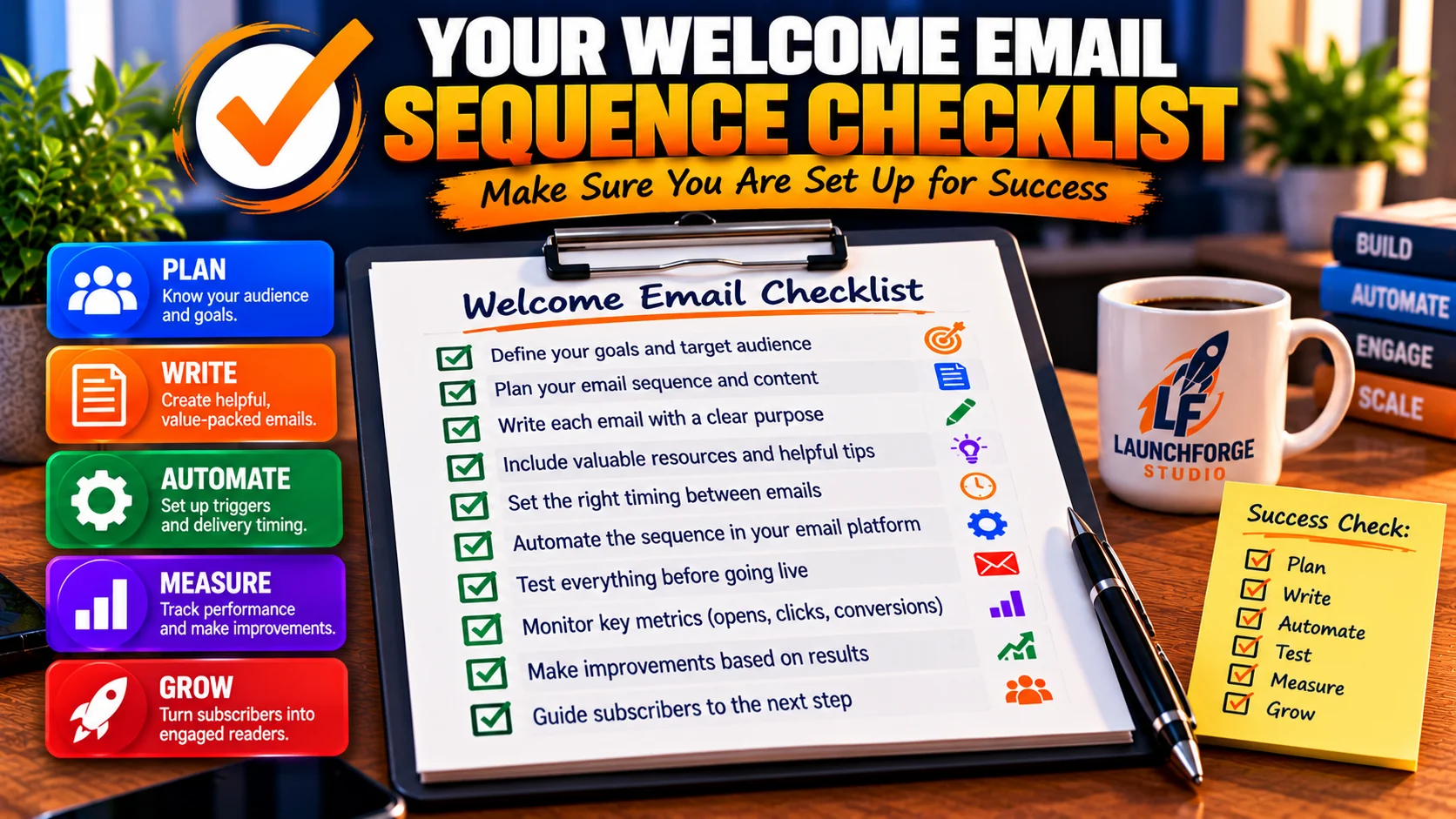
Use this welcome email sequence checklist to organize your content, verify automation settings, and prepare your emails before launching.
Before activating your welcome email sequence, take a few minutes to review the following areas. This simple checklist will help you catch potential problems before your first subscribers begin receiving automated messages.
Planning and Content
1. Confirm Your Signup Promise
Make sure your welcome sequence delivers exactly what subscribers expected when they joined your email list.
2. Establish a Clear Goal
Identify what you want subscribers to learn, understand, or accomplish during the sequence.
3. Choose the Right Number of Emails
Start with a manageable sequence of three to five messages, depending on your audience and available content.
4. Give Every Email a Purpose
Each message should provide something useful without unnecessarily repeating information from previous emails.
5. Review Your Subject Lines
Use clear, relevant subject lines that accurately represent the information inside each message.
6. Include a Clear Call to Action
Help subscribers understand the next step, whether that’s downloading a resource, reading an article, or exploring a relevant solution.
Automation and Delivery
7. Verify Your Signup Form
Confirm that new subscribers are added to the correct email list, group, or automation.
8. Check Your Automation Trigger
Make sure the welcome sequence begins at the appropriate point in the subscription process.
9. Review Your Delivery Schedule
Verify that your emails are spaced appropriately and won’t unnecessarily overlap with other campaigns.
10. Test Every Link
Check download links, educational resources, and calls to action to make sure they lead to the correct destinations.
11. Preview Your Emails on Mobile Devices
Ensure your messages are readable, properly formatted, and easy to navigate on smaller screens.
12. Confirm Subscriber Preferences and Unsubscribe Options
Make sure your email practices respect subscriber consent, provide required unsubscribe options, and honor unsubscribe requests.
For businesses sending commercial emails in the United States, the Federal Trade Commission provides a CAN-SPAM Act compliance guide covering sender identification, accurate subject lines, unsubscribe requirements, and other important responsibilities.
13. Test the Complete Sequence
Use a test email address to verify that your automation sends the correct messages in the intended order.
Monitoring and Improvement
14. Review Subscriber Engagement
Monitor delivery, clicks, unsubscribes, and relevant conversions to understand how your sequence performs.
15. Identify Opportunities for Improvement
Look for messages that could benefit from clearer writing, more relevant resources, or improved calls to action.
16. Keep Your Content Updated
Periodically review your sequence to replace outdated information, repair broken links, and ensure recommended resources remain available.
A Final Reminder Before You Launch
You don’t need an elaborate email marketing system to get started.
A simple, properly tested welcome sequence that delivers useful information can provide an excellent foundation for building relationships with new subscribers.
Start with what you can manage, focus on providing genuine value, and improve your emails as your business develops.
Conclusion: Start Simple and Build Trust
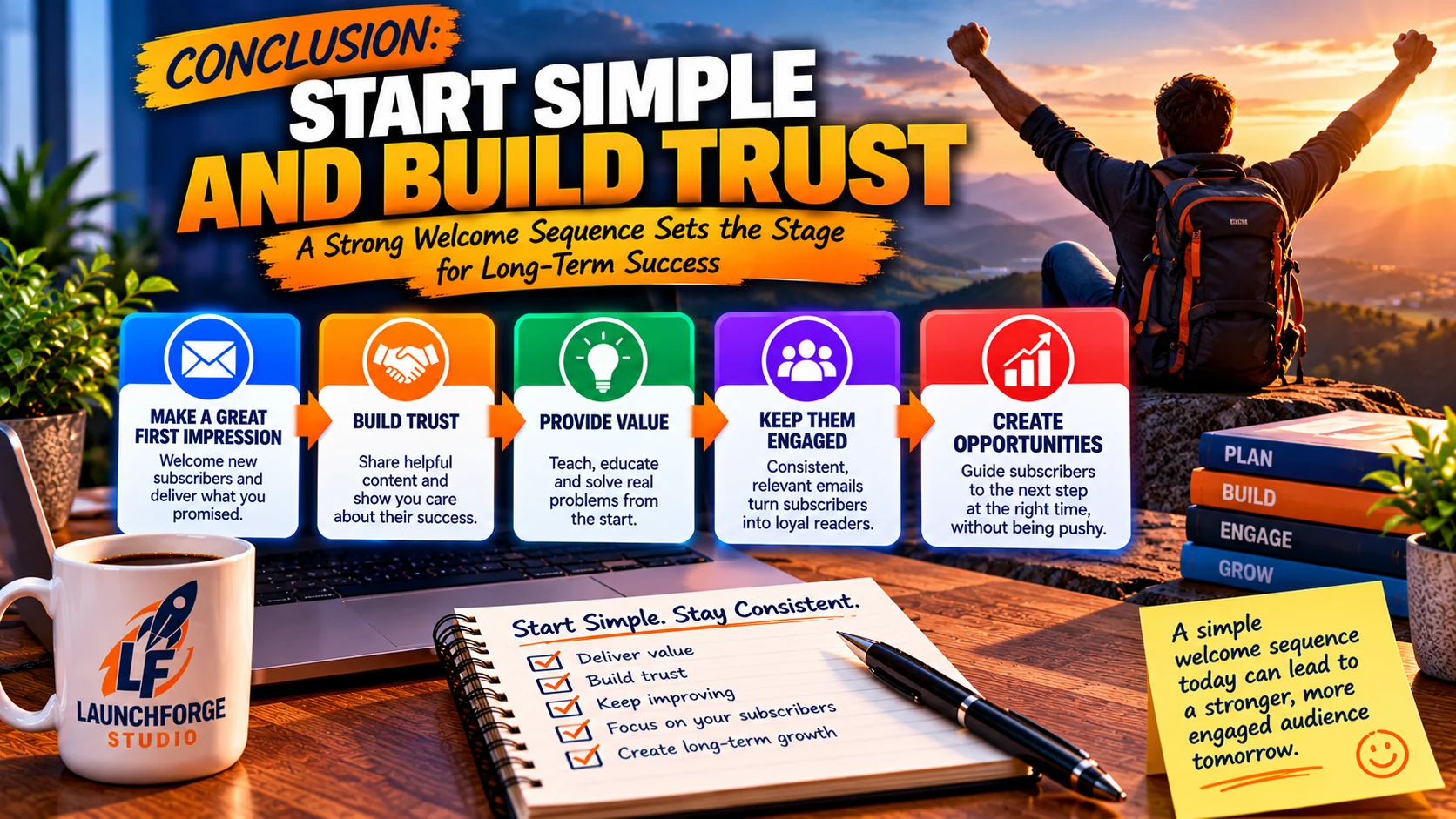
A successful welcome email sequence starts with genuine value, builds subscriber trust, and creates opportunities for lasting relationships.
Creating a welcome email sequence doesn’t have to be complicated.
You don’t need expensive software, advanced technical skills, or dozens of automated messages to make a positive first impression.
What you need is a clear purpose, a thoughtful plan, and a genuine commitment to helping the people who join your email list.
Throughout this guide, we’ve explored how to welcome new subscribers, deliver promised resources, introduce your business, share valuable information, and guide readers toward relevant next steps.
We’ve also covered how to organize your messages, automate delivery, and measure results so you can continue improving your approach.
But there’s one important principle worth remembering:
Your welcome email sequence should serve your subscribers before it serves your sales goals.
When someone gives you their email address, they’re placing a certain amount of trust in your business.
They expect you to respect their time, deliver what you promised, and communicate in a way that reflects their interests.
Every message you send is an opportunity to reinforce that trust.
Your Next Step Starts Today
If you haven’t created your first welcome email sequence yet, don’t worry about building the perfect system.
Start with three simple emails.
Welcome your subscribers and deliver their requested resource.
Introduce yourself and share something helpful.
Then guide them toward one relevant next step.
Once those messages are working, you can expand your sequence, introduce additional educational content, and make improvements based on subscriber feedback.
Remember, successful email marketing isn’t about sending more messages. It’s about sending messages that matter.
Start simple, stay consistent, and give your subscribers a reason to look forward to hearing from you.
Your first welcome email could be the beginning of a valuable, long-term relationship.