You’ve compared the features. You’ve checked the pricing. You’ve probably visited the sales page more than once.
Everything looks promising. The platform appears to offer what you need, the price seems reasonable, and you can picture yourself finally putting those tools to work.
So why haven’t you clicked the Buy button?
Maybe you’re worried about wasting money. Maybe you’ve purchased tools before that sounded fantastic but ended up collecting digital dust. Or perhaps you’re wondering whether this is genuinely the right online business platform for your goals.
Those concerns deserve more than another promotional pitch.
Buying an online business platform isn’t simply about purchasing software. You’re choosing the environment where you’ll build your website, develop your marketing systems, capture leads, and potentially spend months or years growing something meaningful.
A good decision starts with understanding what you’re buying, what it can realistically do, and what responsibilities remain yours.
In this guide, we’ll walk through 10 practical questions to ask before making that purchase. We’ll look at pricing, features, support, limitations, long-term flexibility, and whether you’re ready to use the platform effectively.
By the end, you should have a clearer answer to one important question:
Should you buy now, wait until you’re better prepared, or choose something different?
The goal isn’t to convince you to spend money. It’s to help you make a decision you can stand behind.
Because the right investment isn’t necessarily the one with the most impressive sales page.
It’s the one that fits your business, your budget, and your willingness to put in the work.
Why Choosing the Right Online Business Platform Matters
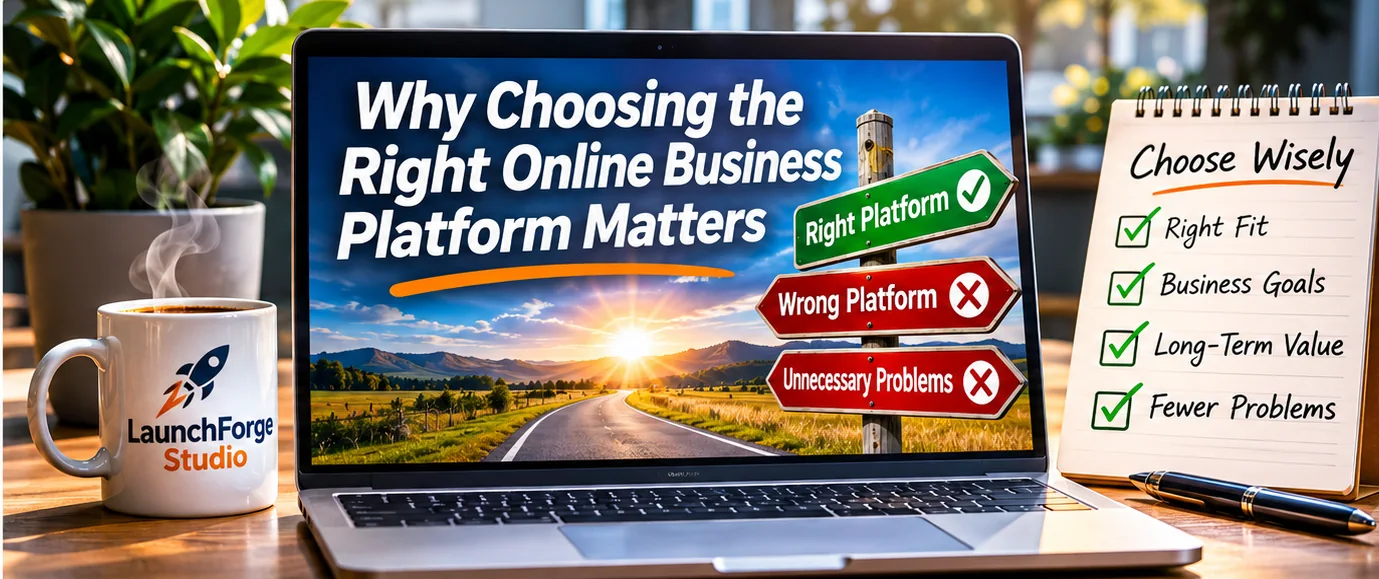
Choosing the right online business platform starts with matching its features and costs to your business goals.
Choosing an online business platform is about more than finding software with an attractive price or an impressive list of features.
It’s about finding a foundation that supports what you’re trying to build.
When you’re close to purchasing, it’s easy to focus on what the platform promises. You see website builders, sales funnels, email marketing tools, automation features, and perhaps an entire collection of business resources packaged together.
That can sound exciting, especially when you’re eager to get started.
But before making the investment, there’s an important distinction to understand:
A platform can provide the tools to build your business, but it cannot build the business for you.
The value comes from how well those tools fit your goals and how consistently you’re prepared to use them.
The Wrong Platform Can Create Unnecessary Problems
Imagine purchasing a platform because it offers dozens of marketing features, only to discover that your immediate goal is simply to create a professional website and publish helpful content.
You may end up paying for capabilities you won’t use for months.
Or consider the opposite situation.
You choose an inexpensive website builder because it seems sufficient today. Six months later, you want to capture leads, build sales funnels, and automate customer follow-up. Suddenly, you’re researching additional subscriptions and figuring out how to connect everything.
Neither situation automatically means you made a terrible decision.
It means your original purchase may not have matched your business requirements.
That’s why it’s worth examining both what you need now and what you’re reasonably likely to need as your business develops.
The objective isn’t to predict every future challenge. It’s to avoid obvious mismatches before spending your money.
The Right Platform Should Support Your Business Model
Different online businesses have different technical requirements.
A content-focused affiliate website may prioritize WordPress, publishing tools, search engine optimization, and email capture.
Someone selling digital products might need landing pages, checkout functionality, payment integrations, and automated product delivery.
A service-based business may care more about appointment scheduling, contact management, lead forms, and customer communication.
And an entrepreneur building a more comprehensive marketing operation may benefit from having several of those capabilities available within one connected system.
The best online business platform isn’t necessarily the one with the most features. It’s the one that helps you accomplish the work your business actually requires.
Before purchasing, you should be able to explain how the platform will fit into your day-to-day activities.
If you can’t identify what you’ll use it for, that may be a reason to investigate further before buying.
Your Time Is Part of the Investment
The purchase price is only one part of the decision.
Every new platform requires some combination of setup, learning, customization, and ongoing maintenance.
Even beginner-friendly software can involve unfamiliar terminology, technical decisions, and occasional frustration.
A platform that costs less but requires extensive troubleshooting may be more expensive in practical terms than one that costs more but fits your workflow.
On the other hand, paying for convenience doesn’t make sense if you aren’t going to use the features you’re purchasing.
Consider how much time you’re willing to devote to learning the system and whether its documentation, training, and support resources match your experience level.
You don’t need to become a technical expert overnight.
But you should understand that building an online business requires more than activating a subscription.
Confidence Comes From Clarity, Not Guarantees
When you’re considering a significant purchase, you may be searching for certainty.
You want to know that the platform will work, that you won’t regret spending the money, and that your business will move forward.
Those are understandable concerns.
But no legitimate online business platform can guarantee that your website will attract visitors, your offers will convert, or your marketing efforts will produce income.
Results depend on many factors, including your audience, offer, execution, competition, and willingness to improve over time.
What you can evaluate is whether the platform provides suitable tools, whether the costs are manageable, and whether you have a realistic plan for using it.
That’s a much stronger foundation for a purchasing decision than excitement alone.
You don’t need absolute certainty before taking action. You need enough reliable information to make a thoughtful decision.
And that’s where our first question begins.
Question 1: What Am I Actually Trying to Build?
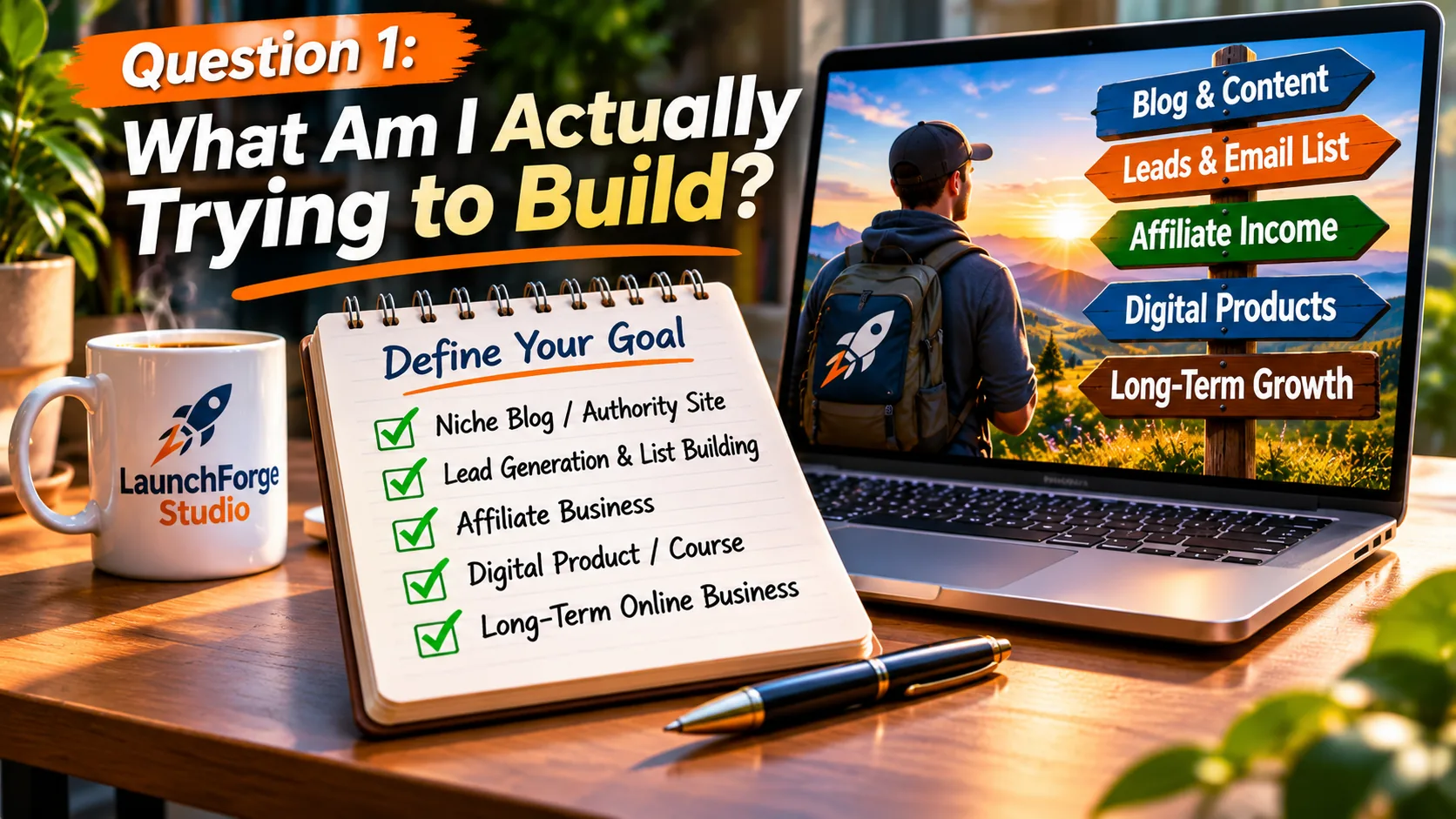
Choose your business direction first, then select the online business platform that supports your goals.
Before purchasing an online business platform, ask yourself a question that sounds simple but can save you considerable time, money, and frustration:
What exactly am I trying to build?
Not what the platform promises you could build someday.
Not what another entrepreneur is building.
And certainly not what a promotional video suggests you should want.
What do you want to create?
Your answer matters because different business models require different tools. A platform that makes perfect sense for one entrepreneur may be unnecessarily complicated or completely unsuitable for another.
If you’re close to making a purchase but still feel uncertain, defining your business goal is one of the fastest ways to determine whether you’re making a practical investment or simply responding to an appealing offer.
Identify Your Primary Business Model
Start by identifying how you intend to provide value and eventually generate revenue.
You don’t need a perfect five-year business plan, but you should understand the basic direction of your business.
For example, you might want to build:
- An affiliate marketing website: Publish helpful content, recommend relevant products, and earn commissions when eligible purchases occur through your referral links.
- A digital product business: Create and sell resources such as downloadable guides, templates, training materials, or online courses.
- A service-based business: Offer consulting, design, marketing, technical assistance, or another service that solves a specific customer problem.
- A content-driven business: Build an audience through educational articles, tutorials, newsletters, or other useful resources before developing suitable offers.
- An online store: Sell physical products through an ecommerce website with appropriate checkout, payment, and order-management capabilities.
These models can overlap.
An affiliate marketer might also sell digital products. A service provider may publish educational content to attract potential clients. A content creator might eventually introduce consulting or training.
That’s perfectly reasonable.
However, your first purchasing decision should support your primary business model rather than every possibility you can imagine.
Trying to prepare for everything at once can lead to unnecessary expenses and an overwhelming collection of features.
Separate What You Need Now From What You Might Need Later
Once you’ve identified your business model, think about what you’ll actually need to accomplish during your first few months.
Suppose you’re planning to launch an affiliate marketing website.
Your immediate priorities might include choosing a niche, building a website, publishing useful articles, and creating a way for interested visitors to subscribe.
You may eventually want sales funnels, automation, advanced analytics, and multiple marketing campaigns.
But those capabilities probably won’t all be equally important on your first day.
The goal is to separate essential features from potential future upgrades.
A helpful way to evaluate this is to create three simple categories:
Must Have: Features required to launch and operate your business.
Nice to Have: Features that could save time or improve your workflow but aren’t essential yet.
Maybe Later: Features that sound useful but don’t currently have a defined purpose in your business.
This exercise makes comparisons easier because you’re no longer evaluating platforms solely by the number of tools they advertise.
You’re evaluating whether those tools solve problems you actually have.
Think About Your First Meaningful Milestone
One of the most effective ways to clarify your purchase is to identify what you want to accomplish within the first 30 days.
Notice that we’re talking about a practical milestone, not an income promise.
Your goal might be to:
- Publish a professional website with your essential pages.
- Create your first five genuinely useful articles.
- Build a landing page for a free resource.
- Connect an email subscription form to a follow-up system.
- Publish a product or service page and test its functionality.
- Establish a clear process for promoting your content.
Choose one meaningful outcome that demonstrates progress.
Then ask whether the platform you’re considering will help you achieve it.
If the answer is yes, you have a practical reason to consider purchasing.
If you’re struggling to identify what you’ll accomplish after signing up, you may need to develop your plan before committing money.
Don’t Confuse Buying a Platform With Starting a Business
This is an important distinction, especially for beginners.
Purchasing software can feel like progress.
You create an account, receive access to a dashboard, explore the available tools, and imagine everything you’re going to accomplish.
Those experiences can be exciting.
But purchasing access isn’t the same as creating something valuable for an audience.
Your business begins taking shape when you research real customer needs, develop useful resources, build your online presence, test your ideas, and improve your approach.
The platform supports those activities.
It doesn’t replace them.
That’s why I encourage you to think about your first project before selecting the software that will support it.
A clear business direction makes a platform easier to evaluate, easier to learn, and easier to use with purpose.
Your Decision Checkpoint: Can You Explain Your Plan?
Before moving to the next question, complete this sentence:
“I’m considering purchasing this online business platform because I want to build ________, and I need it to help me accomplish ________.”
For example:
“I’m considering purchasing this platform because I want to build an educational affiliate website, and I need it to help me publish content, create landing pages, and connect with interested readers.”
That statement gives you something concrete to measure against the platform’s features and pricing.
If you can complete it confidently, you’re ready to examine whether the platform actually provides what you need.
If you can’t, don’t interpret that uncertainty as failure.
Treat it as useful information.
You may need to explore your business idea further before buying.
The goal isn’t to purchase a platform as quickly as possible. It’s to purchase one for a reason you understand.
Now that you’ve clarified what you’re building, the next question is whether the features you’re paying for actually support that plan.
Question 2: Does This Online Business Platform Have the Features I Actually Need?
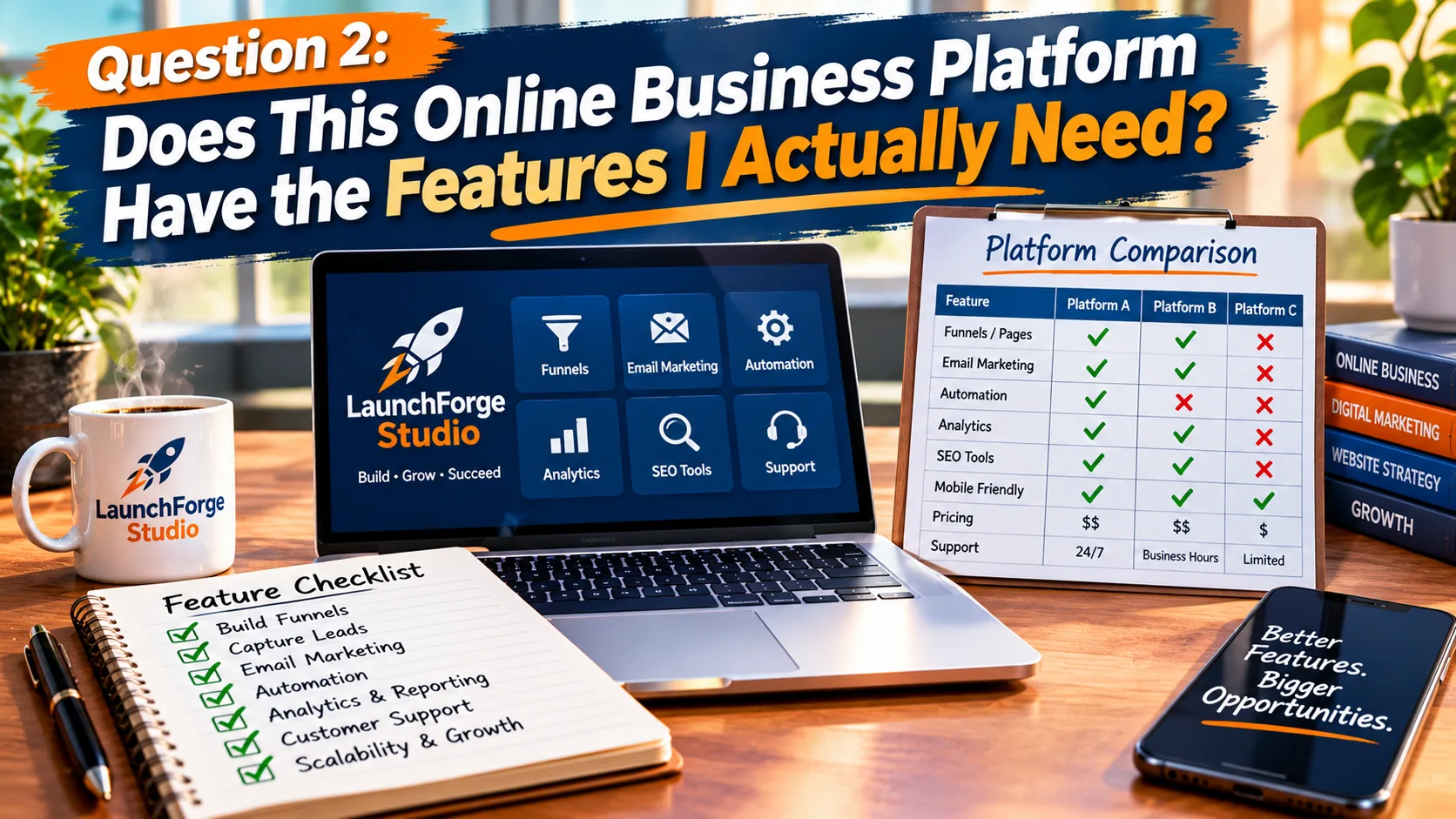
Compare the features of an online business platform against your actual business goals before making a purchase.
You’ve identified what you want to build. You have a general direction, a business model, and hopefully a realistic first milestone.
Now comes the next purchasing question:
Does the online business platform you’re considering actually provide the tools required to execute that plan?
It sounds obvious, but this is where an attractive sales presentation can distract you from your priorities.
A platform might advertise website builders, sales funnels, email marketing, automation, customer management, analytics, training resources, and dozens of additional capabilities.
That’s impressive on paper.
But a lengthy feature list doesn’t automatically make a platform the right choice for your business.
What matters is whether those features work together in a way that supports your specific goals, experience level, and preferred workflow.
Start With the Features Your Business Cannot Operate Without
Think back to the business model you identified in Question 1.
What capabilities must be available for you to complete your first meaningful project?
If you’re building an educational website, for example, you may need a content management system, page-building tools, mobile-friendly layouts, and the ability to organize articles into useful categories.
If you’re planning to capture leads, you’ll need forms or landing pages, a place to manage subscriber information, and a practical method of following up.
If you’re selling products, you’ll need a reliable way to present offers, accept payments, deliver purchases, and communicate with customers.
These requirements should determine which features deserve your attention.
A platform that provides your essential tools in a usable environment may offer more practical value than one with an enormous feature collection that doesn’t fit your business model.
The question isn’t how many features the platform includes. It’s whether you can use the important ones to accomplish meaningful work.
Find Out What’s Included and What’s an Additional Purchase
One of the easiest mistakes to make when evaluating an online business platform is assuming every feature shown in a promotional presentation is included in the advertised price.
That isn’t always the case.
Some platforms offer multiple membership levels. Others provide core software but require separate purchases for advanced capabilities, premium templates, third-party integrations, or higher usage limits.
Before purchasing, investigate exactly what your selected plan includes.
Pay particular attention to:
- Website and page-building tools: Are they included in your membership, or do they require separate licenses?
- Hosting: Does the platform provide hosting, or must you purchase and manage it elsewhere?
- Sales funnels: Can you create the funnels you need with your selected membership?
- Email marketing: Is an email service included, or will you need an outside provider?
- Automation: Which functions are available in your plan, and which require an upgrade?
- Templates: Are the designs ready to use, and are there restrictions on customization or licensing?
- Usage limits: Are there restrictions involving websites, contacts, emails, storage, products, or other resources?
Don’t assume that two membership levels provide the same functionality simply because they belong to the same platform.
And don’t assume a product demonstration represents the capabilities available at the lowest advertised price.
Verify the specific plan you’re considering, not merely the platform’s overall marketing claims.
That distinction can prevent disappointing surprises after checkout.
Understand the Difference Between Built-In Tools and Integrations
When a platform advertises an all-in-one business solution, it’s worth investigating how its different capabilities actually work.
Some functions may operate within one dashboard.
Others may be supplied through connected services, separate applications, third-party plugins, or independent accounts.
That arrangement isn’t automatically a disadvantage.
In fact, integrations can be valuable because they allow you to use specialized tools that fit your workflow.
However, they may also introduce additional costs, setup requirements, and technical dependencies.
For example, a website platform might make it easy to install a lead-capture form, but that doesn’t necessarily mean it includes a complete email marketing service.
Similarly, a sales funnel builder may connect to payment processors without providing payment processing itself.
Before buying, ask yourself:
Which features are included directly, which depend on external services, and what will I need to configure before everything works?
The clearer that distinction becomes, the easier it is to estimate both the cost and effort involved.
Evaluate How Easily You Can Use the Features
A tool is only valuable when you can put it to work.
You might discover a platform with everything you need, but the actual workflow may be more complicated than expected.
That’s why demonstrations, tutorials, documentation, and available trials can be so helpful.
Rather than watching only a promotional overview, look for examples of someone completing the kind of task you intend to perform.
If your goal is to build a website, watch how pages are created, edited, and published.
If you want to develop a lead-generation funnel, examine how the landing page, form, confirmation page, and follow-up process connect.
If automation matters to your business, investigate what triggers are supported, how actions are configured, and whether the process is manageable at your experience level.
You’re not necessarily looking for software that requires no learning.
You’re looking for a system whose learning requirements make sense for the results you want to achieve.
A powerful feature that you’re unlikely to understand or use may provide less value than a simpler feature you can implement consistently.
Consider Whether the Platform Can Grow With You
Your immediate priorities should lead the purchasing decision, but future requirements still deserve some consideration.
A platform that meets your needs today may become restrictive as your business evolves.
Perhaps you eventually want to introduce paid products, connect an email marketing system, build additional landing pages, or experiment with a new traffic strategy.
It helps to know whether your platform can support those developments.
At the same time, you don’t need to purchase every advanced feature before you’ve launched your first project.
Look for a reasonable balance.
Ideally, the platform should help you start without unnecessary complexity while leaving room to expand when your actual business needs justify it.
Consider what upgrades are available, whether third-party integrations are supported, and how difficult it would be to move your website or business data if your needs change.
A platform doesn’t have to provide everything.
It should provide enough flexibility that you’re not forced into an avoidable rebuild simply because your business has progressed.
Your Decision Checkpoint: Build a Feature-to-Goal Checklist
Before purchasing, write down your three most important business activities.
For each activity, identify the feature you’ll use to complete it.
For example:
Business activity: Publish helpful educational articles.
Required capability: A website and content management system that supports regular publishing.
Business activity: Collect contact information from interested readers.
Required capability: A lead-capture page or form connected to an appropriate subscriber management system.
Business activity: Follow up with subscribers.
Required capability: An email marketing service or integration that can deliver messages reliably.
Now compare your requirements against the membership you’re considering.
For every necessary capability, determine whether it is included, available through an upgrade, requires an outside service, or is unavailable.
If the essential features are present and the workflow seems manageable, that’s a meaningful reason to move forward.
If important capabilities are missing or unexpectedly expensive, investigate alternatives before purchasing.
And if the platform provides far more than you need, ask whether the additional convenience justifies the price.
The right purchase is the one that gives you access to useful capabilities—not simply the longest list of possibilities.
Once you’re confident the platform can support your goals, it’s time to examine something just as important:
What will owning and using it actually cost?
Question 3: What Is the True Cost of This Online Business Platform?
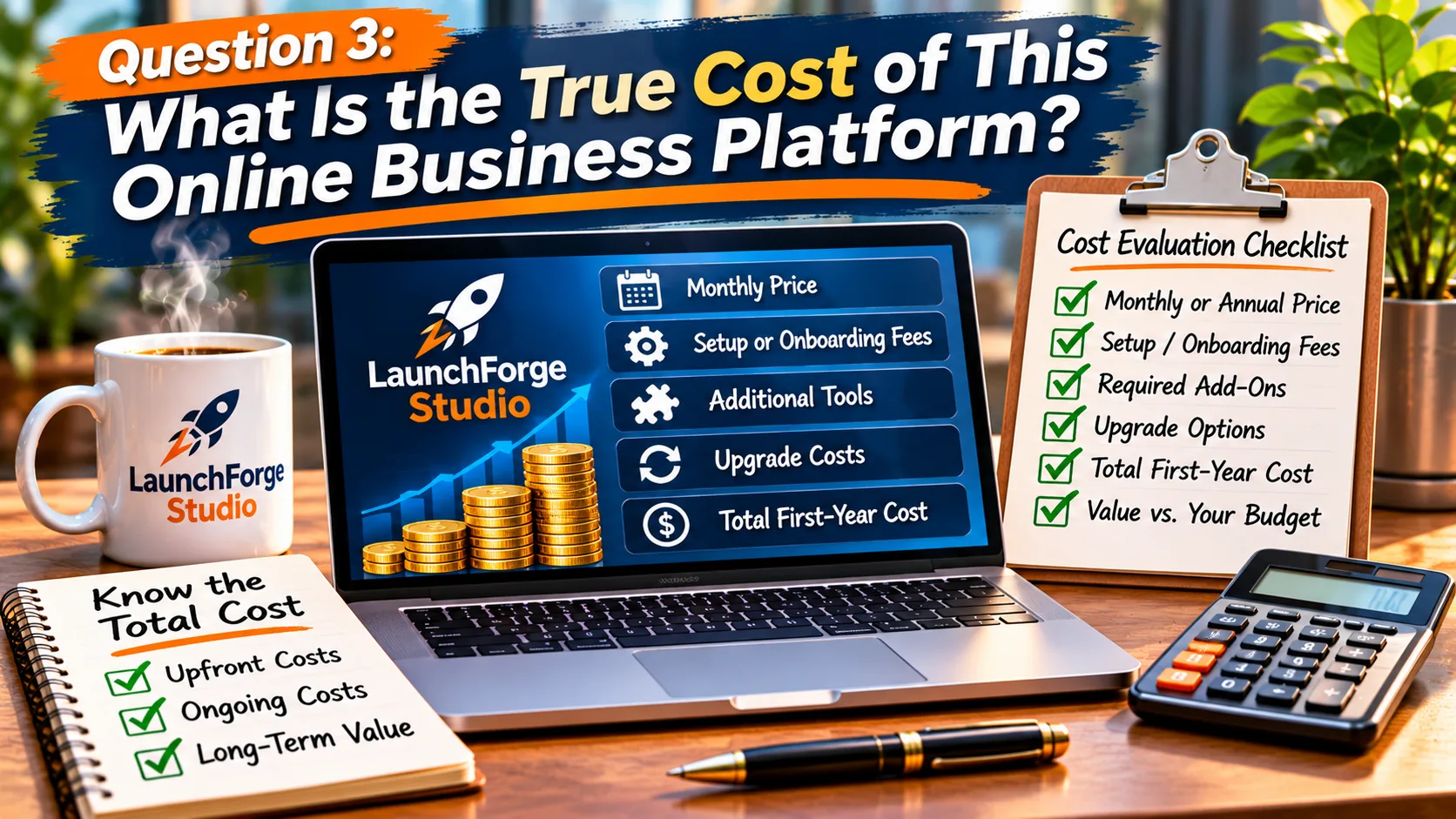
Look beyond the advertised price and calculate the complete cost of an online business platform before purchasing.
You’ve found an online business platform that appears to fit your goals. It includes the tools you need, the features look useful, and you’re starting to picture how everything could work together.
Then you see the price.
Maybe it’s $19.95 per month. Maybe it’s $49 per month. Perhaps there’s a discounted introductory offer or a one-time payment that seems almost too good to pass up.
At first glance, the investment looks manageable.
But before reaching for your credit card, there’s another question worth asking:
What will this platform actually cost me to set up, operate, and maintain?
The advertised price is an important starting point. It isn’t always the complete picture.
Understanding the total cost can help you avoid unexpected expenses, choose an appropriate membership level, and make a purchasing decision that fits your financial situation.
Look Beyond the Advertised Monthly Price
Many online business platforms offer multiple pricing structures.
Some charge monthly or annual subscriptions. Others require a one-time purchase, an activation fee, or an initial licensing payment.
Certain platforms combine these approaches.
For example, you might encounter an offer with a relatively low monthly membership fee but an additional upfront charge to activate specific tools or services.
That doesn’t automatically make the offer unreasonable.
What matters is whether those charges are clearly disclosed and whether the total investment makes sense for your needs.
Before buying, confirm the following:
- Initial payment: How much must you pay today to activate the membership?
- Recurring charges: What amount will be billed monthly or annually?
- Setup or licensing fees: Are there separate charges beyond the advertised subscription?
- Renewal pricing: Will the price change after an introductory promotion?
- Upgrade costs: Which features require a higher membership level?
- Cancellation terms: What happens if you decide the platform isn’t right for you?
- Refund policy: Are refunds available, and what conditions or deadlines apply?
The goal isn’t to find a platform with no expenses.
It’s to understand exactly what you’re agreeing to purchase.
A transparent price isn’t necessarily a low price. It’s a price you understand before committing.
Calculate Your First-Year Cost
One useful way to compare platforms is to calculate their expected cost over the first 12 months.
This helps you look beyond attractive introductory pricing.
Consider a hypothetical platform with a $99 setup fee and a $29 monthly subscription.
The calculation would be:
$99 upfront + ($29 × 12 months) = $447 for the first year.
Now consider another hypothetical platform that costs $39 per month with no setup fee.
Its first-year cost would be:
$39 × 12 months = $468.
The second option has no upfront charge, but the first option costs slightly less over a full year.
That doesn’t automatically make either platform the better choice.
You still need to compare features, support, limitations, and the value each provides.
But calculating the annual cost gives you a clearer financial picture.
If a platform offers annual billing discounts, compare those as well. Just remember that paying annually may require a larger immediate commitment and could involve different cancellation or refund terms.
A lower monthly payment isn’t always the lowest total cost, and the lowest total cost isn’t always the best value.
Identify the Additional Tools You May Need
Here’s where the purchasing decision becomes especially important.
Some online business platforms provide a website-building environment but rely on outside services for other business functions.
Depending on your goals, you might also need:
- A domain name and its annual renewal.
- Email marketing or autoresponder services.
- Payment processing for products or services.
- Premium plugins, extensions, or software licenses.
- Additional hosting, storage, or security services.
- Analytics, tracking, or conversion tools.
- Advertising or paid traffic.
- Design assets or specialized technical assistance.
Not every entrepreneur needs every item on this list.
In fact, purchasing unnecessary subscriptions is one of the easiest ways to complicate a new business.
Your objective should be to identify which outside services are genuinely required and which can wait until your business develops.
Also remember that an integration being available doesn’t necessarily mean the connected service is included in your membership.
If you’re comparing platforms that advertise all-in-one functionality, find out exactly which tools are included and which require separate accounts or subscriptions.
This is particularly important when evaluating the convenience of a connected platform against the flexibility of using several independent services.
Understand the Cost of Features You Won’t Use
A comprehensive platform can be a worthwhile investment when you actively use several of its capabilities.
But more features don’t automatically create more value.
Imagine paying for advanced automation, customer management, product delivery, and multiple funnel-building tools when your only immediate goal is to publish a small educational website.
Those capabilities might become useful later.
Right now, however, you may be funding a collection of possibilities rather than solving your current problems.
The reverse can also happen.
You might purchase an inexpensive basic website package, only to discover that essential lead-generation features require several costly upgrades.
That’s why your decision should focus on the tools you intend to use within a realistic timeframe.
Ask yourself whether the membership provides enough immediate value to justify its cost.
If the answer depends entirely on features you might use someday, a smaller plan or delayed purchase could be more appropriate.
Consider the Financial Commitment Before You Have Revenue
This is especially important if you’re starting your first online business.
You may be enthusiastic about the possibilities, but it’s wise to recognize that a new business might not generate revenue immediately.
Building an audience, publishing useful content, developing offers, and testing marketing strategies all take time.
A monthly subscription continues whether your business earns money that month or not.
Before purchasing, consider whether you can comfortably afford the platform while you’re learning and building.
Think about the next three to six months rather than only today’s payment.
Would the expense still feel manageable if your business hadn’t generated income during that period?
Would you have enough financial flexibility to cover other necessary expenses?
If the answers make you uncomfortable, consider whether a lower-cost membership, a simpler solution, or additional preparation would be the wiser choice.
You should never feel pressured to spend money you cannot reasonably afford simply because someone describes a platform as an opportunity you can’t miss.
A responsible purchasing decision should support your business without creating unnecessary financial strain.
Don’t Confuse Cost With Value
After examining the expenses, it’s tempting to assume the cheapest option must be the smartest choice.
Sometimes it is.
But price and value are not the same thing.
A platform may cost more because it provides tools that would otherwise require several separate subscriptions.
Another may offer excellent value because it supplies exactly what you need without unnecessary extras.
The important question is whether the investment supports your workflow and helps you accomplish your goals.
For example, if one platform allows you to build your website, create lead-capture pages, and manage related marketing functions without purchasing several additional tools, the combined convenience may justify a higher price.
But that value exists only if you genuinely use those capabilities.
Likewise, if your business requires only a few basic functions, paying more for an extensive platform may not provide a meaningful advantage.
The best value is the combination of useful features, manageable costs, and practical benefits for your specific business.
Your Decision Checkpoint: Know Your Real Budget
Before clicking Buy, complete this simple financial review.
1. What will I pay today?
Include setup fees, licensing charges, activation costs, and the first subscription payment.
2. What will I pay over the next 12 months?
Calculate the expected recurring charges and any known renewal costs.
3. What additional services will I need?
Include only the tools and services required for your actual business plan.
4. Can I comfortably afford the investment while I’m still building?
Don’t base your decision on income you haven’t earned.
5. Does the expected value justify the total expense?
Compare what you’ll actually use against what you’re paying.
If you can answer these questions confidently, you’ll have a much clearer understanding of the financial commitment.
If important charges remain unclear, investigate them before purchasing.
And if the total expense is higher than you’re comfortable with, remember that waiting is a legitimate business decision.
You don’t have to purchase today to prove you’re serious about building an online business.
Being serious also means managing your resources wisely.
Once you understand the financial commitment, the next question is whether you have the time, skills, and willingness to put the platform to work.
Question 4: Am I Prepared to Learn and Actually Use This Online Business Platform?
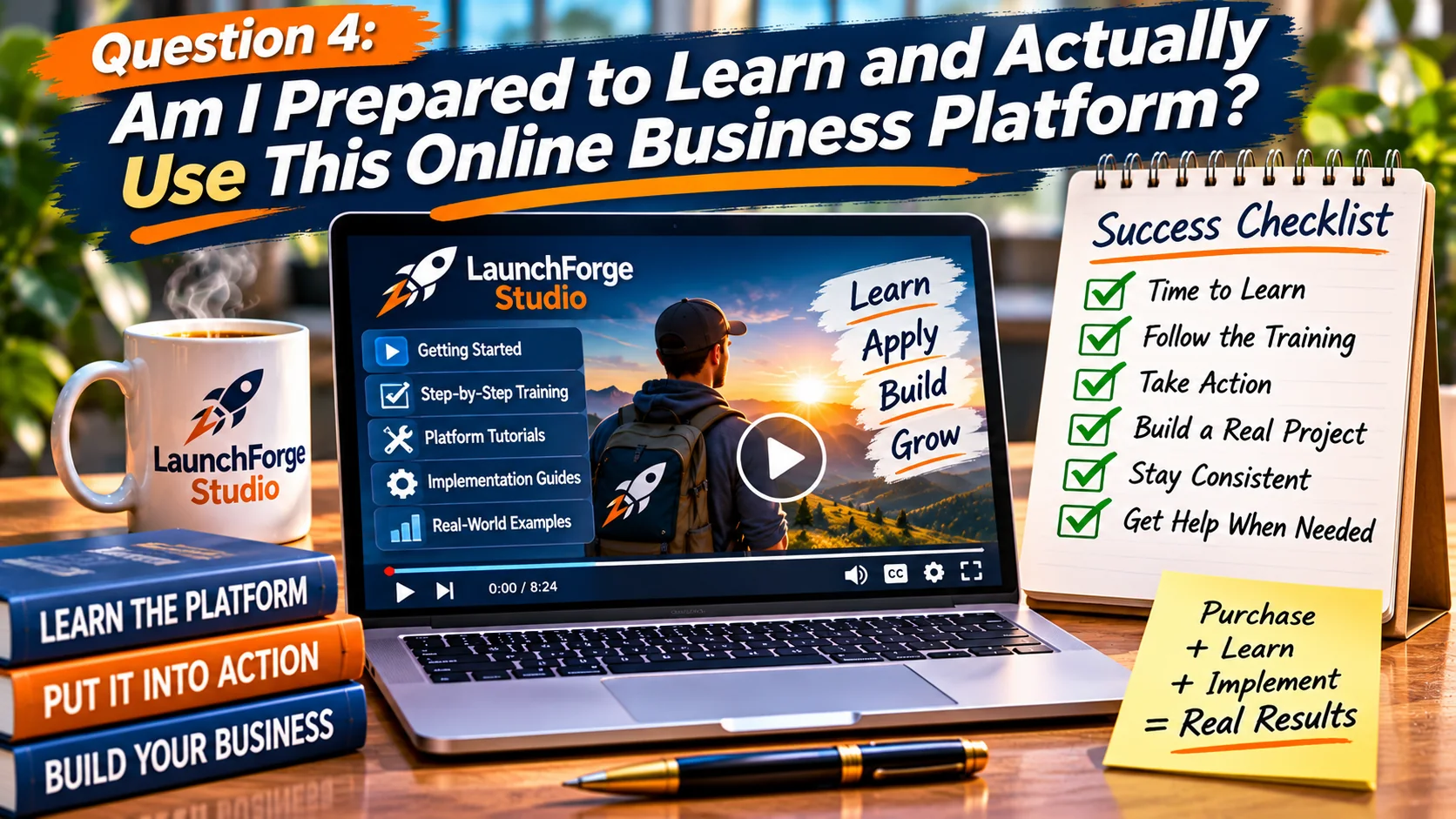
Purchasing an online business platform is only the beginning. Learning the tools and taking consistent action turn preparation into progress.
You’ve identified your business goals, reviewed the available features, and calculated what the platform will cost.
Everything seems to fit.
But there’s still something holding you back.
What if you purchase the platform and discover it’s more complicated than you expected?
That’s a reasonable concern, especially if you’re new to website building, affiliate marketing, sales funnels, or online business technology.
The good news is that you don’t need to know how to use every feature before getting started.
You do, however, need a realistic willingness to learn.
You Don’t Need to Be a Technology Expert
Many beginners assume they must understand website design, automation, email marketing, and online advertising before purchasing a business platform.
That’s rarely necessary.
Most people learn these skills by completing real projects, solving problems, and gradually becoming more comfortable with the tools.
What matters is whether the platform provides a learning environment that matches your abilities.
Before buying, investigate the available training resources.
Look for beginner tutorials, step-by-step instructions, documentation, and demonstrations that show someone completing the tasks you actually want to perform.
If possible, watch a tutorial showing the complete process of creating a website page, publishing content, or building a simple lead-capture form.
A useful platform should make learning possible, even if learning still requires effort.
Be Realistic About Your Available Time
One of the biggest mistakes you can make is purchasing software based on an imaginary schedule.
Perhaps you picture yourself spending four hours every evening building your business.
But your current responsibilities may only leave you with a few hours each week.
There’s nothing wrong with that.
The problem arises when your purchasing expectations don’t match your actual availability.
Before committing, ask yourself how much time you can consistently dedicate to learning and implementing the platform.
You don’t need to work every waking hour.
You need enough time to make meaningful progress.
For example, someone with five available hours per week might focus on completing one important task at a time rather than attempting to learn website design, email automation, and paid advertising simultaneously.
Consistency is more valuable than an ambitious schedule you cannot maintain.
Start With One Useful Project
If you’re worried about feeling overwhelmed, identify the first project you’ll complete after purchasing.
Keep it small and practical.
You might decide to create your homepage, publish your first educational article, or set up a basic email subscription form.
Complete that project before moving to more advanced features.
This approach offers two advantages.
First, it gives you a clear starting point instead of leaving you staring at a dashboard full of unfamiliar options.
Second, each completed project builds experience that makes the next task easier.
You don’t have to master the entire system to begin benefiting from it.
You simply need to start using the tools that matter to your current goal.
Know Where to Get Help When You Need It
Even experienced website owners occasionally run into technical problems.
A plugin may behave unexpectedly. A design setting may create an unwanted layout. An integration might require additional configuration.
These situations are normal parts of working with technology.
Before buying, find out what support is available.
Does the platform offer written documentation, tutorials, community assistance, or direct customer support?
Are some forms of assistance restricted to higher membership levels?
Can you find clear instructions for resolving common issues?
Reliable support doesn’t mean you’ll never experience difficulties.
It means you’ll have somewhere to turn when you do.
And if technical troubleshooting is something you strongly dislike, consider whether the platform’s complexity is appropriate for your needs.
Recognize the Difference Between Hesitation and Unpreparedness
There’s an important distinction between feeling nervous about learning something new and genuinely lacking the resources to begin.
You might feel uncertain because you’re unfamiliar with the software.
That’s normal.
But if you have no available time, cannot afford the membership, or don’t yet know what business you’re trying to build, those concerns deserve more preparation.
Don’t interpret every hesitation as a reason to abandon your plans.
And don’t interpret every hesitation as something you should ignore.
Instead, identify what’s causing it.
If your concern is unfamiliarity, training and practice may solve it. If your concern is a genuine lack of time or resources, waiting may be the wiser decision.
Your Decision Checkpoint: Are You Ready to Take the First Step?
Before purchasing, ask yourself:
- Can I realistically dedicate time to learning the platform?
- Do I know which feature or project I’ll work on first?
- Have I reviewed the available training and support resources?
- Am I willing to troubleshoot, practice, and improve?
- Can I accept that building an online business takes sustained effort?
You don’t need a perfect answer to every question.
But you should feel reasonably confident that you’ll be able to begin using the platform rather than simply paying for access.
My recommendation: If you have a clear goal, a manageable budget, and a realistic plan to learn, don’t let unfamiliar technology automatically stop you.
If those foundations aren’t in place, prepare them before purchasing.
Because the most important step isn’t clicking Buy.
It’s what you’re prepared to do after the purchase.
Next, let’s examine something that can make that learning process considerably easier: the quality of the training and support available when you need assistance.
Question 5: What Kind of Training and Support Will I Receive?
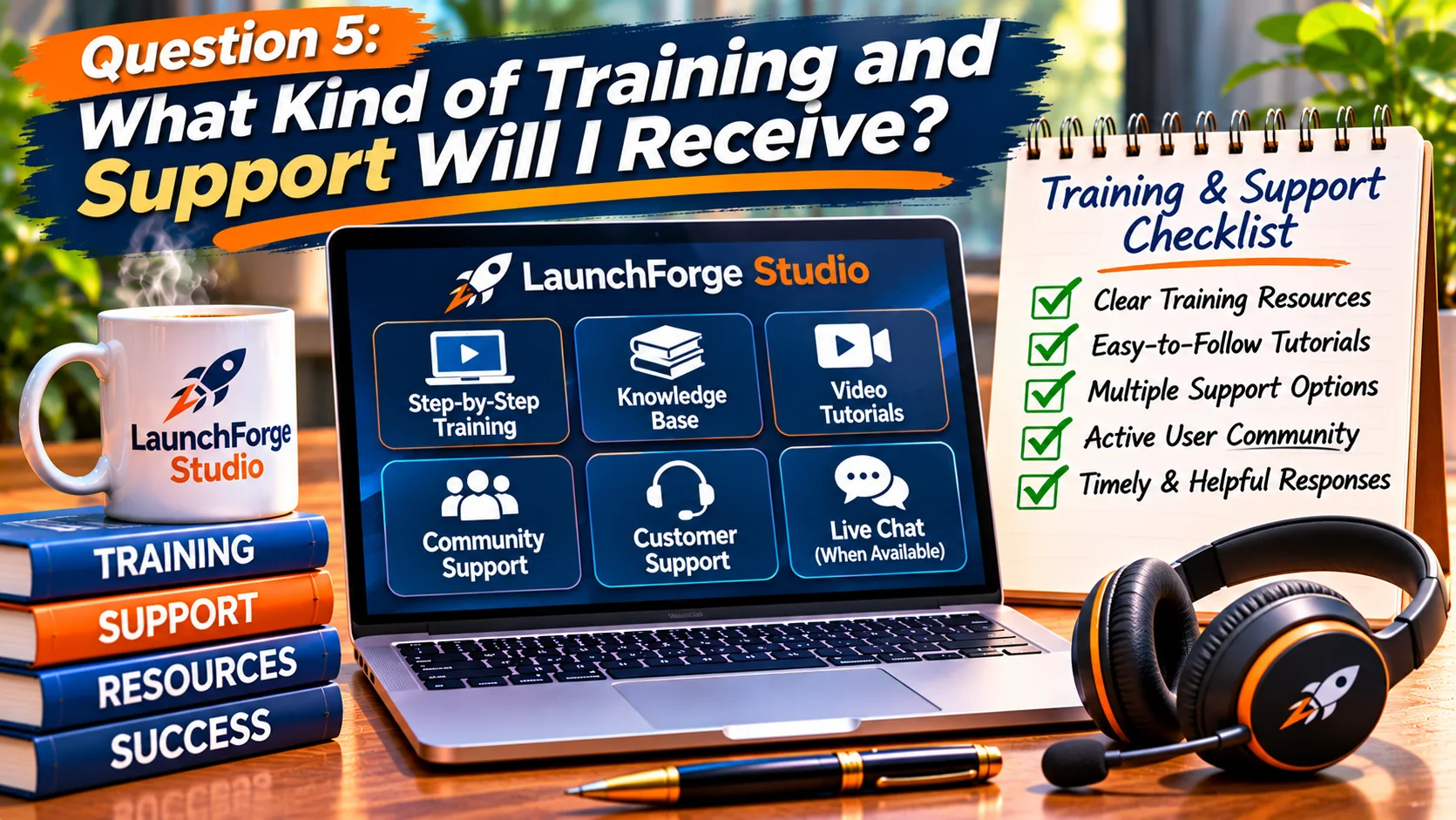
Before purchasing an online business platform, evaluate its training resources, customer support, and available learning assistance.
You’ve found an online business platform with the right features, a manageable price, and tools you’re willing to learn.
But before purchasing, there’s another question worth answering:
What happens when you get stuck?
A polished sales demonstration can make a platform look effortless. The real test often comes later, when you’re configuring your website, connecting an email service, or troubleshooting something that isn’t working as expected.
That’s when good training and dependable support become especially valuable.
Look for Training That Matches Your Experience Level
Not all training resources are equally useful.
Some platforms provide extensive video libraries but assume you already understand website development and digital marketing terminology.
Others offer beginner-friendly tutorials that walk you through individual tasks from start to finish.
Before purchasing, investigate what the training actually covers.
For example, if you’re planning to build an affiliate website, look for instructions explaining how to create pages, publish articles, configure essential settings, and establish basic lead-capture functionality.
The most useful training helps you complete a real task—not simply learn where every button is located.
If possible, watch an introductory tutorial before committing. You’ll get a better sense of whether the teaching style matches how you prefer to learn.
Understand What Customer Support Actually Includes
A platform might advertise customer support without explaining its scope.
Find out whether assistance is available through:
- Support tickets: Useful when you need to describe a technical problem or provide screenshots.
- Live chat: Potentially helpful for straightforward questions, depending on availability.
- Documentation: Guides that allow you to solve common problems independently.
- Community forums or groups: Opportunities to learn from other users’ experiences.
- Training sessions or webinars: Structured instruction for learning platform features.
Also check whether support differs between membership levels.
For example, a lower-cost plan might provide documentation and standard ticket support, while a higher-priced membership includes additional assistance.
Those differences can matter if you’re a beginner who expects to need regular guidance.
Check Support Availability Before You Need It
Support quality isn’t just about which contact methods exist.
It’s also about how effectively those resources help resolve problems.
Look for clearly published support hours, response expectations, and any limitations on the assistance provided.
If independent reviews discuss customer support, consider whether they describe specific experiences rather than vague praise or complaints.
You can also contact the company with a legitimate pre-purchase question.
For example:
“Does my selected membership include assistance with connecting a lead-capture form to an outside email marketing service?”
The response may help you understand what support covers and how clearly the company communicates.
One response won’t establish the quality of every future interaction, but it can provide useful information.
Separate Platform Support From Business Coaching
This distinction is particularly important.
A software company may help you configure its tools without providing personalized advice about your business model, marketing strategy, or offers.
For example, technical support might explain how to create a landing page.
That doesn’t necessarily mean the company will write your advertising copy, develop your sales strategy, or guarantee that the page converts visitors into customers.
Likewise, access to training videos doesn’t always include one-on-one coaching.
Know whether you’re purchasing software, technical assistance, business education, coaching, or a combination of those services.
Understanding that distinction helps prevent unrealistic expectations.
Your Decision Checkpoint: Can You Get the Help You Need?
Before purchasing, answer these four questions:
- Can I find training for the tasks I want to complete first?
- Does my membership include the type of support I’m likely to need?
- Are the support channels, availability, and limitations clearly explained?
- Do I understand which problems are my responsibility to solve?
If the answers are clear and the resources match your experience level, that’s another reason to feel confident in your decision.
If support details are vague or important questions remain unanswered, investigate further before paying.
My recommendation: Choose a platform that gives you a realistic path from learning a feature to successfully using it.
You don’t need someone to do all the work for you. But you should understand where to turn when you need assistance.
And once you’re comfortable with the support available, it’s time to examine another important concern: how much control you’ll have over the business you build.
Question 6: Will I Own and Control What I Build?
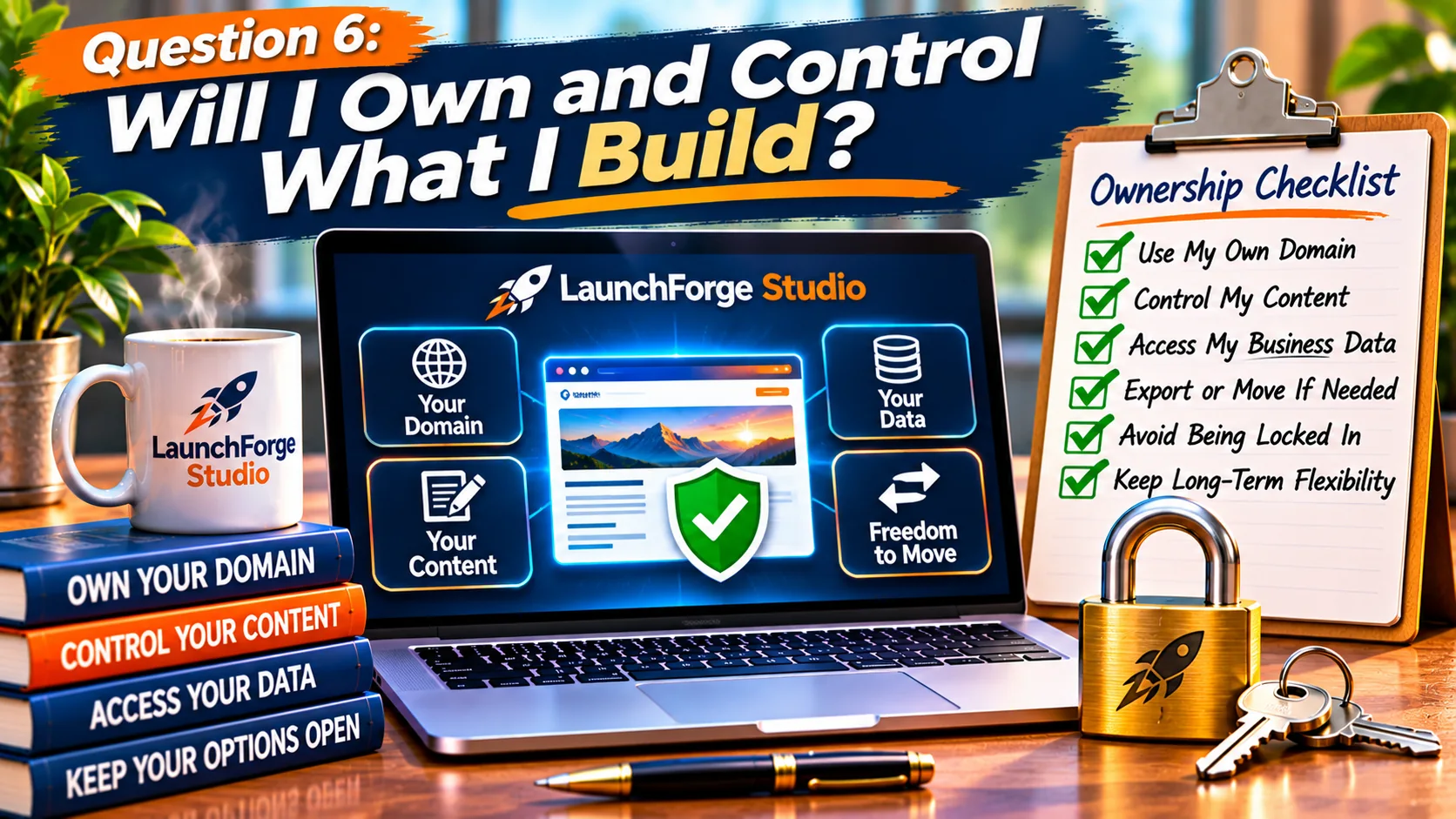
Before choosing an online business platform, understand who controls your domain, content, data, and ability to move your website.
Imagine spending the next year building your website, publishing articles, collecting leads, and developing an online presence.
Your business is finally taking shape.
Then something changes.
Perhaps the platform increases its prices, removes a feature you depend on, or no longer fits your business goals.
You decide it’s time to move elsewhere.
Can you take what you’ve built with you?
That’s a question worth answering before you purchase an online business platform, not after you’ve invested hundreds of hours into it.
Understand What You Actually Own
Using a platform doesn’t necessarily mean you own every component of the system.
There are important differences between owning your business content, controlling your domain, licensing software, and paying for access to hosted services.
For example, you may retain ownership of the articles, images, and original resources you create while having only a license to use the platform’s software.
Similarly, a website builder may allow you to publish a complete website without providing a straightforward way to transfer its layouts to another system.
Before buying, review the platform’s terms and investigate what happens to your content and account if you cancel.
Pay attention to whether you can access and export your information after your membership ends.
Owning your content and being able to move it are two different things. Both matter.
Keep Control of Your Domain Name
Your domain name is an important part of your business identity.
It’s how visitors find your website, how you establish branded email addresses, and how people recognize your online presence.
Before purchasing a platform, determine whether you can use a domain registered through a provider you control.
If the platform offers domain registration, investigate whose account holds the registration and whether the domain can be transferred elsewhere.
You should also understand what happens to your domain connection if you cancel the platform.
Ideally, you want the flexibility to point your domain toward a different hosting provider or website system when necessary.
That doesn’t mean you should expect to change providers frequently.
It simply means your domain shouldn’t become an avoidable obstacle if your business needs evolve.
Check Whether Your Website Can Be Exported
Website portability varies considerably between platforms.
Some systems allow you to export content, databases, and other website files.
Others rely on proprietary page builders or hosted environments that require you to rebuild portions of your website when moving.
Even when a platform supports exports, the exported material may depend on particular themes, plugins, software licenses, or compatible hosting environments.
For example, exporting a website layout doesn’t necessarily mean it will function identically on another platform without the software originally used to create it.
Before buying, ask:
- Can I export my website content?
- Can I transfer my design and page layouts?
- Will I need additional licenses to use exported materials?
- Can I move my website to another hosting provider?
- Which features would need to be rebuilt after leaving?
These answers can help you understand the practical difficulty of changing systems later.
A platform doesn’t need to make every possible migration effortless, but you should know what moving would involve.
Make Sure You Can Access Your Business Data
Your website is only one part of your online business.
Depending on your setup, you may also collect contact information, manage customer records, process orders, or maintain email subscriber lists.
Before purchasing, investigate whether the platform allows you to export the business data you’re entitled to retain.
For example, if you’re collecting email subscribers, you should understand where those records are stored and whether you can export them in a usable format.
Remember that exporting contact information doesn’t automatically give you permission to use it for any purpose. You still need to respect subscriber consent, privacy obligations, and the requirements of any email service you use.
If the platform connects to outside services, determine which company actually stores each type of information.
This makes it easier to understand what remains accessible if you discontinue one service.
Review Restrictions on Templates, Software, and Integrations
Some platforms include templates, themes, plugins, or other licensed resources.
These can save considerable time during setup.
However, their usage rights may differ.
A membership might allow you to use certain templates on your own website while restricting redistribution, resale, or installation outside approved environments.
A plugin may continue functioning after cancellation but lose access to updates or technical support.
Other components may require an active license to operate as intended.
Don’t assume every resource included with a membership becomes your permanent, unrestricted property.
Instead, review the applicable licensing terms.
Pay particular attention to any software or design resources that are essential to your website’s functionality.
Knowing the limitations before purchasing helps you avoid building your business around assumptions that may not be correct.
Your Decision Checkpoint: What Happens If You Leave?
Before purchasing, imagine that you decide to change platforms one year from now.
You don’t need to know exactly how you’ll complete a future migration.
But you should be able to answer these questions:
- Will I retain control of my domain name?
- Can I export my website content and important business data?
- Will my designs or website functions depend on licenses I may lose?
- What would I need to rebuild if I moved elsewhere?
- Are the cancellation and data-access terms clear?
If the platform offers reasonable control and its limitations fit your plans, you may have another solid reason to move forward.
If important restrictions are unclear, ask questions before committing.
And remember, not every limitation is automatically a dealbreaker.
A proprietary system might offer convenience that makes sense for your business, even if moving away would require additional work.
The important thing is to make that trade-off knowingly.
My recommendation: Choose an online business platform that supports your business today without leaving you unnecessarily vulnerable tomorrow.
A confident purchase isn’t just about what you can build.
It’s also about understanding what you can keep, control, and take with you.
Now that we’ve covered ownership and portability, let’s consider whether the platform can continue meeting your needs as your business develops.
Question 7: Will This Platform Still Fit My Business as It Grows?
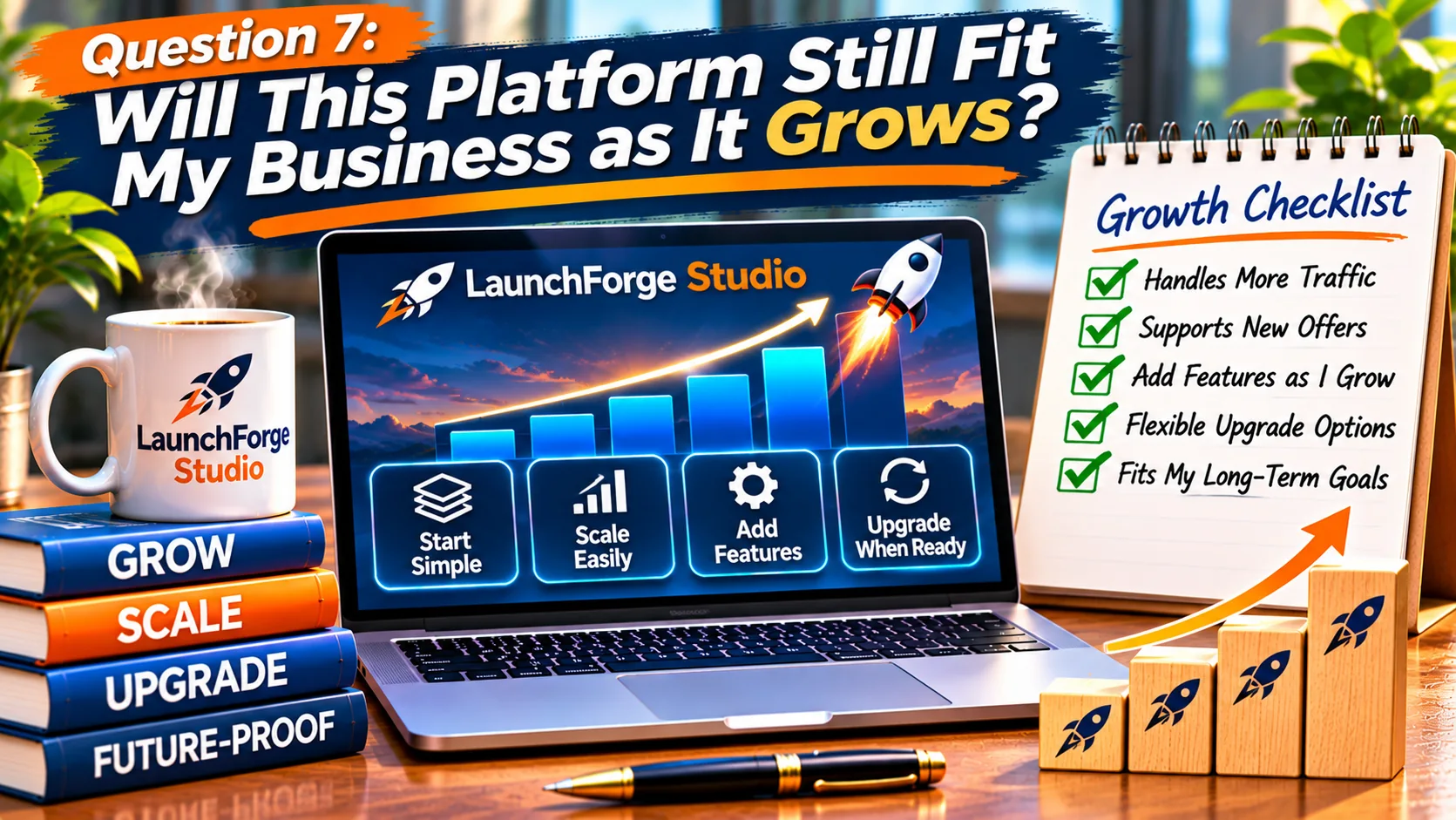
Choose an online business platform that supports your current needs while offering practical room for future growth.
You’ve confirmed that the online business platform can support your immediate goals. But what happens when those goals change?
Maybe you begin with a simple affiliate website and eventually introduce digital products. Perhaps your email list grows, you add new services, or you want to create more sophisticated marketing campaigns.
Will your platform support those changes, or will you need to rebuild your business around another system?
You don’t need a platform that can do everything imaginable. You need one that won’t unnecessarily limit your next reasonable steps.
Think About Realistic Growth, Not Imaginary Success
When comparing platforms, it’s tempting to focus on the biggest possible version of your future business.
You imagine thousands of subscribers, multiple websites, elaborate sales funnels, and automated marketing systems.
There’s nothing wrong with having ambitious goals.
But buying expensive features for a business that doesn’t exist yet can put unnecessary pressure on your budget.
Instead, consider what you might realistically need over the next 12 to 24 months.
For example, if you’re starting a content-driven website, reasonable future requirements might include adding an email subscription system, publishing more content, creating landing pages, or introducing a digital product.
Those possibilities are worth evaluating.
Building an entire technical infrastructure for an imaginary business empire probably isn’t necessary.
Identify the Limits That Could Affect You
Every platform has limitations, even when its marketing emphasizes flexibility.
Before purchasing, investigate restrictions involving:
- Websites and domains: How many sites can you create or manage?
- Storage and traffic: Are there limits or additional charges as usage increases?
- Contacts and subscribers: Does pricing change when your audience grows?
- Email and automation: Are sending limits or advanced workflows tied to membership levels?
- Products and transactions: Can you expand your offers without changing systems?
- Integrations: Can you connect additional services if your requirements evolve?
Not every limitation will matter to your business.
A single-website allowance, for instance, may be perfectly adequate if your plan is to build one focused authority website.
The important question is whether a restriction could interfere with a realistic business goal.
A limitation is only a serious problem when it prevents you from doing something you actually need to do.
Understand Your Upgrade Options
Sometimes you can begin with an entry-level membership and upgrade as your business develops.
That can be an advantage, particularly when you’re trying to control expenses.
However, investigate how upgrades work.
Will you pay the difference between plans? Does upgrading require a new setup fee? Will your existing website, content, and configurations remain intact?
Also determine whether upgrading is genuinely optional or effectively necessary to access a feature you’ll need immediately.
You want to avoid purchasing an inexpensive plan only to discover that the functionality you expected requires a significantly larger investment.
Consider Flexibility Without Overcomplicating Your Decision
A good platform should provide a reasonable path forward as your business evolves.
That might involve built-in advanced tools, optional upgrades, compatible integrations, or the ability to transfer certain parts of your business elsewhere.
You don’t have to know every feature you’ll need years from now.
But you should understand whether the platform can support your next likely stage without excessive expense or disruption.
And remember our discussion about ownership and portability: flexibility also means knowing your options if the platform eventually stops meeting your needs.
Your Decision Checkpoint: Can the Platform Support Your Next Stage?
Before buying, ask yourself:
- Does the platform meet my requirements today?
- Can it support the next two or three capabilities I’m reasonably likely to need?
- Do I understand the limits and upgrade costs that could affect me?
- Would expanding my business require manageable changes or a major rebuild?
If the answers are encouraging, you have another reason to feel confident about your purchase.
If the platform already feels restrictive before you’ve started, investigate alternatives.
My recommendation: Buy for the business you’re building now, with enough room for the business you’re realistically working toward.
Don’t pay for an imaginary empire.
But don’t ignore obvious limitations that could interfere with your next meaningful milestone.
Now let’s turn our attention to another important buying consideration: whether the platform’s promises are supported by credible evidence.
Question 8: Can I Trust the Reviews, Testimonials, and Marketing Claims?
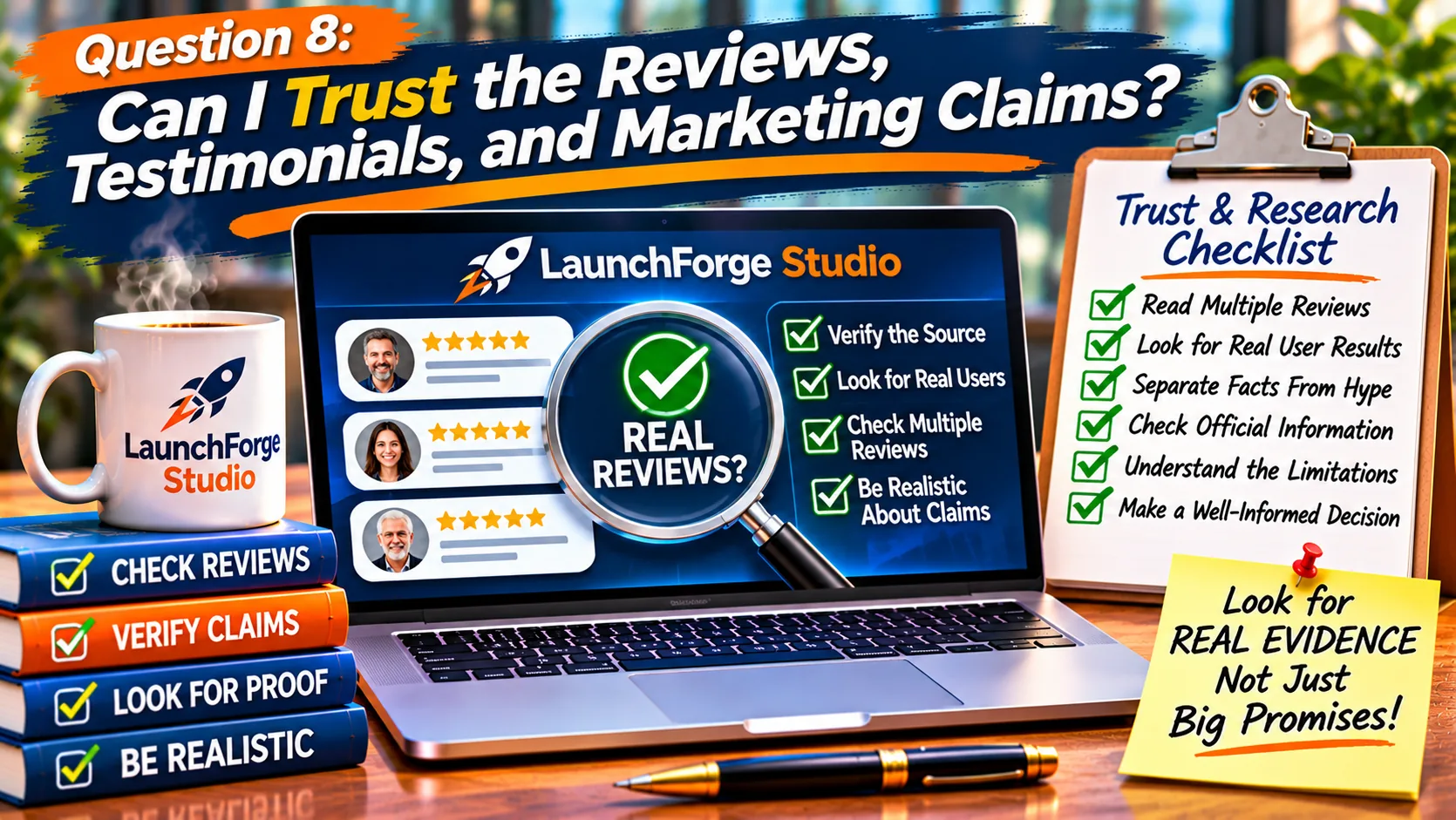
Look for firsthand experience, verifiable evidence, and realistic claims before trusting an online business platform review.
You’ve probably encountered an online business platform that seems to have overwhelmingly positive reviews.
The testimonials sound convincing. The demonstration videos look impressive. Customers describe how much easier the platform has made their work.
But before purchasing, there’s an important distinction to make.
Positive reviews can help you evaluate a platform, but they shouldn’t replace your own research.
The goal isn’t to become suspicious of every recommendation. It’s to distinguish useful evidence from promotional excitement.
Look for Firsthand Experience, Not Just Enthusiasm
A trustworthy review should help you understand what the reviewer actually knows about the product.
Has the person used the platform? Can they explain which features they tested? Do they provide specific examples of how the tools work?
A review that simply repeats the company’s sales page may offer little additional insight.
Look for practical details such as:
- Screenshots or demonstrations of the actual platform.
- Specific examples of completed projects.
- Honest explanations of features that require additional setup.
- Pricing information that can be verified.
- Limitations, frustrations, or situations where the platform may not be suitable.
A reviewer doesn’t need to dislike a product to be credible.
But a recommendation becomes more useful when you can understand the experience behind it.
Understand Affiliate Relationships
Some reviews contain affiliate links, which means the reviewer may receive compensation if you purchase through their referral.
That arrangement doesn’t automatically make the review unreliable.
Affiliate marketing is a legitimate business model when recommendations are presented transparently and accurately.
However, financial incentives can create potential conflicts of interest.
Look for clear affiliate disclosures, then evaluate the actual substance of the review.
Does the writer explain the product’s disadvantages? Are pricing claims accurate? Does the recommendation make sense for someone with your needs?
A useful affiliate review should help you make an informed choice even when that choice is not to purchase.
Be Cautious With Income and Success Claims
An online business platform provides tools. It does not guarantee business success.
Be especially cautious when promotional materials suggest that purchasing software will automatically generate traffic, customers, or income.
Customer success stories may be genuine, but individual outcomes aren’t necessarily representative.
Consider what other factors contributed to those results.
Did the person already have an audience? Did they invest heavily in advertising? Did they possess experience, resources, or business relationships that a beginner might not have?
A platform’s capabilities should be evaluated separately from someone else’s financial results.
Your success will depend on what you build, whom you serve, and how effectively you execute your business strategy.
Compare Reviews With Official Information
Independent reviews can provide valuable perspectives, but official documentation should be your reference for current features, membership terms, and pricing.
Before purchasing, compare important review claims against the platform’s current product information.
If a review says a feature is included, verify that it’s available in the membership you’re considering.
If someone describes a particular price, check whether it still applies and whether additional charges exist.
Pay attention to review publication dates, especially when software products receive frequent updates.
A review can be accurate when written and become outdated later.
Your Decision Checkpoint: Is the Evidence Strong Enough?
Before buying, ask yourself:
- Have I found evidence that the platform can perform the tasks I need?
- Do the reviews provide specific firsthand information?
- Have I considered both advantages and limitations?
- Have I verified important pricing and feature claims?
- Am I making this decision based on practical evidence rather than someone else’s promised results?
If you can answer these questions confidently, you’re in a stronger position to make an informed purchase.
If the only information you can find is promotional material, continue researching before committing.
My recommendation: Look for evidence you can understand, verify, and apply to your own situation.
A trustworthy recommendation shouldn’t require you to ignore the product’s limitations.
It should help you understand whether those limitations matter to you.
Once you’ve evaluated the evidence, another important question remains:
Are there better alternatives for what you’re trying to accomplish?
Question 9: Have I Compared the Alternatives?
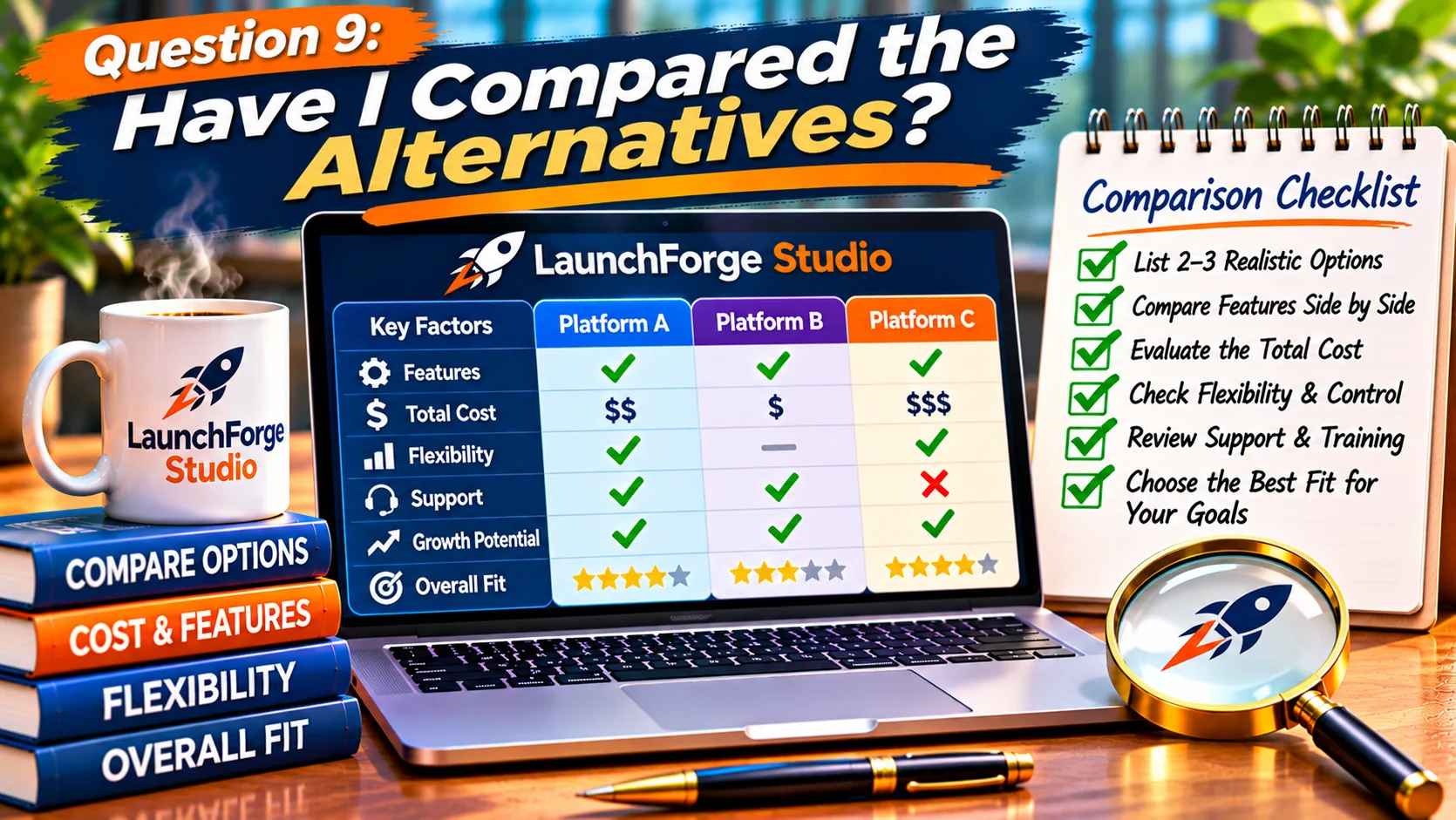
Compare two or three realistic online business platforms based on their features, total costs, flexibility, and suitability for your goals.
You’ve found an online business platform that appears to meet your requirements. The features look promising, the price fits your budget, and the reviews have given you some confidence.
You’re almost ready to purchase.
But before making that final commitment, ask yourself one more question:
Have I compared this platform against other realistic options?
This doesn’t mean spending the next six months researching every website builder, marketing platform, and automation service on the internet.
It means making sure you’re not overlooking an option that could serve your business better.
Sometimes the platform you’re considering really is the strongest fit.
Other times, a brief comparison reveals important differences in cost, flexibility, technical requirements, or functionality.
Either outcome is useful.
Compare Platforms Based on Your Actual Business Needs
The easiest way to get overwhelmed is to compare software based on everything it can possibly do.
One platform offers hundreds of templates. Another advertises advanced automation. A third promises an all-in-one business environment.
Before long, you’re buried in features that may have nothing to do with your business.
Instead, return to the goals you identified earlier in this guide.
If you’re building a content-focused affiliate website, your primary concerns might include:
- Reliable website hosting and publishing functionality.
- Search engine optimization capabilities.
- Customizable pages and landing pages.
- Lead-capture options and email marketing integrations.
- Reasonable setup and ongoing costs.
- Access to training and technical support.
A platform that performs well in those areas may be more suitable than one offering impressive ecommerce features you have no immediate plans to use.
Compare platforms against your requirements, not against each other’s advertising headlines.
That keeps the decision focused on the work you actually intend to accomplish.
Compare Three Realistic Options
You don’t need a spreadsheet containing 25 platforms to make a thoughtful decision.
For most buyers, comparing two or three realistic choices is a useful starting point.
Consider evaluating:
Option 1: The Platform You’re Already Considering
This is your current leading choice.
You’ve researched its features, reviewed its pricing, and developed a reasonable understanding of how it works.
Use it as your starting point for comparison.
Option 2: A Direct Competitor
Choose another platform designed for a similar audience or business model.
Compare the features that matter most, including cost, learning requirements, support, and limitations.
Don’t assume two products are equivalent simply because both describe themselves as complete business solutions.
Option 3: A Simpler or More Specialized Alternative
Sometimes the best alternative isn’t another all-in-one platform.
It might be a straightforward WordPress hosting plan, a dedicated landing page builder, or a smaller collection of specialized tools.
This option helps you answer an important question:
Would a simpler setup accomplish what I need without introducing unnecessary complexity or expense?
The objective isn’t to identify a universally superior platform.
It’s to identify which approach best supports your particular business.
Evaluate the Total Cost of Each Option
Pricing comparisons can be misleading when you focus only on monthly membership fees.
Suppose one platform includes website hosting, landing pages, and several marketing capabilities within a single membership.
Another platform offers inexpensive hosting but requires separate subscriptions for the additional functions you need.
The second option might initially appear cheaper.
But after accounting for necessary services, the total expense could be comparable—or even higher.
The reverse is also possible.
An all-in-one membership may cost considerably more than a simple setup that already meets your needs.
Use the first-year cost calculation from Question 3 to compare each option consistently.
Include required setup fees, subscriptions, software licenses, renewals, and essential outside services.
The comparison should reflect what you’ll actually need to operate your business, not merely the advertised starting price.
Consider Convenience Versus Flexibility
This is one of the more important trade-offs when selecting an online business platform.
An integrated system may reduce the number of separate tools, accounts, and connections you need to manage.
That convenience can be valuable, particularly when you’re learning how different parts of online marketing work together.
On the other hand, combining specialized services may give you more freedom to select individual tools and replace them when necessary.
Neither approach is automatically better.
An integrated platform may suit someone who prefers a more structured environment.
A collection of independent tools may suit someone who values customization and doesn’t mind managing multiple services.
The right choice depends on your technical comfort, budget, and business requirements.
Ask yourself whether you’re paying for convenience you’ll genuinely appreciate or flexibility you’ll realistically use.
Don’t Let Endless Comparison Become Another Form of Procrastination
Research is valuable.
But there’s a point where additional comparisons stop providing meaningful information.
You discover another platform, watch another demonstration, read another review, and suddenly find yourself questioning a decision that was already reasonably well supported.
This is sometimes called analysis paralysis.
It happens when the desire to make the perfect decision prevents you from making a practical one.
Remember, no platform will be perfect in every category.
One may offer stronger design flexibility while another provides simpler setup.
One may cost less but require additional integrations.
Another may provide more training but limit certain advanced features.
Your job isn’t to eliminate every possible trade-off.
It’s to understand the trade-offs well enough to choose the option that best supports your priorities.
Once you’ve compared a small number of suitable options and verified the information that matters, give yourself permission to make a decision.
Your Decision Checkpoint: Which Option Is the Best Fit?
Before purchasing, compare your leading choices using these five criteria:
1. Essential Features
Which option provides the capabilities required for your business model?
2. Total Cost
Which option offers the most appropriate value when you account for the full financial commitment?
3. Learning and Support
Which option provides a realistic path to learning the tools and getting assistance?
4. Control and Flexibility
Which option offers an acceptable level of ownership, portability, and room for growth?
5. Practical Fit
Which option can you realistically see yourself using consistently?
You don’t need every answer to favor the same platform.
Instead, consider which differences matter most to your business.
If your current choice remains the strongest fit after a fair comparison, that’s a meaningful reason to feel more confident about purchasing.
If another platform clearly serves your requirements better, that’s valuable information too.
And if none of the options seems appropriate, you may need to reconsider your requirements before making a financial commitment.
My recommendation: Compare enough to make an informed decision, but don’t confuse endless research with progress.
The purpose of comparing alternatives is to identify a suitable solution—not to postpone building your business indefinitely.
You’ve now examined your goals, required features, costs, learning requirements, support, ownership, growth potential, credibility, and competing options.
That brings us to the final and perhaps most personal question of all:
Am I ready to make a decision and follow through on it?
Question 10: Am I Ready to Make the Decision and Commit to the Work?
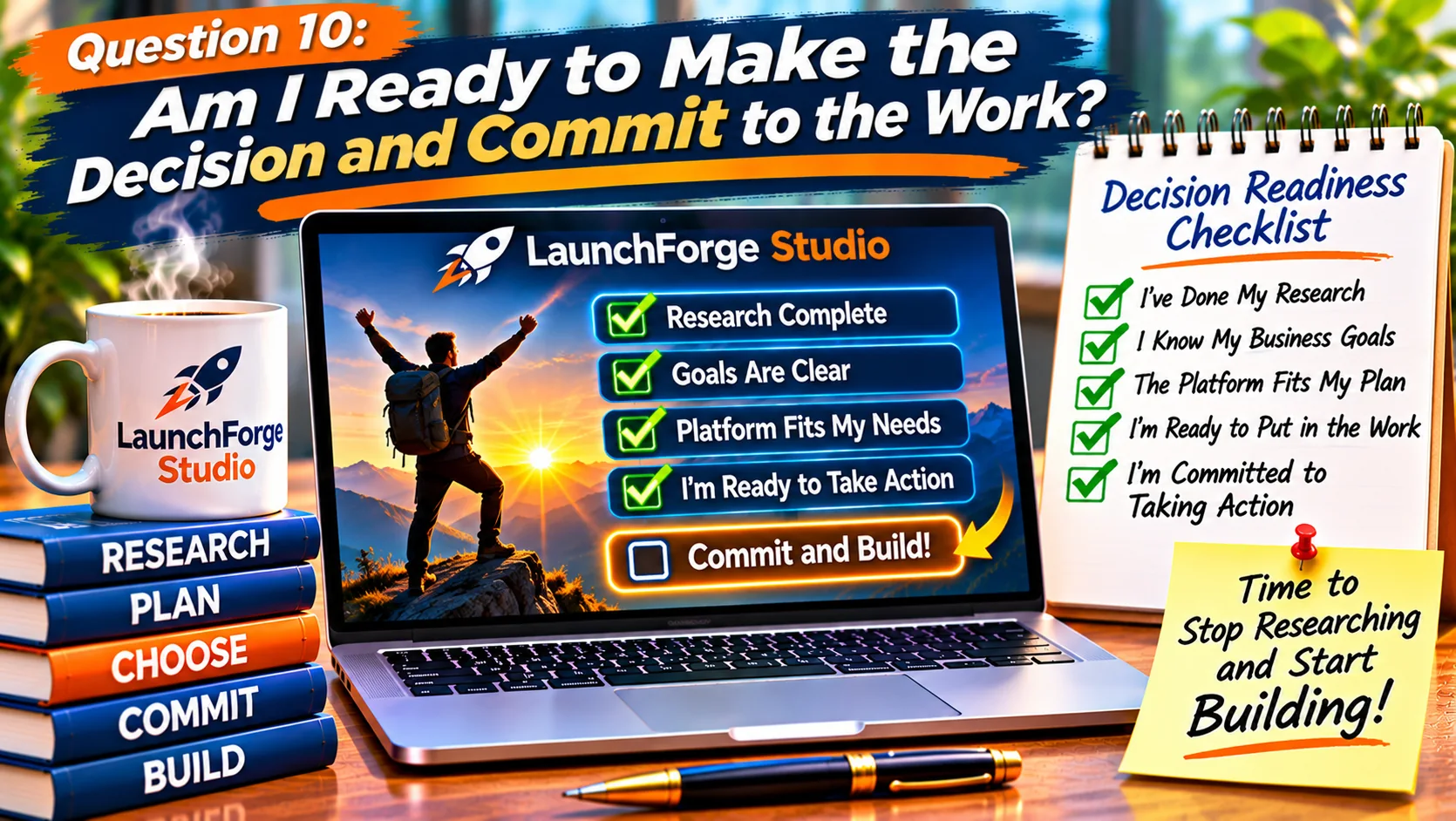
A confident purchasing decision starts with research, clear goals, a realistic plan, and a willingness to follow through.
You’ve done your research.
You’ve examined the features, calculated the costs, reviewed the available support, considered the limitations, and compared other platforms.
You understand what you’re purchasing and why it could help you build your business.
Yet you still hesitate.
Maybe you’re afraid of making the wrong decision. Perhaps you’ve purchased business tools before and never followed through. Or maybe you’re waiting for that perfect moment when everything feels certain.
Here’s something worth remembering:
You can make a well-informed decision without knowing exactly how everything will turn out.
The goal isn’t to eliminate every uncertainty. It’s to determine whether you have enough information, resources, and commitment to take a reasonable next step.
Understand What’s Really Holding You Back
Before deciding, identify the source of your hesitation.
Are you concerned about an unanswered pricing question? Do you still need to verify an important feature? Are you unsure whether the platform supports your business model?
Those are practical concerns that deserve answers.
But perhaps your hesitation is different.
Maybe you’ve already found a suitable platform, and you’re worried about whether you’ll succeed after purchasing it.
That’s a much more personal concern.
Starting an online business involves learning unfamiliar skills, making decisions, experimenting with ideas, and occasionally discovering that something doesn’t work as expected.
No software purchase can eliminate those challenges.
The platform can provide tools and structure. What you build with those resources remains your responsibility.
Recognizing that distinction can help you separate concerns about the product from concerns about the work ahead.
Stop Waiting for the Perfect Moment
There’s rarely a moment when every detail of starting an online business feels completely settled.
You might wish you had more technical knowledge, a larger budget, a better schedule, or a clearer picture of your future results.
Some of those concerns may justify additional preparation.
Others may never disappear entirely.
The key is determining whether you’re adequately prepared for your next step, not whether you feel perfectly prepared for every challenge you’ll eventually face.
If you understand the purchase, can afford it comfortably, have a clear purpose for the tools, and know how you’ll begin using them, waiting indefinitely may not provide much additional value.
However, if the purchase would create financial pressure or you still lack essential information, waiting can be a smart decision.
Confidence doesn’t mean ignoring uncertainty. It means understanding which uncertainties matter and responding appropriately.
Make a Commitment to Action, Not a Promise of Results
One of the healthiest ways to approach an online business investment is to separate your actions from your expectations.
You cannot guarantee how quickly visitors will discover your website.
You cannot guarantee that your first offer will convert.
And you cannot guarantee that every strategy you try will produce the outcome you hoped for.
But you can commit to activities within your control.
You can create your website, publish useful content, develop a clear offer, learn how your tools work, and evaluate what needs improvement.
Instead of purchasing a platform with the expectation that it will make your business successful, purchase it with a plan for what you’ll accomplish using it.
For example, your first 30 days might focus on setting up essential website pages, publishing several helpful articles, and building your first lead-capture opportunity.
Those are practical goals you can work toward without depending on immediate revenue.
Your commitment should be to consistent, meaningful effort—not guaranteed financial results.
Give Yourself Permission to Make an Imperfect Decision
Even a carefully researched purchase may involve trade-offs.
A platform might be excellent for publishing content but require additional setup for email marketing.
Another might provide convenient automation tools but offer less flexibility in website design.
You may eventually discover a feature you wish you’d evaluated more closely.
That doesn’t automatically mean the entire decision was a mistake.
What matters is whether you understood the important costs, capabilities, and limitations when purchasing.
A reasonable decision can still lead to unexpected challenges.
Likewise, a platform that works well for someone else may not be the right fit for your particular circumstances.
You’re not searching for a flawless product. You’re searching for a suitable foundation on which you can do meaningful work.
Your Decision Checkpoint: Are You Ready to Follow Through?
Before making your final decision, ask yourself:
- Do I understand what I’m purchasing and what it will cost?
- Does the platform support a business goal I’ve clearly identified?
- Can I afford the investment without relying on immediate earnings?
- Do I have enough time and willingness to begin learning the tools?
- Have I resolved the important concerns that could make this purchase unsuitable?
- Do I know what my first practical action will be after purchasing?
If you can confidently answer these questions, you may be ready to move forward.
Not because someone has promised you’ll succeed.
Not because you’re afraid of missing an opportunity.
But because you’ve made an informed decision and developed a reasonable plan.
If you’re still missing important information, seek clarification before purchasing.
And if your budget, schedule, or business direction isn’t ready, there’s nothing wrong with postponing the investment.
The Final Difference Between Wanting a Business and Building One
It’s easy to become excited about the idea of running an online business.
You imagine the website, the content you’ll create, the people you’ll help, and the opportunities that might develop over time.
Those dreams can provide powerful motivation.
But eventually, progress requires action.
Not reckless spending.
Not purchasing every new tool that promises to make the process easier.
And certainly not expecting technology to replace patience, effort, or genuine value creation.
It requires choosing a practical direction, getting to work, and improving as you learn.
You don’t need to know everything before you begin. But you do need to be willing to begin learning.
If the platform fits your needs, the investment is manageable, and you’re prepared to do the work, you may have enough information to make your decision.
If not, take the time to address what’s missing.
Either way, you’re making progress by approaching the decision thoughtfully.
Because the objective was never simply to click the Buy button.
It was to choose a path you understand—and give yourself a realistic opportunity to follow through.
The Final Decision Framework: Buy, Wait, or Walk Away?
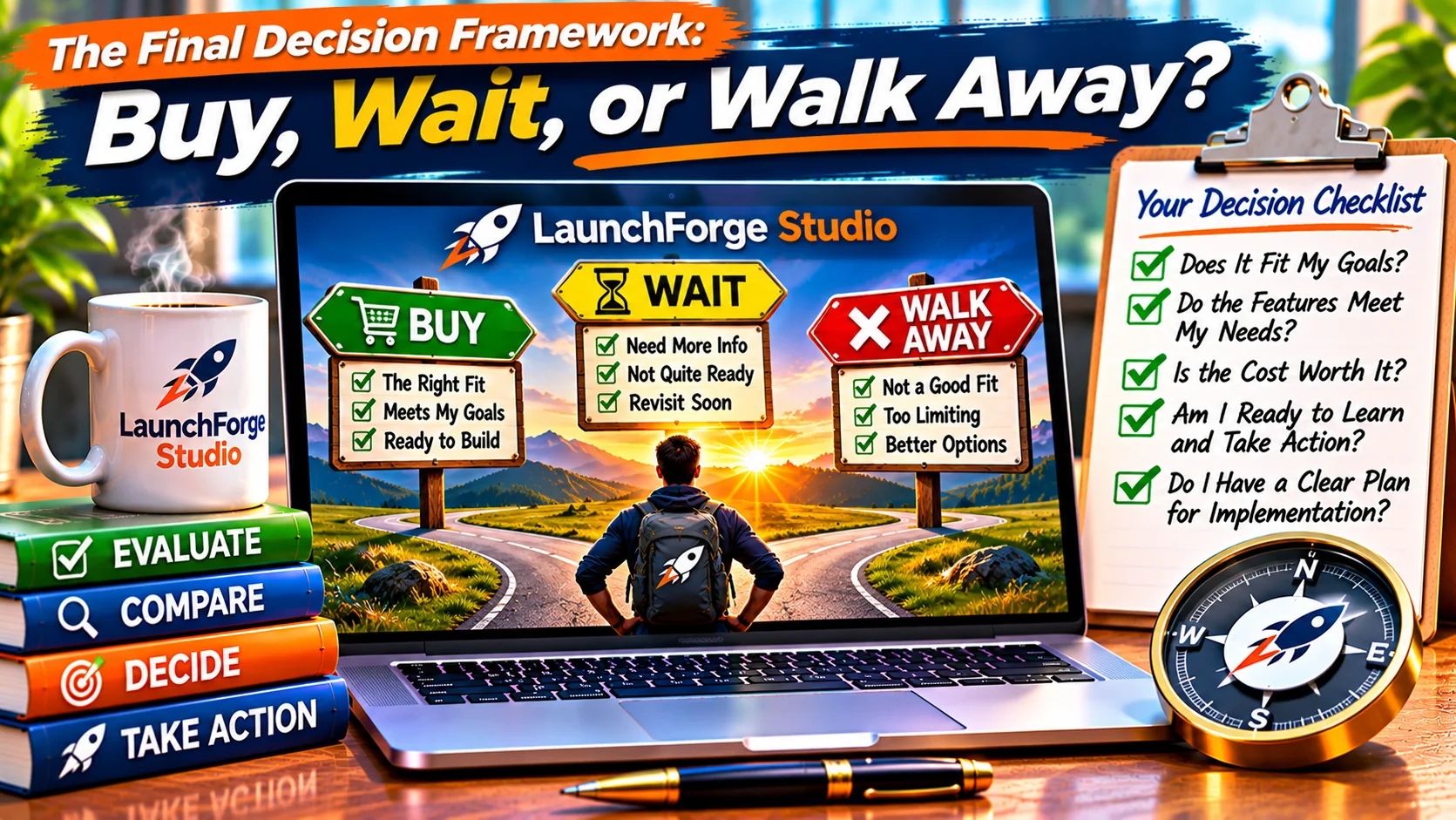
Buy when the platform fits your needs, wait when you need more preparation, or walk away when the investment isn’t right for you.
You’ve worked through the ten questions. You’ve examined your business goals, the platform’s capabilities, its true cost, the available support, and the potential limitations.
You’ve also considered competing options and whether you’re prepared to put the tools to work.
Now it’s time to make a decision.
Not necessarily a purchasing decision.
A decision about what makes the most sense for you right now.
There are three reasonable outcomes: buy the platform, wait until you’re better prepared, or walk away and choose a different direction.
None of these automatically represents success or failure.
The right choice depends on what you’ve learned.
Option 1: BUY — When the Platform Genuinely Fits Your Needs
Purchasing may be the appropriate next step when your research supports the decision.
You understand your business model, know which features you’ll use, and have verified that the platform can perform the tasks you need.
The total cost fits comfortably within your budget, and you’ve reviewed the membership terms, training resources, and relevant limitations.
Most importantly, you have a realistic plan for what you’ll do after purchasing.
Signs you may be ready to buy:
- The platform supports your primary business goals.
- You’ve confirmed that the necessary features are included or appropriately priced.
- You understand the upfront and recurring costs.
- You’ve considered reasonable alternatives.
- The training and support match your needs.
- You can afford the investment without depending on immediate business income.
- You have a specific first project and time to work on it.
If those conditions are satisfied, continuing to research indefinitely may offer diminishing value.
You don’t need a guarantee that every aspect of your business will work perfectly.
You need a well-supported reason to believe this platform is suitable for the work you’re prepared to do.
Your next step: Review the final checkout details, confirm the membership and billing terms, and proceed only if they match your research.
After purchasing, begin your first planned project rather than getting distracted by every available feature.
Option 2: WAIT — When the Platform Looks Right but Your Timing Doesn’t
Sometimes the software isn’t the problem.
The timing is.
You may have discovered a platform that offers exactly what you need, but your budget is currently too tight, your schedule is overloaded, or your business idea needs more development.
In those situations, waiting can be a responsible choice.
Signs you may benefit from waiting:
- You haven’t established a comfortable budget for the purchase.
- You still need to clarify your business model.
- You don’t have time to begin using the tools.
- Important pricing or membership questions remain unanswered.
- You’re unsure which features you actually need.
- You feel pressured by a deadline or promotional offer rather than confident in the product.
Waiting doesn’t mean abandoning your goals.
It means addressing the specific obstacle that’s preventing a sensible purchase.
The key is to make waiting productive.
Instead of vaguely promising yourself that you’ll revisit the decision someday, identify what needs to change.
Perhaps you need to set aside a reasonable startup budget, research your target audience, or outline your first website.
Maybe you need to contact the platform’s support team and clarify whether an essential feature is included.
Your next step: Identify the one or two unanswered issues that matter most, resolve them, and establish a realistic date to reassess the purchase.
Don’t use waiting as an excuse to research endlessly.
But don’t let impatience push you into a decision that doesn’t fit your circumstances.
Option 3: WALK AWAY — When the Platform Isn’t the Right Fit
This is the option that many promotional articles conveniently ignore.
Sometimes the smartest decision is not to buy.
Perhaps the platform lacks a critical feature, costs more than you can reasonably afford, or requires technical skills you’re not interested in developing.
Maybe its licensing restrictions conflict with your plans, or the available support doesn’t meet your needs.
You might even discover that a simpler alternative would accomplish everything you currently require.
Signs you should seriously consider walking away:
- Essential features are missing or unavailable within your budget.
- The complete cost is unclear despite reasonable attempts to verify it.
- The platform’s restrictions conflict with your business model.
- Important marketing claims cannot be substantiated.
- The cancellation, refund, or data-access terms create unacceptable risks.
- Another option clearly provides a better fit.
- You’re being pressured to purchase before you can evaluate the offer properly.
Walking away isn’t the same as giving up on your business.
It’s rejecting a purchase that doesn’t serve your goals.
And that’s an important distinction.
Your next step: Document why the platform isn’t suitable and use those findings to refine your search.
You may find a better alternative, simplify your requirements, or decide that you don’t need to purchase anything yet.
That’s still a useful outcome.
A Simple Five-Minute Final Purchase Test
If you’re still uncertain, give yourself five minutes to answer the following questions without reopening another sales presentation.
1. What am I buying?
Describe the specific membership, tools, and services you’ll receive.
2. Why do I need it?
Identify the business goal the purchase will help you accomplish.
3. What will it cost?
State the upfront payment, recurring charges, and required additional expenses.
4. What concerns remain?
Identify any unanswered questions that could materially affect your decision.
5. What happens after I purchase?
Name the first practical task you’ll complete and when you’ll begin.
Now evaluate your answers.
If they’re clear, the platform fits your requirements, and the investment is manageable, buying may be reasonable.
If the platform seems suitable but you’re missing essential preparation or information, wait.
If the product doesn’t meet your needs or introduces unacceptable risks, walk away.
And if you cannot explain why you’re buying something, that’s a strong reason not to purchase it yet.
Remember: A Confident Decision Doesn’t Require a Purchase
It’s worth emphasizing one final point.
Making a confident purchasing decision doesn’t always mean spending money.
Sometimes confidence means recognizing that you’ve found the right platform and are ready to begin.
Sometimes it means acknowledging that you need more time.
And sometimes it means choosing not to purchase something that doesn’t align with your goals.
All three outcomes can represent thoughtful decision-making.
You don’t need to prove your commitment by buying software.
You demonstrate commitment through the decisions you make, the value you create, and the work you’re willing to put into your business.
A good purchase should support your progress—not become a substitute for it.
If you’ve decided to buy, move forward with a clear plan.
If you’ve decided to wait, take the next step toward becoming prepared.
And if you’ve decided to walk away, use what you’ve learned to choose a better direction.
Whatever your decision, make it deliberately.
Because the goal isn’t simply to feel confident at checkout.
It’s to feel confident about what you’re building after checkout.
A Real-World Example: How I Evaluated Profit Hub System for LaunchForge Studio
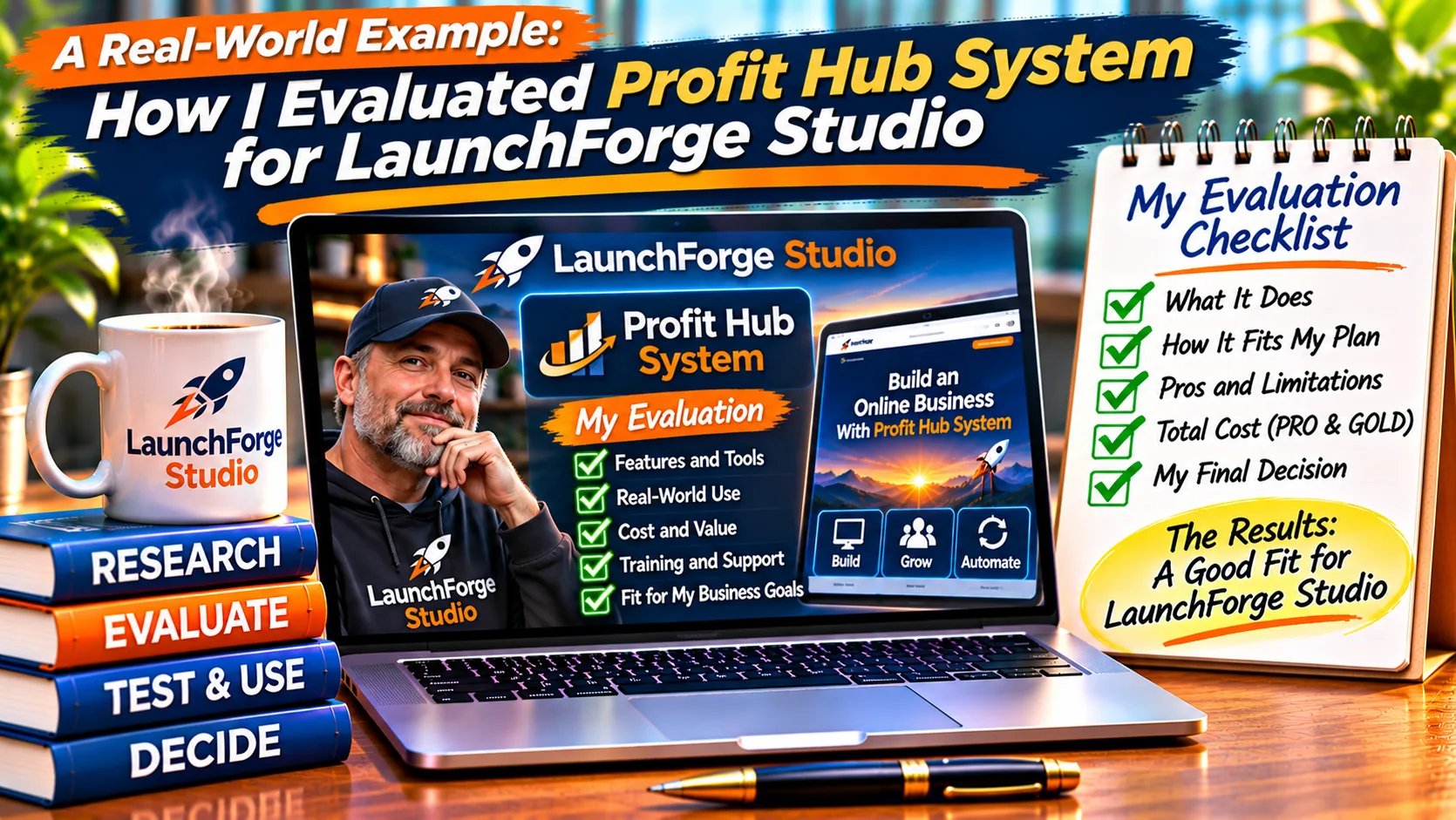
A real-world look at how Profit Hub System fits the website-building and marketing needs of LaunchForge Studio.
Everything we’ve discussed becomes more meaningful when you see how these purchasing decisions apply to an actual business.
When I began building LaunchForge Studio, I needed more than an attractive website.
My goal was to create an educational online business built around helpful articles, practical tutorials, product reviews, lead generation, and ongoing communication with interested readers.
That meant choosing a platform capable of supporting several connected activities without losing sight of my budget or business goals.
Why I Chose Profit Hub System
After evaluating my needs, I chose Profit Hub System and its Profit Engine membership as part of the foundation for LaunchForge Studio.
My decision wasn’t based on the expectation that purchasing software would automatically create a successful business.
I wanted an environment where I could build and manage a WordPress website, work with Divi, develop landing pages, and support my broader online marketing activities.
Those capabilities aligned with what I was actually trying to accomplish.
But choosing the platform didn’t eliminate the work.
I still had to build the website, customize the design, create useful content, configure the necessary tools, and develop a strategy for reaching readers.
And that process continues today.
What My Experience Has Taught Me
One of the biggest lessons I’ve learned is that a platform should be evaluated based on how it fits your workflow, not simply how impressive its promotional materials appear.
I’ve also learned that understanding the complete cost, available features, software requirements, and limitations matters before committing.
Profit Hub System is part of my business setup, but I also use outside services for certain marketing and subscriber-management functions.
That distinction is important because no buyer should assume that purchasing one platform automatically replaces every other tool they might need.
And while Profit Hub System works for the approach I’m building, that doesn’t mean it’s automatically the best choice for every entrepreneur.
Your business model, budget, technical preferences, and goals may be different.
Explore My Firsthand Profit Hub System Review
If you’re specifically considering Profit Hub System, I’ve documented my experience in a separate guide.
My Profit Hub System Review covers the platform’s pricing, setup fees, features, advantages, limitations, and how I use Profit Engine while building LaunchForge Studio.
The review also includes an affiliate disclosure, so you can evaluate my recommendation with that relationship clearly understood.
My intention isn’t to convince you that everyone should purchase the same platform I use.
It’s to show you how one real business owner approaches the tools, trade-offs, and responsibilities involved in building an online business.
Use that information alongside the ten questions in this guide to decide whether the platform makes sense for your circumstances.
Final Thoughts: Make the Decision That Supports Your Future
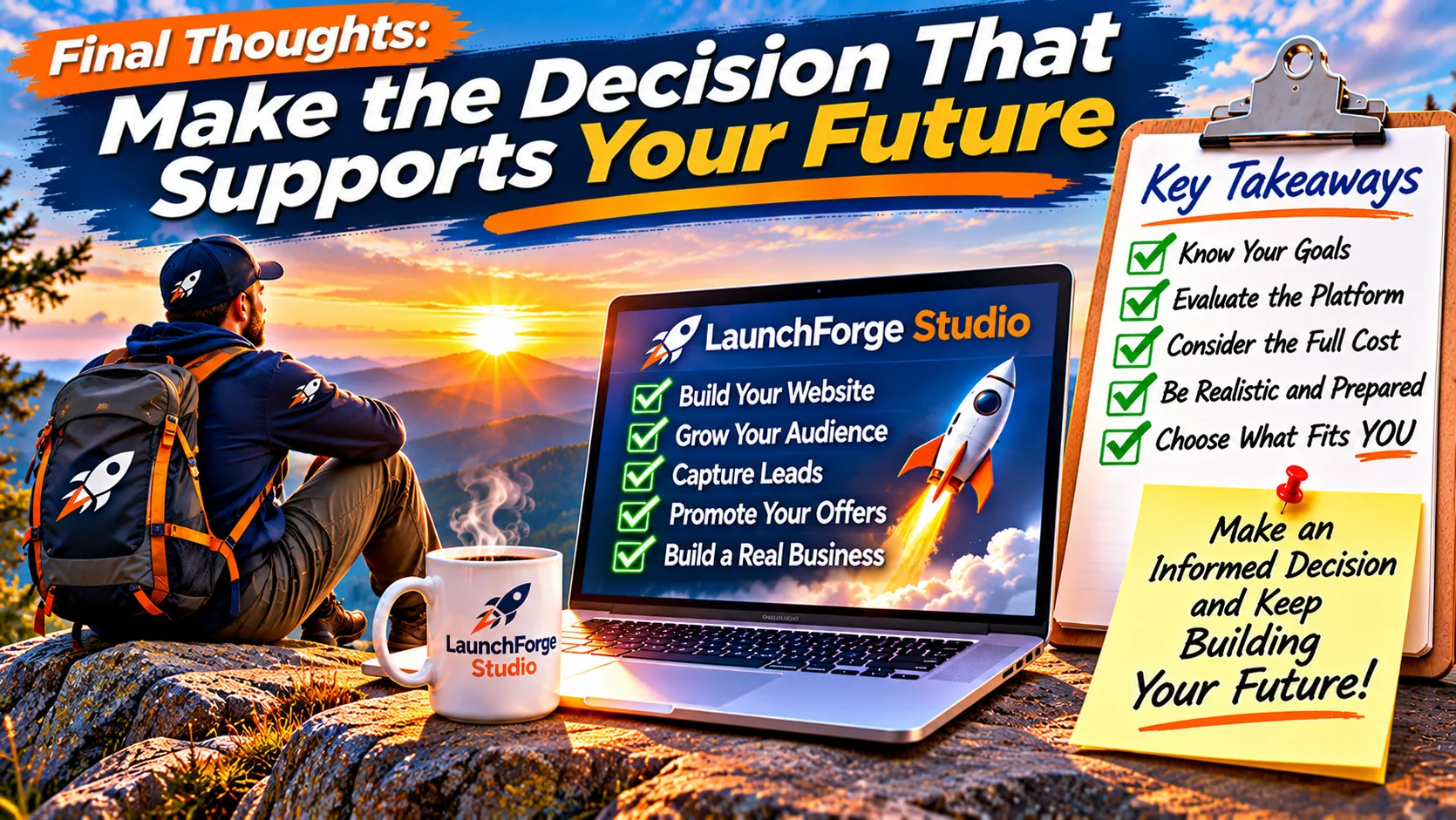
The right online business platform supports your goals, but consistent effort and informed decisions help turn your plans into progress.
If you’ve made it this far, you’ve done something valuable.
You’ve taken the time to look beyond the sales page and consider what purchasing an online business platform would actually mean for your business.
You’ve examined the features, calculated the costs, considered the limitations, researched the support available, and compared your options.
Most importantly, you’ve considered whether you’re ready to put those tools to work.
Here’s what I hope you’ll remember:
You don’t need to make a perfect decision. You need to make an informed one.
If the platform fits your goals, the investment is manageable, and you have a realistic plan for using it, you may be ready to move forward.
If important questions remain unanswered, take the time to resolve them.
And if the platform isn’t right for you, have the confidence to choose something different.
Your future isn’t determined by whether you purchase a particular piece of software today.
It’s shaped by the value you create, the people you help, the lessons you learn, and the effort you consistently put into your work.
At LaunchForge Studio, I believe building a business should begin with helping people solve real problems.
The tools matter, but they’re only part of the journey.
Choose the tools that support your goals. Build something useful. Keep learning. And give your ideas the consistent effort they deserve.
Because it costs absolutely nothing to dream.
But turning those dreams into something meaningful requires action.
The dream is free. The work gives it wings.