What do you need to start an online business? The answer can sound a lot more complicated than it actually is.
Search for information about getting started and you’ll quickly find lists of software, platforms, websites, marketing tools, social media accounts, sales funnels, email systems, payment processors, and countless other things you’re supposedly going to need.
Before long, what started as a simple idea can feel like a massive project.
But here’s the thing: you don’t need everything before you begin.
So, what do you need to start an online business? You need a solid foundation, a clear purpose, and a practical way to put the essential pieces together.
You need a foundation.
You need something you want to build around, an audience you want to reach, something useful to offer, and a way to put that offer in front of people.
From there, you can add the other pieces as your business actually needs them.
That’s an important distinction because there’s a big difference between what you need to start an online business and everything you could possibly use once that business grows.
I’ve learned this myself while building LaunchForge Studio.
There are plenty of tools and platforms available, and it’s easy to convince yourself that the next piece of technology is the thing that’s going to make everything come together.
Sometimes it helps.
Sometimes it just gives you another login, another subscription, and another thing to figure out.
That’s why I want to approach this article from a practical perspective.
Instead of giving you a giant list of everything you could buy, we’re going to look at the essential pieces of an online business, what each one is actually for, and which things you can worry about later.
We’ll look at the business idea, your audience, your offer, your website and online presence, lead capture, email and follow-up, traffic, conversion, basic business requirements, and the tools that can help bring everything together.
We’ll also look at what you don’t necessarily need before getting started.
Because if you’re waiting until you have the perfect website, the perfect branding, the perfect marketing system, a huge audience, and every tool imaginable, you could spend a very long time preparing without ever actually building the business.
The goal isn’t to have everything.
The goal is to have enough of the right things to get moving.
What Do You Need to Start an Online Business?
The short answer is that you need a few basic pieces working together.
You need something to offer.
You need a way for people to find you.
You need a place where people can learn about what you’re offering.
And you need a way to turn that attention into whatever outcome you’re trying to achieve.
That might mean generating a lead, making a sale, building an email list, promoting an affiliate offer, booking a service, or simply getting someone to take the next step.
The mistake I see beginners make is assuming they need to build everything at once.
They start looking at website builders.
Then they find funnel builders.
Then email platforms.
Then automation tools.
Then traffic platforms.
Then analytics.
Before long, the simple idea of starting an online business has turned into trying to manage a collection of separate systems.
That’s why I think it’s more useful to look at an online business as a group of connected pieces rather than a giant list of tools.
You don’t necessarily need the most advanced version of every component.
You need the components that support what you’re actually trying to build.
For example, someone starting an affiliate business may need a very different setup from someone selling consulting services.
Someone building an email list may have different priorities from someone selling a digital product.
The business model can change the tools and systems you need.
But the underlying structure remains fairly consistent.
You need an offer, a way to present it, a way to attract attention, and a process for moving people toward the next step.
Once you understand that structure, choosing the individual tools becomes much easier.
Start With a Business Model
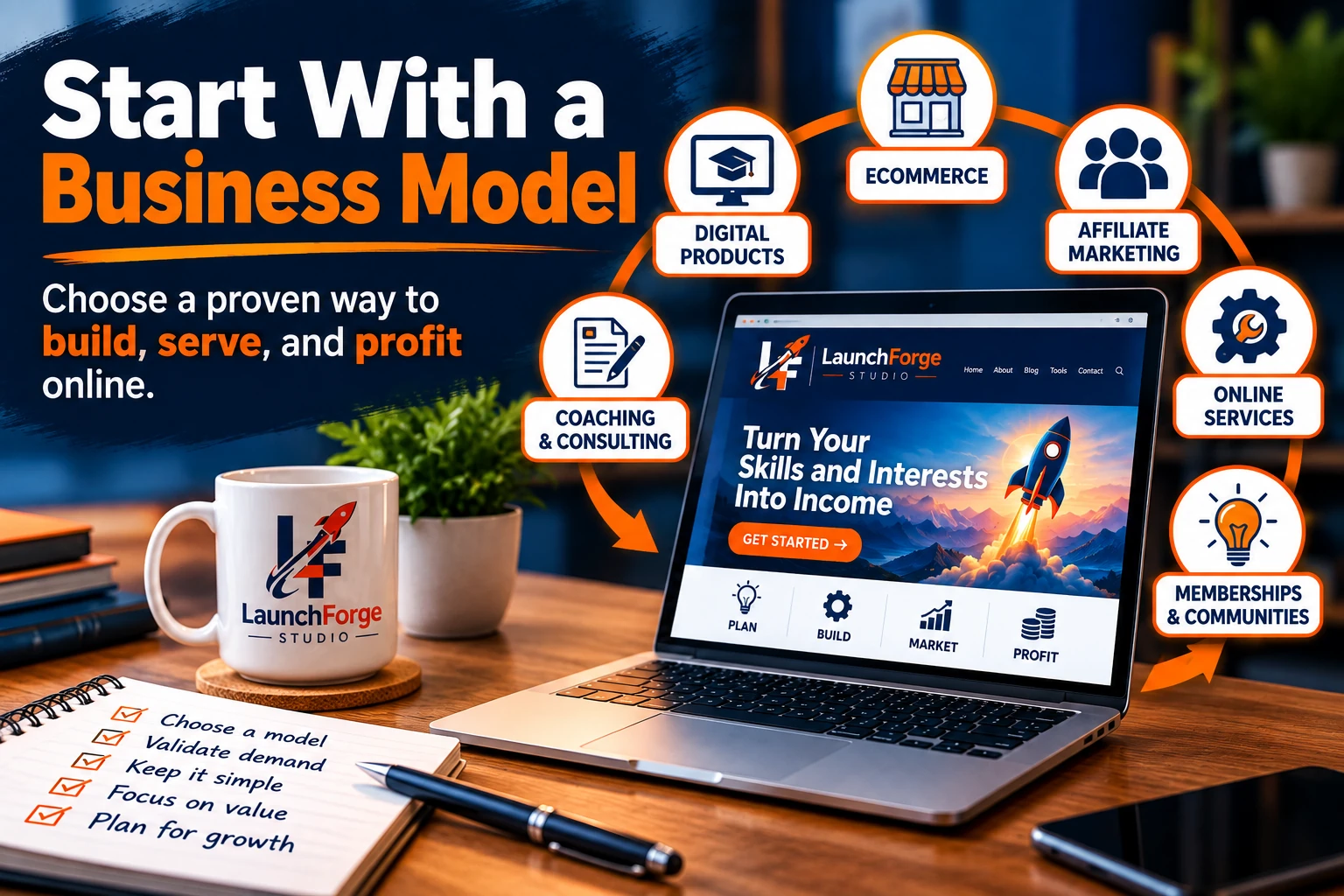
Choose a business model that fits what you want to build and how you want to serve your audience.
Before you start choosing software, building pages, or worrying about traffic, you need to have some idea of how your business is going to make money.
That doesn’t mean you need a 50-page business plan.
You simply need to understand what you’re offering and who you’re trying to help.
An online business can take many forms.
You might sell your own products.
You might sell digital products such as courses, guides, templates, or other downloadable resources.
You might provide services based on your skills or experience.
You might build an affiliate business by recommending products or services offered by other companies.
You might create content and build an audience that you eventually monetize through several different methods.
There isn’t one business model that every beginner has to follow.
What matters is knowing what you’re trying to build before you start assembling the technology around it.
For example, if you’re selling a service, your website may need to explain that service, establish credibility, answer questions, and give visitors an easy way to contact you or book a consultation.
If you’re promoting affiliate offers, you may focus more heavily on content, landing pages, email marketing, and traffic generation.
If you’re selling your own product, you’ll likely need a way to present the product, collect payment, and deliver what the customer purchased.
The tools may be different, but the principle is the same.
Start with the business instead of starting with the software.
I’ve found this to be an important distinction because it’s easy to get distracted by everything a platform can do.
Just because a tool gives you twenty different features doesn’t mean your business needs all twenty.
Figure out what your business needs first.
Then choose the tools that help you accomplish those specific objectives.
That approach can save you time, reduce unnecessary expenses, and make the entire process easier to understand.
Have Something Worth Offering
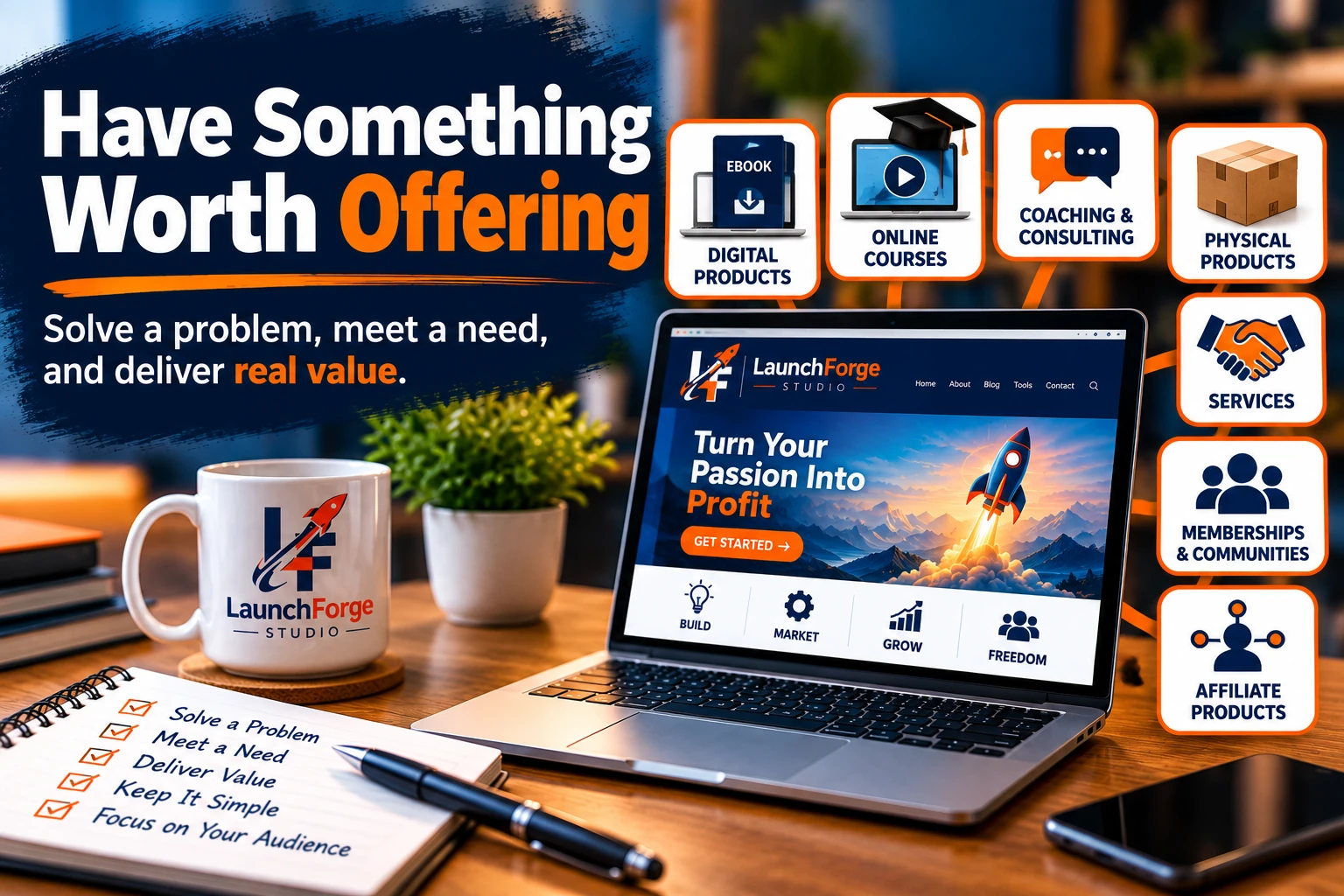
Build an offer that solves a problem, meets a need, and provides real value.
Once you know what kind of business you want to build, the next piece is figuring out what you’re actually offering people.
This sounds obvious, but it’s an area where a lot of new businesses get stuck.
You can have a great-looking website.
You can have an email list.
You can have traffic coming to your pages.
You can have all the marketing tools you could possibly need.
But if the visitor doesn’t understand what you’re offering or why it matters to them, the rest of the system has a much harder job.
Your offer doesn’t have to be complicated.
It could be a physical product.
It could be a digital product.
It could be a service.
It could be access to a membership.
It could be an affiliate product or service you’re recommending.
It could even be a free resource designed to help you begin building a relationship with a potential customer.
The important thing is that the visitor should be able to understand what you’re presenting and what they can expect by taking the next step.
That means your offer needs to communicate a few basic things.
What is it?
Who is it for?
What problem does it address?
What does the person get?
What should they do next?
You don’t need to answer all of those questions with a massive sales pitch.
In many cases, simple and clear is better.
Think about what happens when someone arrives at your website for the first time.
They don’t know your business the way you do.
They don’t automatically understand your product, your service, or your reasoning behind creating it.
You have to make the value understandable from their perspective.
This is also where your business model and your marketing start connecting.
Your offer determines what kind of message you need to create.
That message influences the page you send people to.
And the page gives the visitor the information they need before deciding whether to continue.
So before worrying about driving thousands of visitors to your website, make sure there’s actually something there worth presenting to them.
Traffic can bring people to your business, but your offer gives them a reason to stay.
Ready to Build the Rest of Your Online Business?
Once you have something worth offering, you need the pieces that help you actually put that business online, attract people, capture leads, and continue building relationships.
Profit Hub System brings many of those essential business tools together in one platform, giving you a place to build and manage your online business without having to piece everything together from multiple services.
Learn More About Profit Hub System →
Build a Place for Your Business to Live
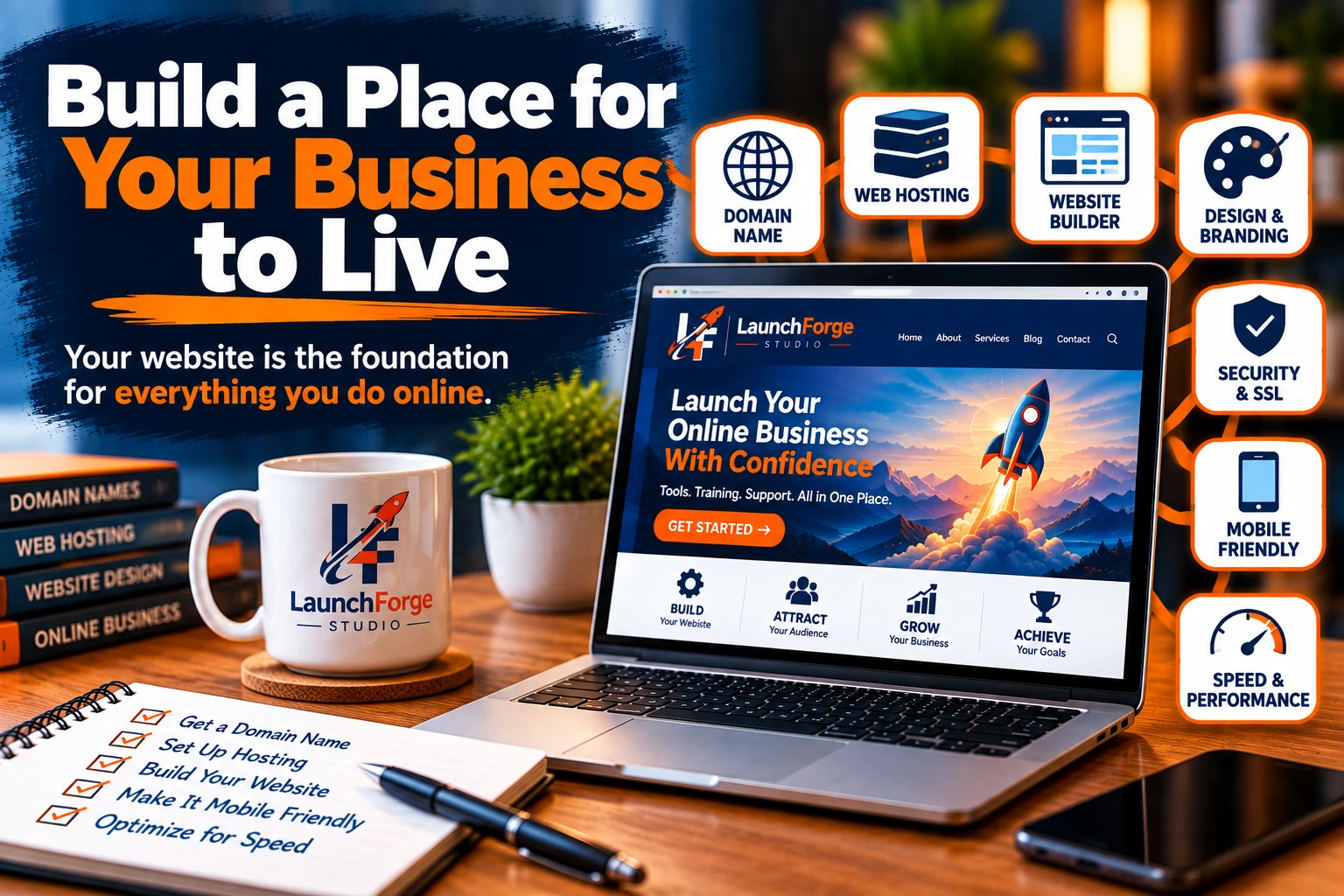
Your website gives your online business a place to live, grow, and serve your audience.
Once you know what you’re offering, you need somewhere online where people can find out more about it.
For many businesses, that means a website.
Your website doesn’t have to be enormous when you’re starting out.
You don’t need twenty different pages just because someone told you a professional website is supposed to have them.
What you need is a clear place where visitors can understand who you are, what you offer, and what they can do next.
Depending on your business, that might mean a simple homepage, an about page, service or product pages, contact information, and supporting content.
You may also use landing pages for specific campaigns instead of sending every visitor to your homepage.
The important thing is that each page should have a purpose.
A visitor should not have to figure out where to go.
If someone arrives because they’re interested in your service, they should be able to find information about that service.
If someone arrives because they read one of your articles, there should be a logical next step available.
If you’re building an email list, your site should make it easy for people to find your signup opportunity.
Your website is essentially the home base for everything else you’re doing online.
Traffic can come from search engines, social media, advertising, email, referrals, or other sources.
Those visitors need somewhere to go.
That’s why I wouldn’t look at a website as simply an online business card.
It can become the central point where your content, offers, lead generation, marketing, and customer relationships connect.
At the same time, don’t let the idea of building a website become another excuse to delay starting.
Your first website doesn’t need to be perfect.
It needs to be useful.
You can improve the design, add content, create new pages, and refine your messaging as the business develops.
That’s exactly how I approach LaunchForge Studio.
The site continues to evolve as I learn what works, what needs improvement, and what information people actually need.
Build the foundation first. Improve it as you grow.
Secure Your Domain and Basic Website Infrastructure
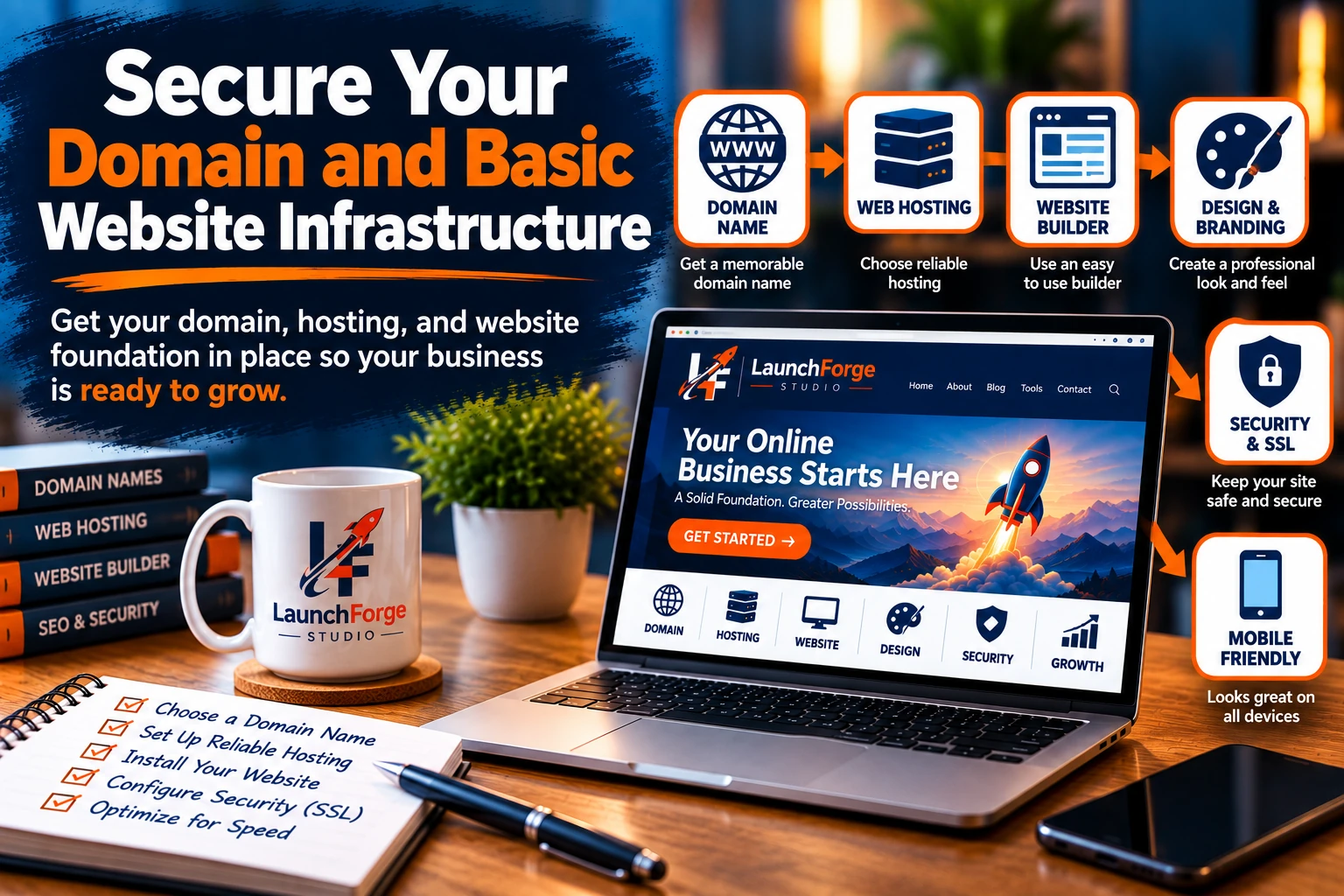
Put your domain, hosting, and website foundation in place before building further.
Once you’ve decided what you’re building and established where your business will live online, you’ll need a few basic pieces of infrastructure behind it.
The first is your domain name.
Your domain is the address people use to find your business online. It’s part of your brand identity and, ideally, should be reasonably easy to remember, spell, and connect to what you’re doing.
You don’t need to spend a fortune trying to find the perfect domain.
You need one that makes sense for your business and gives you a solid foundation to build on.
You’ll also need hosting if you’re building a self-hosted website.
Hosting is where the files and resources that make up your website are stored so visitors can access the site through your domain.
This is one area where beginners can quickly encounter a confusing collection of technical terms and competing offers.
Shared hosting.
Managed hosting.
Website builders.
WordPress hosting.
Different storage limits.
Different traffic limits.
Different features.
It can become overwhelming very quickly.
The important thing is to understand what your particular business actually needs rather than automatically choosing the most expensive package.
You’ll also need a way to manage the website itself.
For many businesses, WordPress is one option because it provides a flexible foundation for creating pages, publishing content, managing a website, and expanding its capabilities over time.
But WordPress isn’t the only option.
The right choice depends on your business model, technical comfort level, budget, and what you need the website to accomplish.
The same principle applies to everything else in your technical setup.
Choose infrastructure that supports the business you’re building rather than building a business around the infrastructure you’ve purchased.
And remember that your domain, hosting, and website platform are simply the foundation.
They aren’t the business by themselves.
The real value comes from what you build on top of them.
Know Who You Want to Reach

Understanding your audience helps you create a business that speaks to the people you want to serve.
Knowing what you want to build is only part of the foundation.
You also need to have some idea of who you’re building it for.
You don’t have to create a complicated customer profile with pages of demographic information.
Start by asking a much simpler question:
Who is most likely to need what I’m offering?
The answer helps shape almost every other part of your online business.
Your website messaging can speak more directly to that person.
Your content can address the questions they’re actually asking.
Your lead magnets can solve problems that matter to them.
Your landing pages can focus on the benefits they’re looking for.
And your marketing can be directed toward places where that audience is already spending time.
This is where choosing a niche can be helpful.
A niche gives your business a more specific area of focus rather than trying to appeal to everyone.
That doesn’t mean you have to permanently lock yourself into one tiny category.
It simply gives you a starting point.
For example, saying that you want to help “everyone who wants to make money online” is extremely broad.
You might instead decide to focus on beginners who want to learn how to build their first online business.
Now your content, messaging, resources, and offers can be created with a much clearer person in mind.
The more clearly you understand the problem you’re trying to solve, the easier it becomes to communicate your value.
You also don’t need to know everything about your audience before you start.
You can learn from the questions people ask, the problems they encounter, the content they respond to, and the feedback you receive.
That information becomes useful as your business develops.
Your initial audience definition is a starting point, not a permanent contract.
Start specific enough to be understood, then learn and refine as you go.
Identify the Problem You’re Solving
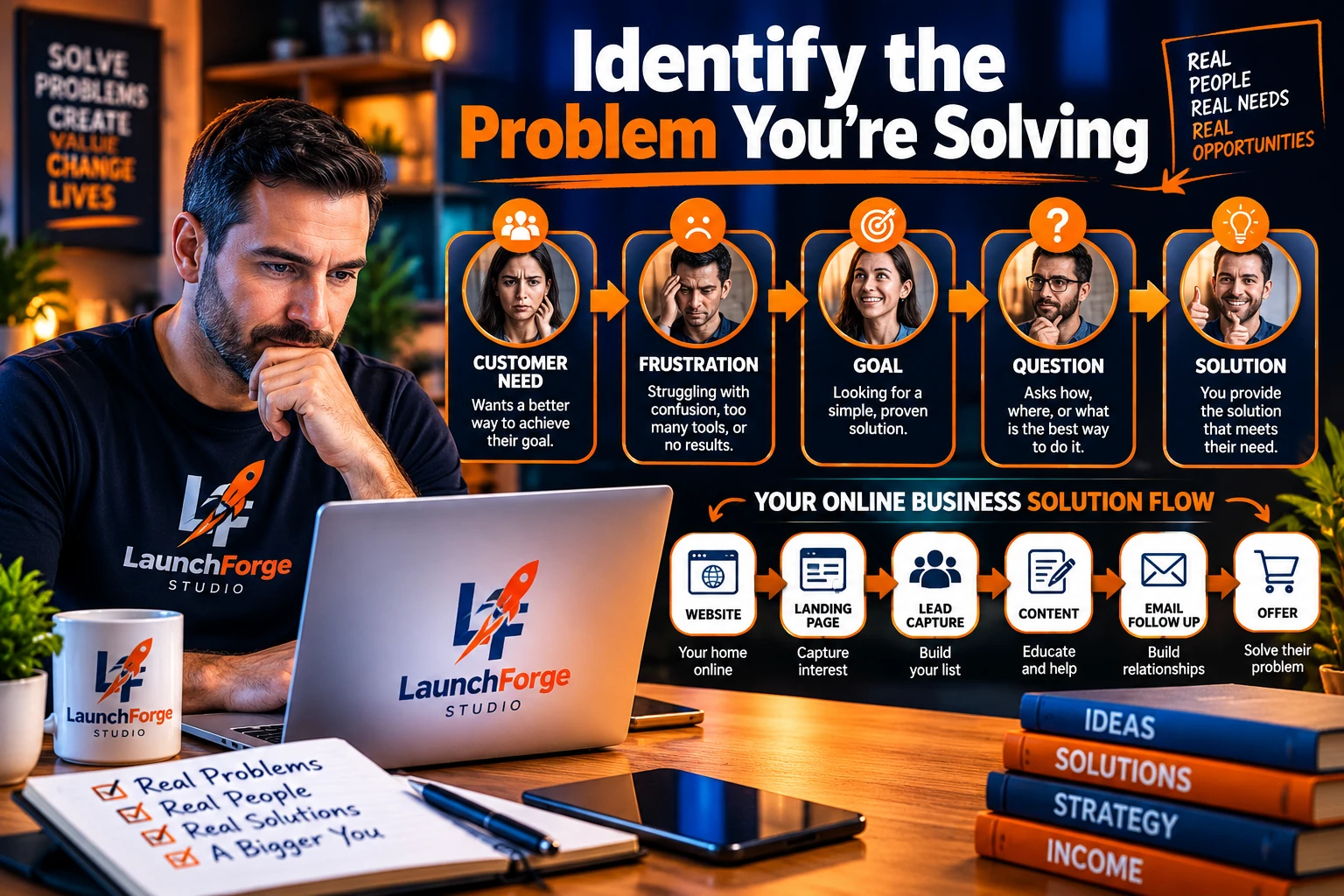
Understanding your audience helps you create a business that speaks to the people you want to serve.
Knowing your audience is important, but there’s another question you need to answer:
What problem are you helping them solve?
People generally don’t seek out a business simply because that business exists.
They have a need, a question, a frustration, a goal, or a problem they’re trying to address.
Your job is to understand that need and make it clear how your business can help.
That doesn’t mean you have to invent some revolutionary solution.
Sometimes the problem is surprisingly simple.
A local business may help customers save time.
A consultant may help someone solve a specific business problem.
A service provider may handle something the customer doesn’t have the time, knowledge, or desire to do themselves.
A digital product may help someone learn a skill or accomplish a particular task.
An affiliate marketer may help people discover products or services that solve a problem they’re already trying to solve.
The more clearly you understand the problem, the easier it becomes to build the rest of your online presence around it.
Your website can explain the problem.
Your content can answer questions about it.
Your lead magnet can provide a useful first step.
Your landing page can present a focused solution.
Your email follow-up can continue the conversation.
And your offer can give the person a logical next step.
This is one reason I believe starting with technology is backwards.
If you begin by asking, “Which website builder should I use?” or “Which marketing software should I buy?”, you are starting with the tools instead of the reason those tools are needed.
Start with the problem.
Then determine how you can help.
Then build the technology around that process.
You may also discover that the problem changes as you learn more about your audience.
That’s okay.
Your first version of the business doesn’t have to have every answer.
Pay attention to the questions people ask and the obstacles they describe.
Those conversations can help you improve your offer, your content, and eventually the entire way your business operates.
A useful business starts with a useful answer to a real problem.
Create a Clear Offer
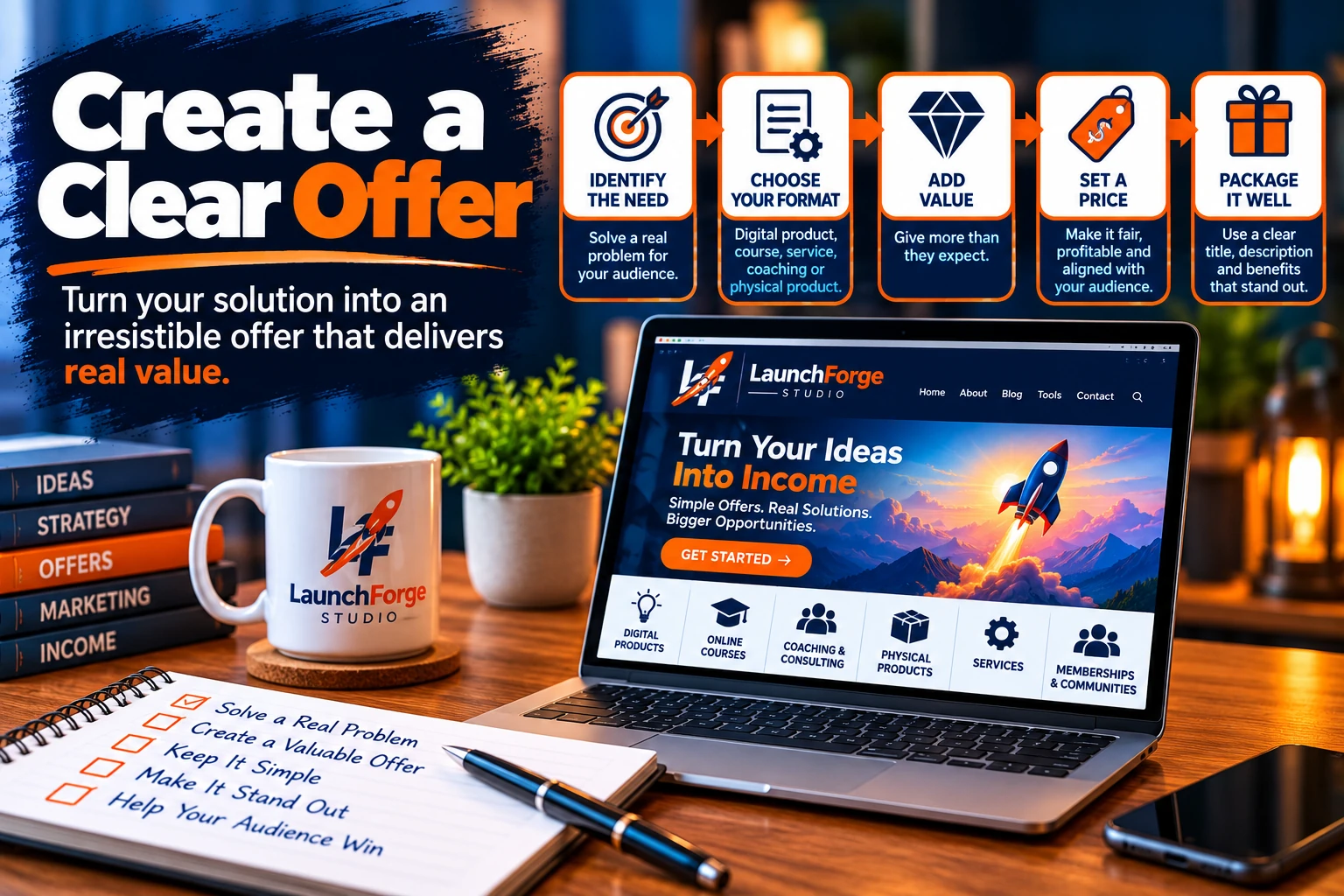
Turn the solution you provide into a clear offer that gives your audience a reason to take the next step.
Once you understand who you’re trying to reach and the problem you’re trying to help them solve, you need to turn that understanding into a clear offer.
Your offer is what you’re actually putting in front of the person.
It might be a product they can purchase.
It might be a service you provide.
It might be a digital resource they can access.
It might be a membership or subscription.
It could also be an affiliate offer where you’re helping someone discover a product or service provided by another company.
Whatever model you choose, the person should be able to understand what they’re being offered without having to decode your website.
A clear offer answers some basic questions:
What are you offering?
Who is it for?
What problem does it address?
What does the person receive?
What should they do next?
You don’t need to answer every question with a wall of text.
In fact, the simpler the explanation, the easier it may be for someone to understand what you’re offering.
Think about the difference between saying:
“Welcome to our innovative digital ecosystem designed to empower today’s modern entrepreneur.”
and saying:
“Learn how to build your first online business step by step.”
The second example tells the visitor much more about what they’re actually going to find.
Clarity matters because your offer eventually becomes the center of your marketing.
Your content introduces problems and provides useful information.
Your website establishes your online presence.
Your landing pages focus attention on a particular opportunity.
Your lead capture system gives people a way to stay connected.
Your email and follow-up systems continue the conversation.
But eventually, the person needs to understand what you’re asking them to consider or purchase.
Your offer doesn’t have to be perfect when you launch.
You can refine it as you learn more about your audience and see how people respond.
What matters initially is having something real enough to put in front of people and learn from.
Don’t spend months perfecting an offer nobody has seen. Give yourself an opportunity to test, learn, and improve.
Create Your Online Presence
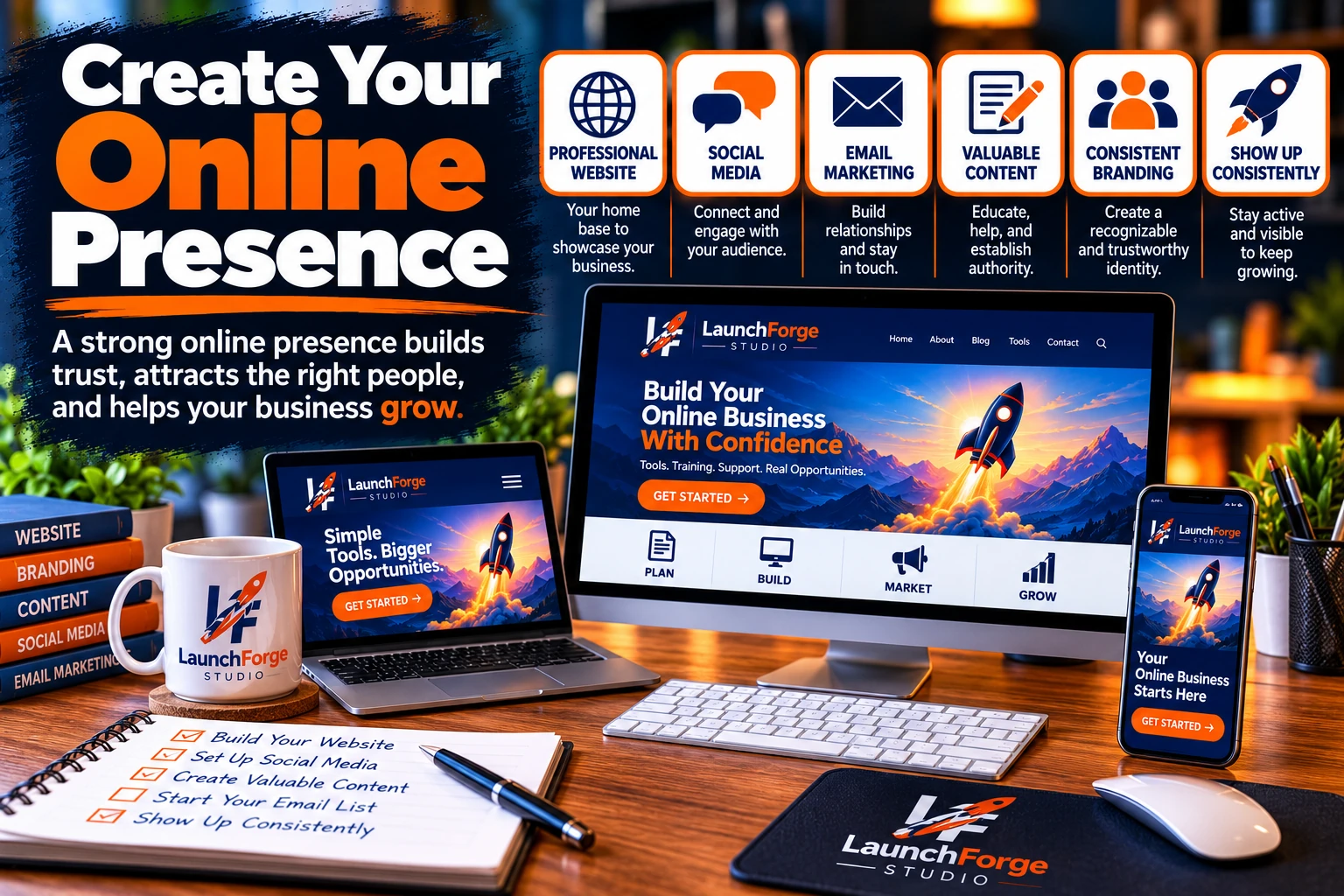
Build an online presence that gives people a clear way to discover, understand, and connect with your business.
Once you have a business idea, an audience, a problem you’re trying to solve, and an offer, you need a way for people to find out more about you.
That’s where your online presence comes in.
For many online businesses, the website becomes the central hub.
It gives you a place to explain what you do, publish useful content, present your offers, collect leads, and give visitors a clear path toward the next step.
But your online presence doesn’t have to begin with a massive website.
In fact, starting small can make the process much easier.
At the beginning, you may only need a handful of important pages.
Your Homepage
Your homepage should quickly communicate what your business is about and who you help.
A first-time visitor shouldn’t have to dig through your site to figure out what you do.
Your About Page
Your About page gives people an opportunity to learn more about the person or business behind the website.
It can help establish credibility and give your visitors another reason to connect with you.
Your Offer or Service Pages
If you’re selling products or services, visitors need somewhere to learn about them.
These pages should explain what you’re offering, who it’s for, and what the visitor can do next.
Your Contact or Lead Capture Page
People need a simple way to get in touch, request information, join your list, or take whatever next step makes sense for your business.
Your Content
Content can help people discover your business and learn from you before they’re ready to buy.
That might include blog posts, guides, tutorials, videos, or other useful resources.
You don’t necessarily need every one of these pages on day one.
The right structure depends on the business you’re building.
What matters most is creating an online presence that makes sense to the visitor.
They should be able to arrive, understand what you do, find the information they need, and know where to go next.
And don’t overlook mobile users.
People may discover your business while sitting at a computer, but they may just as easily find you on a phone or tablet.
Your pages should be easy to read, navigate, and use regardless of the device someone is using.
The same principle applies to your overall design.
You don’t need the most elaborate website on the internet.
You need one that is clear, functional, trustworthy, and useful to the people you’re trying to reach.
Your website is the home base. Build it to help people, not simply to look impressive.
Give Visitors a Way to Stay Connected
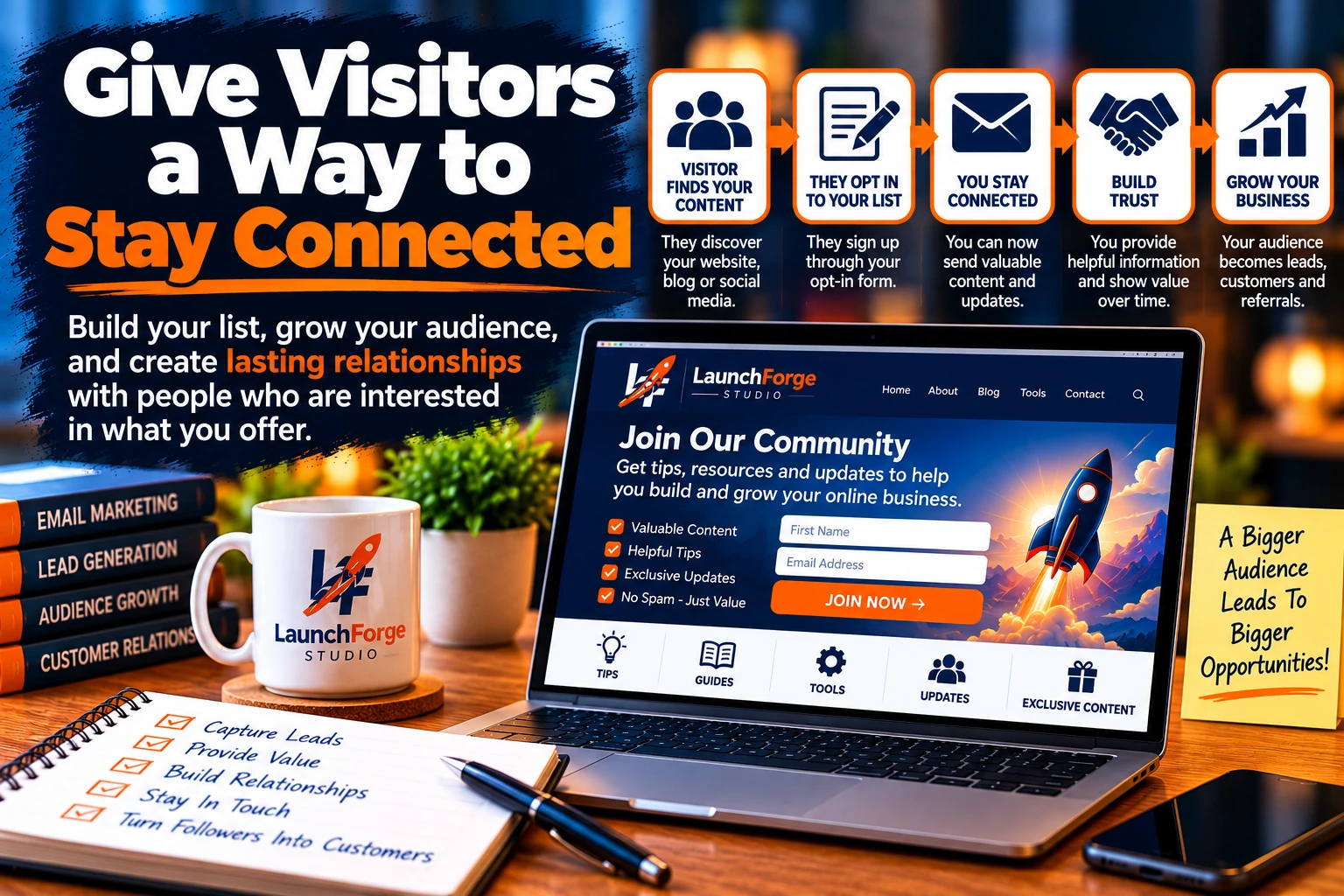
Give interested visitors a simple way to stay connected while you continue providing value and building relationships.
Getting someone to visit your website is only part of the process.
What happens when they leave?
If the answer is simply, “They’ll come back later,” you’re leaving the next step entirely up to the visitor.
They may come back.
They may forget.
They may get distracted.
They may find another website.
Or they may simply close the browser and never think about your business again.
That’s why giving visitors a way to stay connected can be such an important part of an online business.
One of the simplest ways to do this is through lead capture.
Instead of relying on someone to remember your website, you can give them an opportunity to voluntarily provide their contact information so you can continue communicating with them.
That might happen through an email signup form, a lead capture page, a free resource, a newsletter, or another useful offer.
The important part is that you’re giving the visitor a reason to take that step.
Simply placing a form on a page and saying “Sign Up” may not be enough.
People want to know what they’re signing up for and why it is worth their time.
That’s where something like a lead magnet can help.
A useful checklist, guide, resource, or other free offer can give someone a reason to exchange their contact information for something they actually want.
Once someone becomes a lead, your relationship with that person can continue beyond their first visit.
You can provide useful information.
You can answer questions.
You can introduce relevant products or services.
You can send helpful content.
And when the timing is right, you can present an appropriate offer.
This is one of the reasons I don’t think traffic should be viewed as the entire marketing strategy.
Getting someone to your website is the beginning of the relationship, not necessarily the end goal.
A visitor who leaves without taking any action may be gone for good.
A visitor who chooses to stay connected gives your business another opportunity to provide value.
That doesn’t mean every visitor needs to become a lead.
People should always have a choice.
But if building an audience and developing customer relationships are important parts of your business model, you need a system that gives interested visitors a simple way to stay connected.
Build a Way to Follow Up With Your Leads
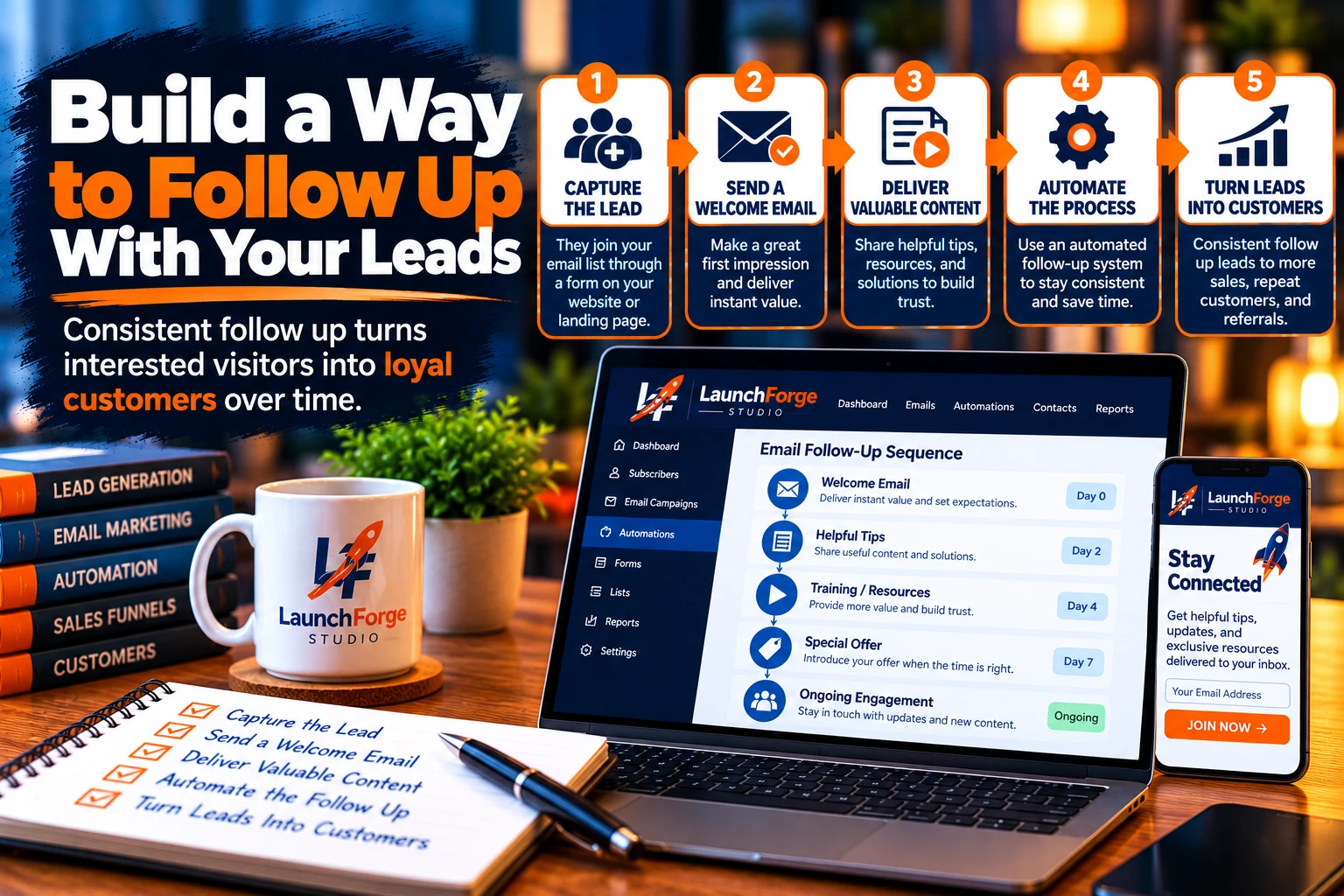
A consistent follow-up process helps you continue providing value and building relationships with your leads.
Once someone becomes a lead, the relationship shouldn’t simply stop there.
You now have an opportunity to continue providing value and building trust.
This is where email marketing and follow-up become important.
A person may not be ready to buy the first time they encounter your business.
Maybe they were simply looking for information.
Maybe they downloaded your free resource.
Maybe they liked what they saw but wanted to think about it.
Maybe they weren’t ready at that particular moment.
That doesn’t necessarily mean they’re no longer interested.
A follow-up system gives you a way to continue the conversation.
For a simple online business, that might begin with a welcome email after someone joins your list.
From there, you can send useful information, educational content, resources, updates, and relevant offers.
The goal isn’t to bombard people with promotional messages.
It’s to give people a reason to continue opening your emails.
Your follow-up should be connected to the reason they joined your list in the first place.
If someone downloaded a guide about building an online business, for example, the next messages should make sense in relation to that original interest.
You can answer related questions.
You can provide additional resources.
You can introduce another useful piece of information.
And eventually, when appropriate, you can present an offer that is relevant to what you’ve been discussing.
This creates a simple progression:
Visitor → Lead → Conversation → Relationship → Opportunity
The technology behind that process can be as simple or sophisticated as your business requires.
You may eventually use automated sequences, segmentation, behavioral triggers, and other marketing automation.
But you don’t need a complicated automation system simply because one exists.
Start with a useful way to communicate consistently with the people who have chosen to hear from you.
And remember that your email list is not just another number on a dashboard.
These are people who have voluntarily given you permission to communicate with them.
Treat that relationship accordingly.
Provide value.
Respect their attention.
Make your messages useful.
And give them an easy way to stop receiving them if they no longer want to.
The goal of follow-up isn’t to chase people. It’s to continue a conversation that they chose to start.
You Need a Way to Get Traffic
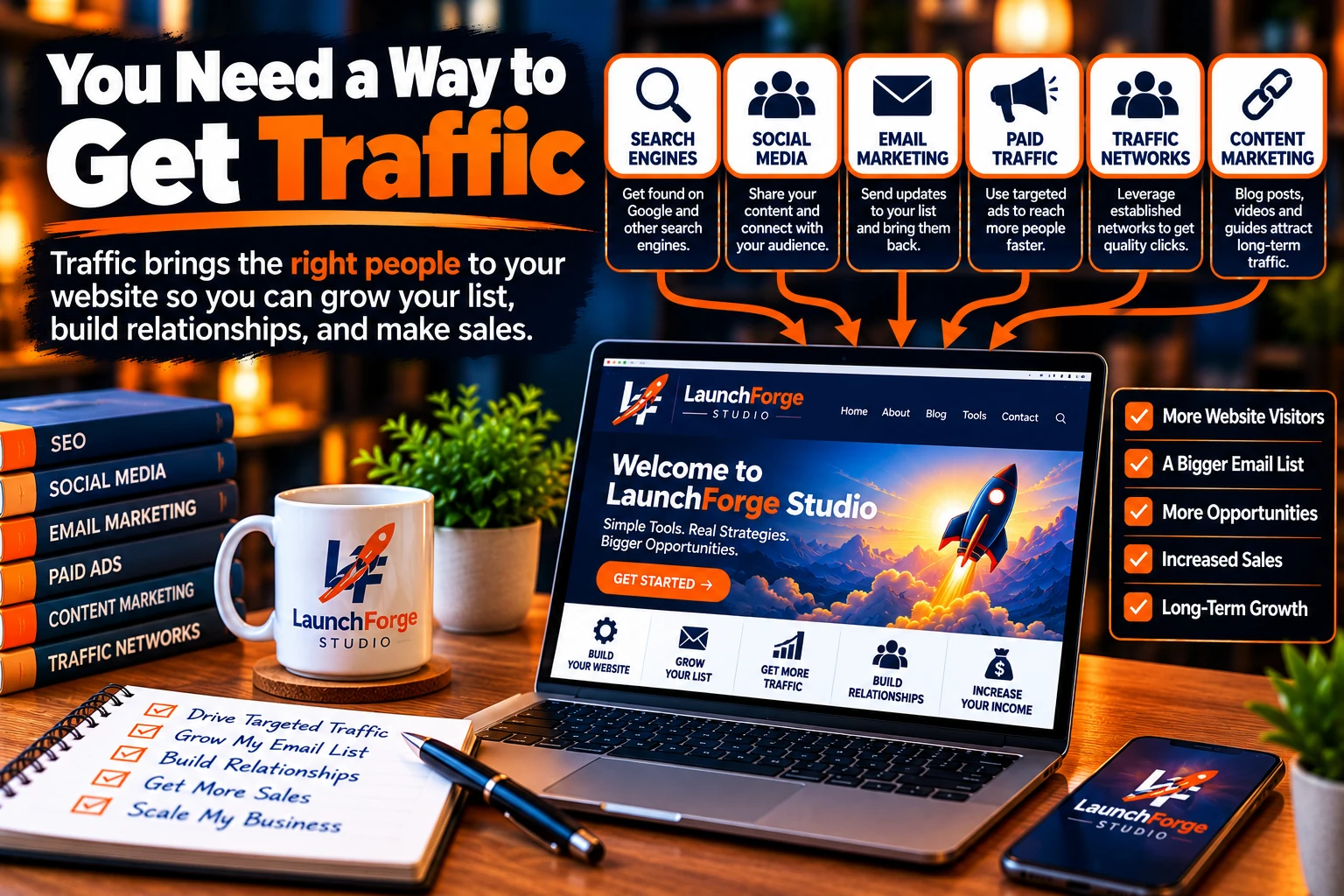
Different traffic sources can help bring the right people to your website, grow your audience, and create opportunities for your business.
You can have a great website, a useful offer, a lead capture system, and a follow-up sequence, but none of those things matter very much if nobody ever discovers your business.
You need a way to get people to your website, landing pages, content, offers, or other points of entry.
That’s traffic.
And traffic can come from a lot of different places.
Search engines can bring people who are actively looking for information, products, services, or solutions.
Social media can help you build an audience and introduce your business to people who may not have discovered you otherwise.
Email marketing can bring people who already know you back to your website or offers.
Paid advertising can put your message in front of a targeted audience without waiting for organic traffic to develop.
You can also use other promotional methods, including advertising networks, traffic platforms, partnerships, referrals, and communities where your target audience already spends time.
You don’t need to use all of them.
In fact, trying to use every traffic source at the same time can create another version of the same problem we’ve been talking about throughout this article: too much complexity too soon.
Start with one or two traffic sources that make sense for your business and learn how they work.
If you’re creating helpful content, search traffic may become an important part of your strategy.
If your audience spends time on social platforms, those networks may provide opportunities to reach them.
If you have a budget and a proven offer, paid advertising may eventually make sense.
The key is to understand what you’re trying to accomplish with each traffic source.
Getting visitors is not the same thing as generating leads.
Getting leads is not the same thing as making sales.
And a large number of clicks doesn’t automatically mean that your marketing is working.
You need to pay attention to what happens after people arrive.
Do they stay?
Do they read?
Do they sign up?
Do they contact you?
Do they purchase?
Do they return?
Those questions can tell you far more than simply looking at the number of visitors your website received.
Traffic is an input into your system.
Your job is to build the rest of the system so that the attention you’re generating has somewhere useful to go.
You don’t need more traffic just for the sake of having more traffic. You need the right people reaching the right part of your business.
Turn Visitors Into Action
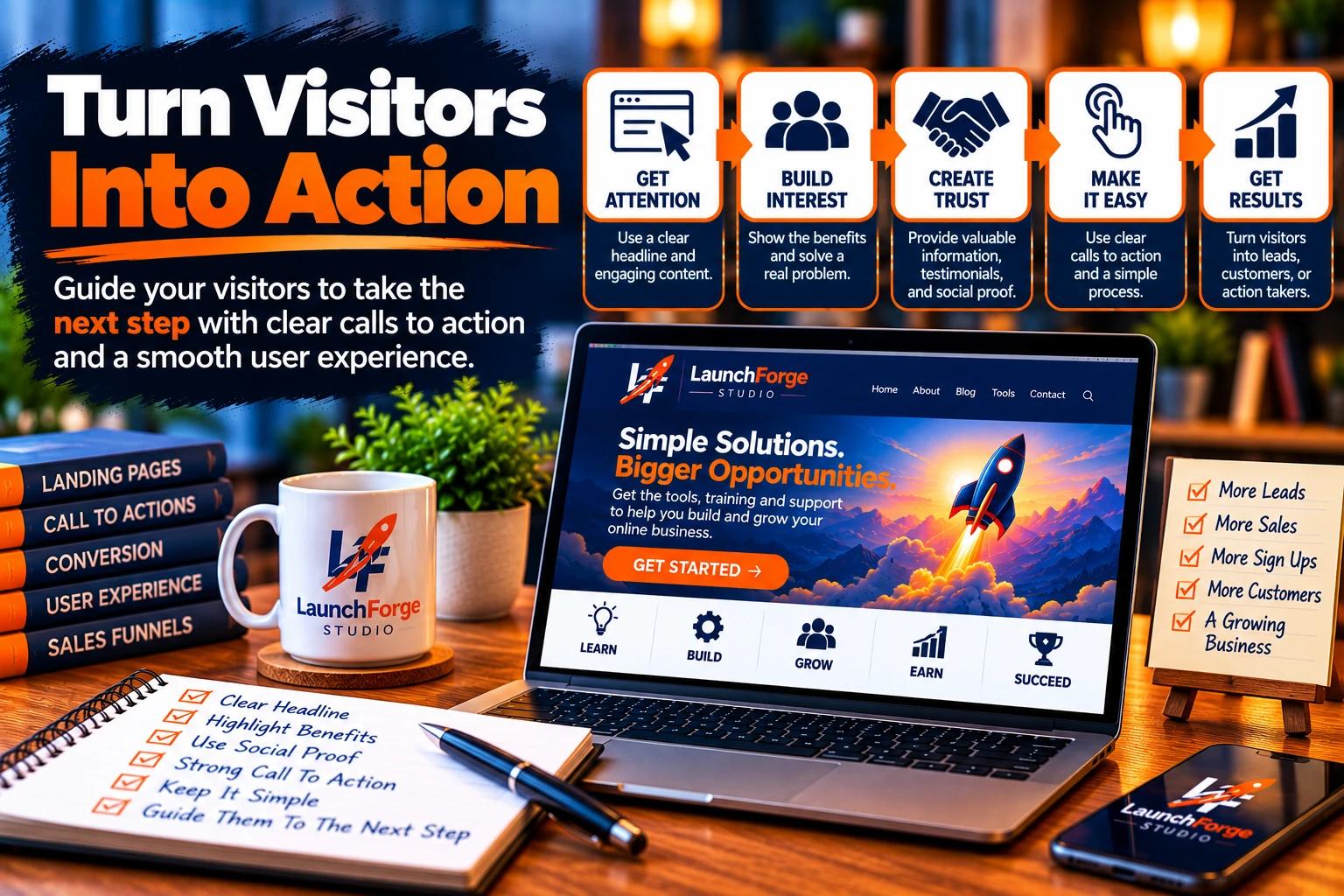
Clear calls to action and a simple user experience can guide website visitors toward the next step.
Getting people to your website is only half the job.
Once they arrive, you need to make it easy for them to understand what you want them to do next.
That next step will depend on your business.
You might want someone to purchase a product.
You might want them to request a quote.
You might want them to schedule an appointment.
You might want them to join your email list.
You might want them to download a resource.
You might simply want them to read another piece of content and learn more about your business.
Whatever the goal is, the visitor shouldn’t have to guess.
This is where your call to action becomes important.
A call to action gives the visitor a clear direction.
It might say “Get Started,” “Request a Quote,” “Download the Guide,” “Join the List,” or something else that matches the action you’re asking them to take.
Your page also needs to support that action.
If you’re asking someone to sign up for a free resource, explain what they’re getting.
If you’re asking someone to purchase something, make the offer and important details easy to understand.
If you’re asking someone to contact you, make the contact process simple.
This is one reason landing pages can be useful.
Instead of sending every visitor through your entire website, you can create a focused page built around a particular offer or objective.
A landing page can remove unnecessary distractions and keep the visitor focused on the action you want them to consider.
But a landing page isn’t magic.
A great-looking page won’t automatically convince someone to take action.
The headline needs to capture attention.
The content needs to explain the value.
The offer needs to make sense.
The call to action needs to be clear.
And the entire experience needs to work properly on the device the visitor is using.
There also needs to be a logical connection between the traffic source and the page.
If someone clicks an advertisement promising one thing and lands on a page talking about something completely different, confusion is almost guaranteed.
The same principle applies to your other marketing channels.
Your message should remain reasonably consistent from the first interaction through the next step.
That creates a more understandable experience for the visitor.
And sometimes the best conversion improvement isn’t adding another feature or another piece of software.
It may simply be making the existing path easier to understand.
Give people a clear reason to act, and make the next step obvious.
What You Don’t Need to Start an Online Business
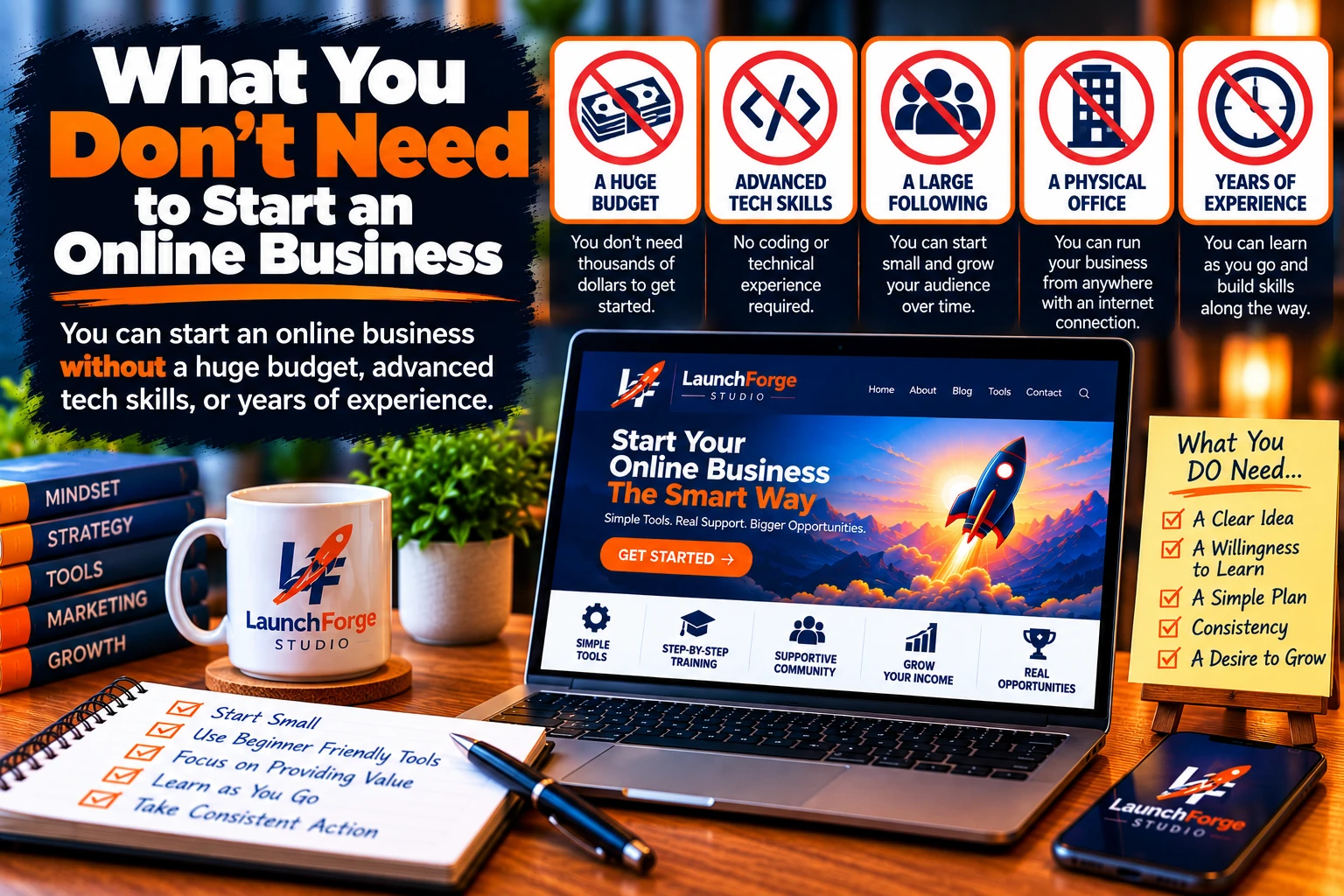
You don’t need a huge budget, advanced technology skills, or everything figured out before you can begin building an online business.
One of the easiest ways to make starting an online business feel impossible is to believe you need everything figured out before you begin.
You don’t.
You don’t need a massive website.
You don’t need every marketing tool available.
You don’t need to be active on every social media platform.
You don’t need a huge email list.
You don’t need thousands of visitors.
And you don’t need a perfect brand, perfect funnel, or perfect marketing strategy on day one.
What you need is enough of the right foundation to begin learning.
You Don’t Need Dozens of Software Tools
It’s easy to see another entrepreneur demonstrating a collection of tools and assume your business needs the same setup.
Maybe they use one platform for their website, another for landing pages, another for email, another for automation, another for analytics, and another for advertising.
That doesn’t mean you need all of them.
A tool should solve a problem for your business.
If you don’t have that problem yet, you may not need the tool yet.
Adding software simply because it’s available can create additional expenses, additional logins, and additional things you have to learn and maintain.
Start with what you actually need.
Add something when there is a clear reason for adding it.
You Don’t Need a Huge Website
Your first website doesn’t need to contain every possible piece of content.
A small, useful website can provide a much better foundation than a massive website filled with pages nobody needs.
Start with the pages that help visitors understand your business and take the appropriate next step.
You can expand the site as your business grows.
You Don’t Need to Be Everywhere
There are more social networks, advertising platforms, communities, and promotional channels than any one person could realistically manage well.
You don’t have to be everywhere.
Choose the channels that make sense for your audience and your business.
Learn what works there.
Then expand when you have a reason to do so.
You Don’t Need a Huge Email List
An email list of ten people who are genuinely interested in what you’re doing can be more useful to a new business than a much larger list of people who never engage.
Your first objective isn’t necessarily to collect the biggest number possible.
It’s to start building relationships with people who have a legitimate reason to hear from you.
You Don’t Need Perfect Branding
Your logo can improve.
Your colors can change.
Your website design can evolve.
Your messaging can become clearer.
Your business may even change direction as you learn more.
That doesn’t mean you should ignore professionalism.
It means you don’t need to spend months perfecting every visual detail before allowing the business to exist.
You Don’t Need Everything Figured Out
This may be the biggest one.
You will learn things after you start that you could not have learned beforehand.
You’ll discover which questions people ask.
You’ll find out which pages receive attention.
You’ll see which traffic sources produce results.
You’ll learn which parts of your process are confusing.
You’ll discover which tools are useful and which ones aren’t worth keeping.
That’s information you can only get by actually doing the work.
You don’t need to know everything before you start. You need to be willing to learn as you build.
Take Care of the Basic Business Requirements
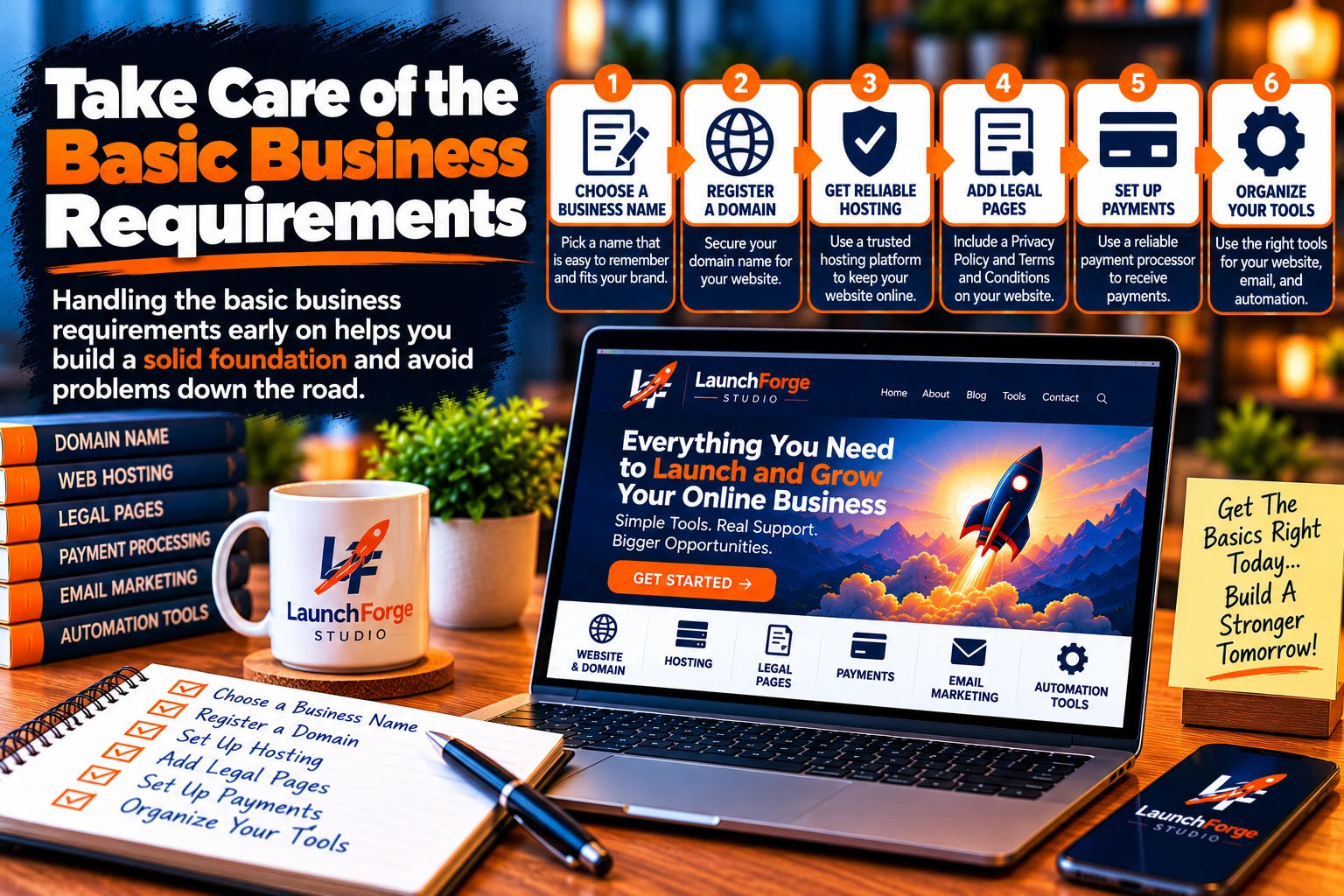
Taking care of the basic business requirements gives your online business a stronger foundation from the beginning.
There’s another side of starting an online business that doesn’t get nearly as much attention as websites, social media, and marketing.
It’s the basic business setup.
Your specific requirements will depend on where you live, what you’re selling, and how your business operates. That’s why you shouldn’t assume that every online business needs exactly the same legal or financial setup.
You may need to choose a business structure, register your business, obtain applicable licenses or permits, understand your tax responsibilities, and keep appropriate financial records.
Some businesses may have very few requirements.
Others may have additional obligations because of the products or services they provide.
The fact that your business operates online doesn’t automatically remove those responsibilities.
Choose a Business Structure
Depending on your situation, you may need to determine how your business will be structured.
That could include operating as a sole proprietor or creating another type of business entity.
There isn’t a universal answer that applies to everyone.
Your location, business activities, financial situation, and long-term plans can all affect what makes sense.
If you’re unsure about the appropriate structure, this is an area where getting advice from a qualified professional can be worthwhile.
Check Registration and Licensing Requirements
Some businesses may need to register with a government agency or obtain specific licenses or permits.
Those requirements can vary significantly by location and industry.
For example, the requirements for a local service business may be very different from those for someone selling digital products online.
Don’t assume that because you’re working from a computer, there are no rules that apply to your business.
Check the requirements that apply to your particular situation before you begin accepting customers.
Have a Way to Accept Payments
If you’re selling something, you’ll also need a way to collect payment.
That could involve a payment processor, ecommerce system, invoicing system, or another method appropriate for your business model.
Again, the right solution depends on what you’re selling.
A service provider may need a different payment process from an ecommerce store.
An affiliate marketer may not process customer payments at all because the company behind the offer handles the transaction.
The important thing is to understand where payment fits into your particular business model.
Keep Track of the Money
Even if your business starts small, keep reasonable records of the money coming in and the expenses associated with operating the business.
You don’t have to begin with an elaborate accounting department.
You do need to understand what you’re earning, what you’re spending, and what records you may need to maintain.
As your business grows, you can introduce more sophisticated accounting and financial systems.
The goal at the beginning is simply to avoid treating the financial side of the business as an afterthought.
Don’t Confuse Online With Unregulated
This is worth emphasizing.
The internet changes how you reach customers.
It doesn’t necessarily change the legal, tax, or financial responsibilities associated with operating a business.
The rules can vary depending on your location and business model, so use this section as a reminder to investigate your own requirements rather than as legal or tax advice.
Build your online business, but don’t forget that it’s still a business.
How Much Does It Cost to Start an Online Business?
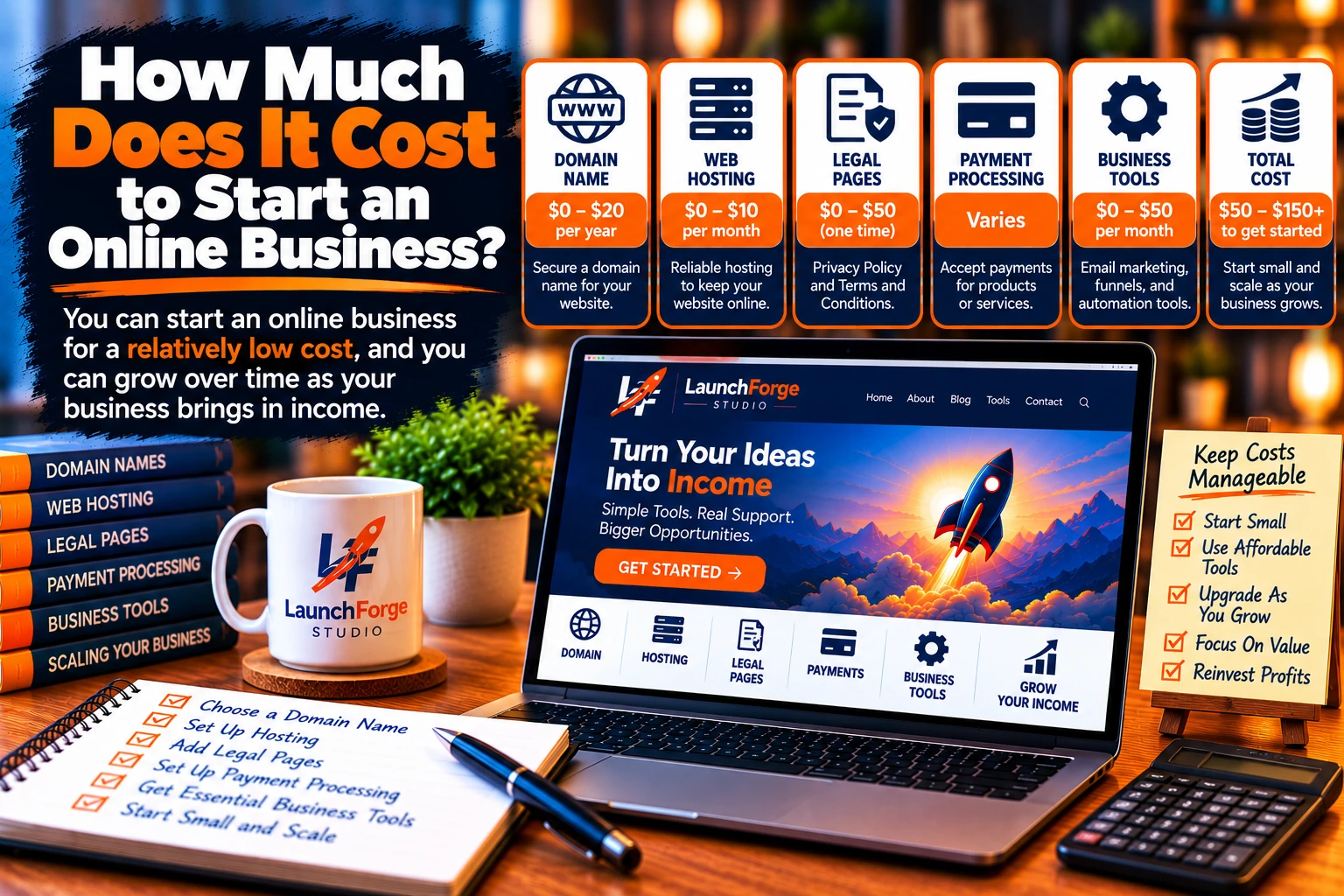
The cost of starting an online business depends on what you need, how you build it, and what you choose to invest in.
One of the first questions many beginners ask is, “How much money do I need to get started?”
There’s no single number that applies to every online business.
The cost can vary considerably depending on what you’re selling, how you’re selling it, which technology you use, and how much of the work you handle yourself.
Someone starting a service business may have very different expenses from someone building an ecommerce store.
Someone selling digital products may have a different setup again.
And someone starting an affiliate business may not need many of the systems required by a business that processes its own customer payments.
That’s why I wouldn’t approach the question by asking, “What’s the minimum amount of money required to start an online business?”
I’d ask:
What do I actually need to spend money on right now?
That’s a much more useful question.
Your Domain
A domain is one of the basic expenses you may encounter when establishing your online presence.
The cost depends on the domain extension and the registrar you use.
You don’t need an expensive premium domain to begin.
You need a domain that makes sense for your business and that you’re comfortable building your brand around.
Website and Hosting
Depending on how you build your website, you may have hosting or platform costs.
Some platforms bundle hosting and website functionality together.
Others require you to purchase hosting separately.
Again, there isn’t one universally correct setup.
Look at what your business actually needs and compare the total cost rather than focusing only on the advertised monthly price of a particular tool.
Email and Marketing Tools
As your business develops, you may decide to use email marketing, automation, lead capture, analytics, advertising, or other tools.
Some services have free plans.
Others charge monthly or annual fees.
The important thing is not to assume that you need every available service immediately.
Start with the systems required for your current stage.
Advertising and Traffic
You may also choose to spend money getting visitors to your website or offers.
That could include paid advertising, sponsored placements, traffic platforms, or other promotional methods.
But paid traffic isn’t automatically a requirement for starting.
You can begin by using organic content, social media, referrals, networking, email, or other methods that fit your business.
If you do spend money on advertising, treat it as a marketing expense that should be measured rather than assuming that spending more automatically produces better results.
Your Own Time Is a Cost Too
There’s another cost that doesn’t appear on a software invoice.
Your time.
Learning WordPress takes time.
Creating content takes time.
Building pages takes time.
Learning how to market takes time.
Testing different approaches takes time.
You can reduce some of that workload with tools, templates, automation, or outside help, but those options generally involve their own costs.
Understanding this can help you make better decisions about where to spend money and where to invest your own time.
Start Lean and Expand When There’s a Reason
One of the biggest advantages of starting small is that you can learn before committing to a complicated technology stack.
You might begin with a domain, a basic website, a way to communicate with leads, and a simple method of attracting visitors.
As the business grows, you may discover that you need better automation, more advanced analytics, additional traffic sources, or other specialized tools.
That’s when adding them makes more sense.
Your goal isn’t to spend as little as possible. Your goal is to spend intentionally on things that help you build, market, or improve the business.
Put the Essential Pieces Together
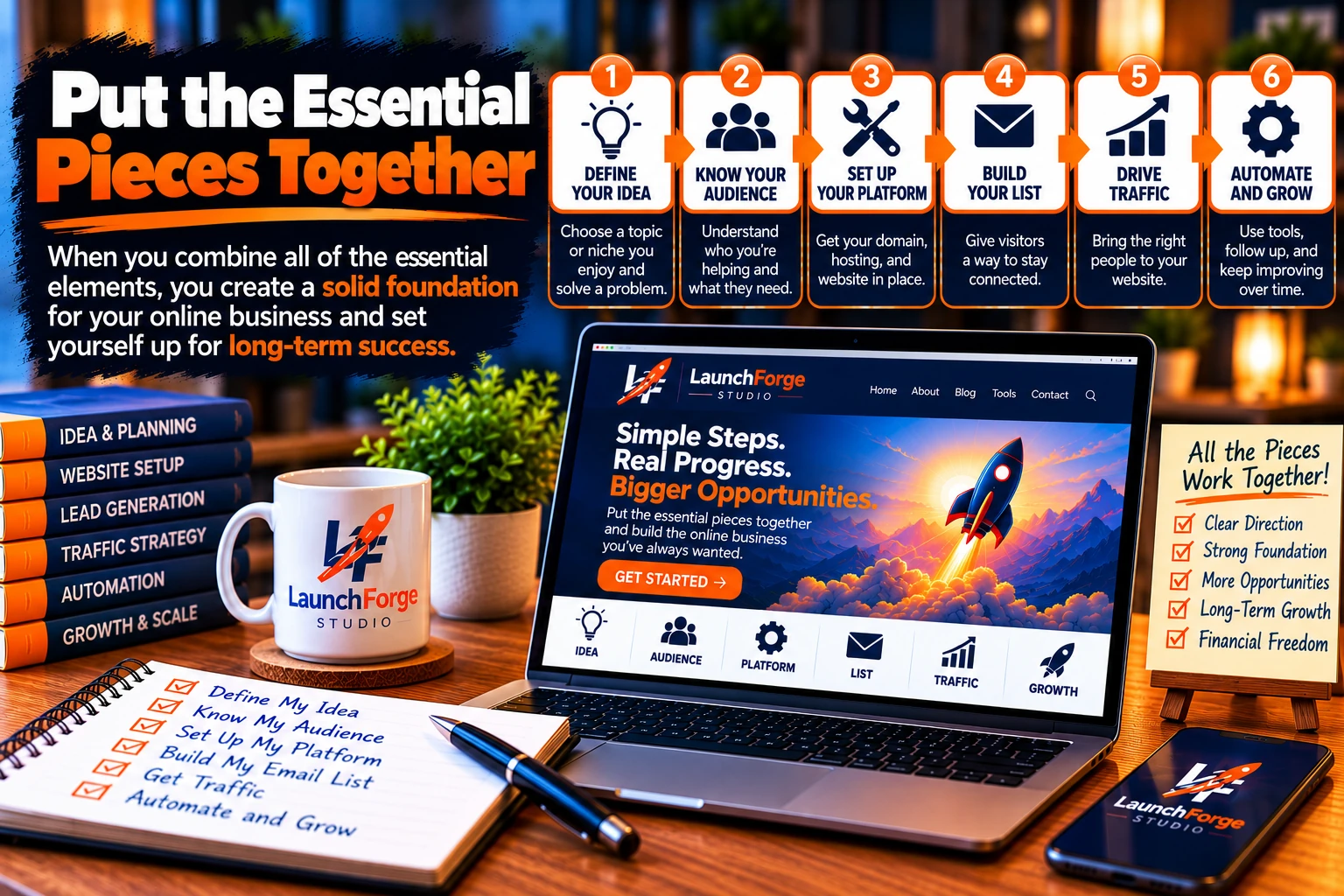
When the essential pieces of an online business work together, they create a foundation you can build on and improve over time.
By this point, you can probably see that starting an online business isn’t about finding one magical tool that does everything.
It’s about putting a handful of important pieces together so they support one another.
Think about the basic flow:
Business Idea → Audience → Offer → Online Presence → Traffic → Lead Capture → Follow-Up → Conversion
Each piece has a job.
Your business idea gives you something to build around.
Your audience gives you a clear group of people to serve.
Your offer gives those people something relevant to consider.
Your website or online presence gives them somewhere to learn more.
Your traffic sources give people a way to discover you.
Your lead capture system gives interested visitors a way to stay connected.
Your follow-up system lets you continue the conversation.
And your conversion process gives people a clear path toward becoming a customer, client, subscriber, or whatever outcome fits your business model.
The important thing is that these pieces don’t have to be complicated.
For example, imagine you’re starting a small service business.
You could begin with a domain and a simple website explaining what you do.
You could create a service page that clearly explains your offer.
You could provide a useful resource that visitors can request in exchange for joining your email list.
You could use social media, search-friendly content, referrals, or another traffic source to bring people to the website.
Once someone joins your list, you could send a short series of helpful emails that introduces your business and provides additional information.
When the person is ready, you give them a clear way to contact you, request a quote, schedule an appointment, or purchase your service.
That’s a complete system.
It may be relatively simple, but it contains the essential components.
You can make that system more sophisticated later.
You might add additional landing pages.
You might automate more of your follow-up.
You might introduce additional traffic sources.
You might create more content.
You might add analytics and tracking.
You might connect different systems together.
But those additions should solve actual problems that develop as the business grows.
They don’t have to be present before you launch.
This is also where an integrated platform can become useful.
Instead of managing a collection of completely separate services, some businesses may prefer having multiple functions available through a single platform.
That can simplify the technology side of the business and reduce the number of separate systems you have to learn and maintain.
But even then, the principle remains the same.
The platform is the tool. The business is what you’re building.
Don’t let the availability of technology determine what your business becomes.
Start with the business model, understand what your audience needs, and then use technology to support that process.
What Should You Do First?
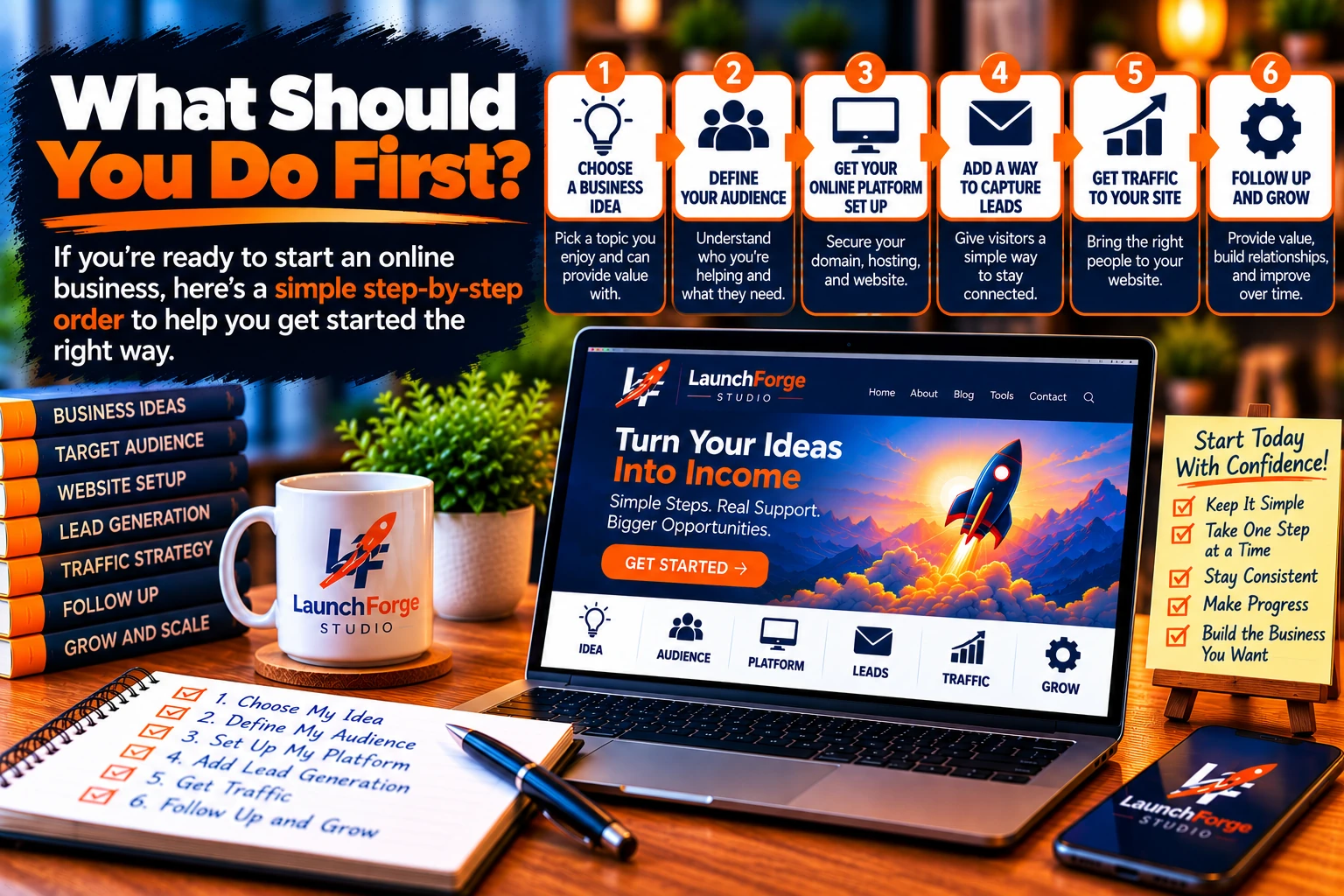
A simple step-by-step order can help you build your online business without trying to do everything at once.
Knowing what you need is helpful, but it can still leave you wondering where to begin.
That’s where a simple order of operations can make the process much easier.
You don’t have to build every part of your online business at the same time.
Start with the decisions that affect everything else, then build the systems that support those decisions.
Step 1: Decide What You Want to Build
Start by choosing the type of online business you want to create.
You don’t need to have every detail figured out, but you should have a basic direction.
Are you selling a product?
Providing a service?
Creating digital products?
Building an affiliate business?
Creating content and building an audience?
Your answer will influence the rest of your setup.
Step 2: Identify Your Audience
Next, determine who you’re trying to reach.
Think about the people who are most likely to have the problem you’re trying to solve or the need your offer addresses.
The clearer you can become about your audience, the easier it becomes to create useful content and communicate your value.
Step 3: Define Your Offer
Decide what you’re actually going to provide.
Make it clear enough that someone can understand what it is, who it’s for, and what they can expect.
You can refine the details later as you learn more.
Step 4: Establish Your Online Home
Secure your domain and create the basic online presence your business needs.
Start with the pages and information visitors actually need rather than trying to build an enormous website immediately.
Step 5: Create a Way to Capture Leads
If your business depends on building relationships with potential customers, give interested visitors a way to stay connected.
That might be an email signup, lead magnet, contact form, or another appropriate method.
Step 6: Choose Your Initial Traffic Sources
Decide how you’re going to get people to discover your business.
Choose the methods that make sense for your audience and resources.
You can expand later.
Step 7: Create a Clear Next Step
Make sure visitors know what you want them to do when they arrive.
That could be joining your list, contacting you, learning more, requesting information, or making a purchase.
Step 8: Start Learning From What Happens
Once the basic system is operating, pay attention to what people actually do.
Which pages receive attention?
Where do people leave?
Which traffic sources bring visitors?
Are people joining your list?
Are they contacting you?
Are they purchasing?
Those observations give you information you can use to improve the business.
The key is not to wait until every piece is perfect before moving forward.
Build enough to launch, launch enough to learn, and use what you learn to make the business better.
Choose Tools That Support Your Business
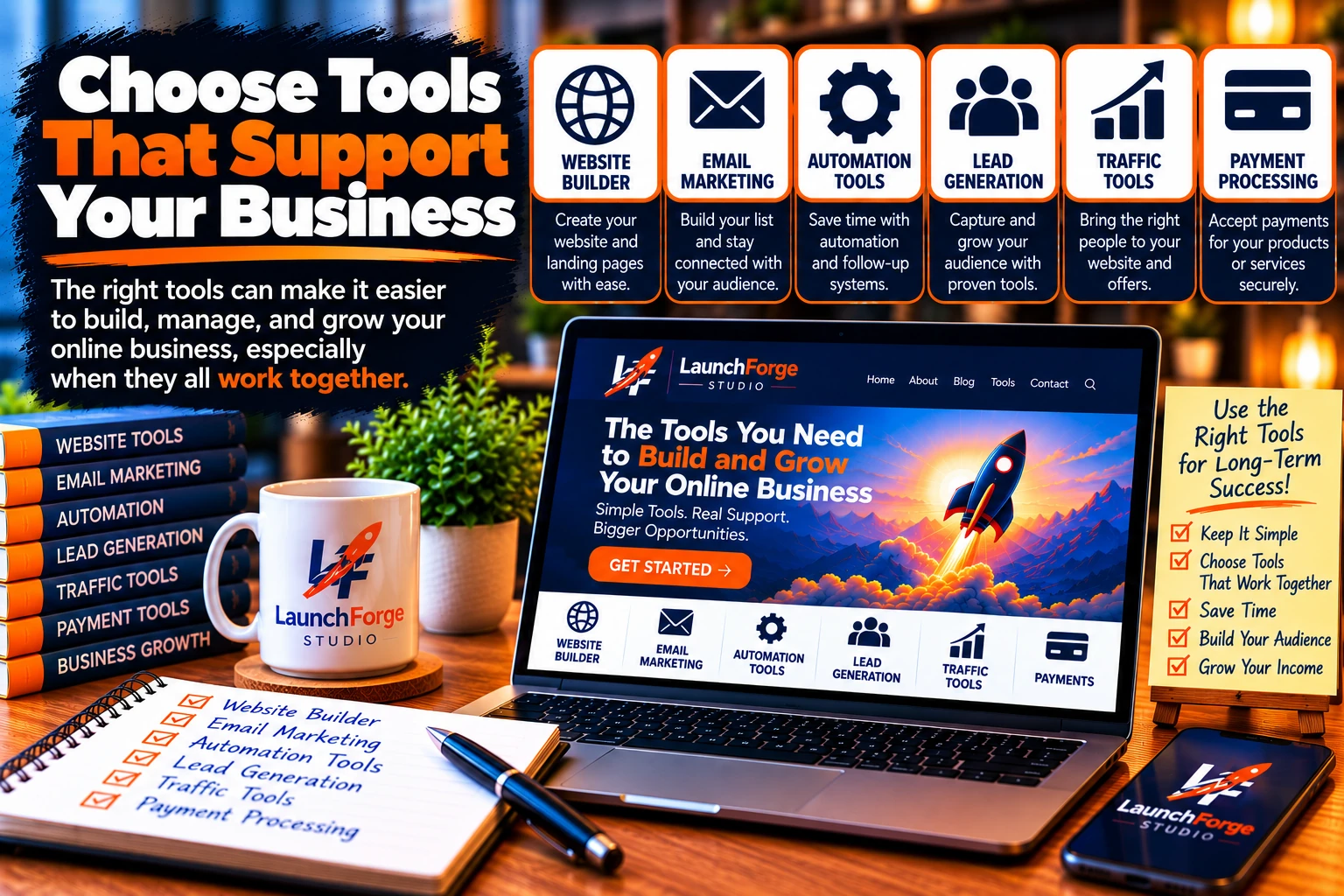
Choose tools based on what your business actually needs rather than collecting technology you may never use.
Once you understand what your business needs to accomplish, choosing your technology becomes much easier.
Instead of asking, “What tools do successful online businesses use?”, ask a more useful question:
“What problem do I need this tool to solve?”
That small change in thinking can save you a lot of money and frustration.
There are tools for almost everything you can imagine.
Website builders.
Email platforms.
Landing-page builders.
Customer relationship management systems.
Automation platforms.
Analytics tools.
Scheduling systems.
Graphic design software.
Social media management tools.
Advertising platforms.
And the list keeps growing.
The existence of a tool doesn’t mean your business needs it.
Start by identifying the job you need to accomplish.
If you need a website, you need a way to build and host that website.
If you need to collect leads, you need a way to capture their information.
If you need to communicate with those leads, you need a way to send and manage your messages.
If you need to automate repetitive tasks, then automation may be worth considering.
If you need to understand where your visitors are coming from and what they’re doing, analytics can become useful.
The tool should follow the need.
Not the other way around.
Look at the Total Cost
It’s also important to look beyond the advertised price of an individual tool.
A service might appear inexpensive on its own, but if you’re paying for five or ten separate platforms to make your business function, those monthly charges can add up quickly.
You also have to account for the time required to learn and maintain each system.
Every additional platform can mean another account, another password, another interface, another billing cycle, and another system that has to work properly with everything else.
That doesn’t mean using multiple tools is always a bad idea.
Sometimes specialized tools are exactly what a business needs.
The point is to make the decision intentionally.
Look for Simplicity Where It Makes Sense
Some businesses may benefit from using an integrated platform that combines several functions under one system.
Having website tools, funnels, lead management, email capabilities, marketing features, or other functions available through a common platform can reduce some of the complexity involved in managing separate services.
That’s one approach I use with LaunchForge Studio.
The goal isn’t to claim that one platform is the answer for every business.
It’s to recognize that simplifying the technology stack can allow you to spend more time working on the business instead of managing the technology behind it.
Don’t Buy Tools for a Business You Haven’t Built Yet
This is another common trap.
You see an advanced tool and imagine everything you’re eventually going to do with it.
So you buy it before you actually have a need for it.
Months later, you’re paying for something you barely use.
Instead, let the business tell you what it needs.
Start with the essentials.
Learn how those pieces work.
Then add technology when it solves a problem you’ve actually encountered.
The best tool isn’t necessarily the one with the longest feature list. It’s the one that helps you accomplish what your business needs right now.
Pay Attention to What Is Actually Happening

Track what visitors, leads, and customers actually do so you can make informed improvements to your business.
Launching your online business doesn’t mean the work is finished.
In many ways, that’s when the real learning begins.
Once people start visiting your website, reading your content, joining your email list, contacting you, or purchasing your offers, you begin collecting information about how your business is actually performing.
That information can help you make better decisions.
You don’t need an expensive analytics department to get started.
Begin with some basic questions.
Where are your visitors coming from?
Which pages are they visiting?
Are people clicking your calls to action?
Are visitors joining your email list?
Are people contacting you or purchasing your offer?
Which traffic sources appear to be producing useful results?
These questions can reveal where your system is working and where it may need attention.
For example, if a page receives plenty of visitors but almost nobody takes the intended next step, you may want to examine the page, offer, messaging, or call to action.
If people are joining your email list but rarely opening your messages, your follow-up may need some attention.
If one traffic source consistently brings visitors who engage with your content while another produces little meaningful activity, that information can influence where you spend your time and money.
This is why simply watching traffic numbers isn’t enough.
A thousand visitors doesn’t automatically tell you whether your business is moving in the right direction.
You need to understand what those visitors actually do.
At the same time, don’t become obsessed with every number.
Analytics are useful when they help you make decisions.
They become less useful when you’re constantly checking statistics without knowing what you’re looking for.
Choose a handful of measurements that relate directly to your business goals.
Then use what you learn to make small improvements.
Change a headline.
Improve a page.
Clarify an offer.
Test a different call to action.
Create better content.
Try another traffic source.
Improve your follow-up.
Then watch what happens.
You don’t need to rebuild your entire business every time something doesn’t work.
Build, measure, learn, improve, and repeat.
That’s how an online business can evolve from its first simple version into something much more effective over time.
Give Your Business Room to Grow
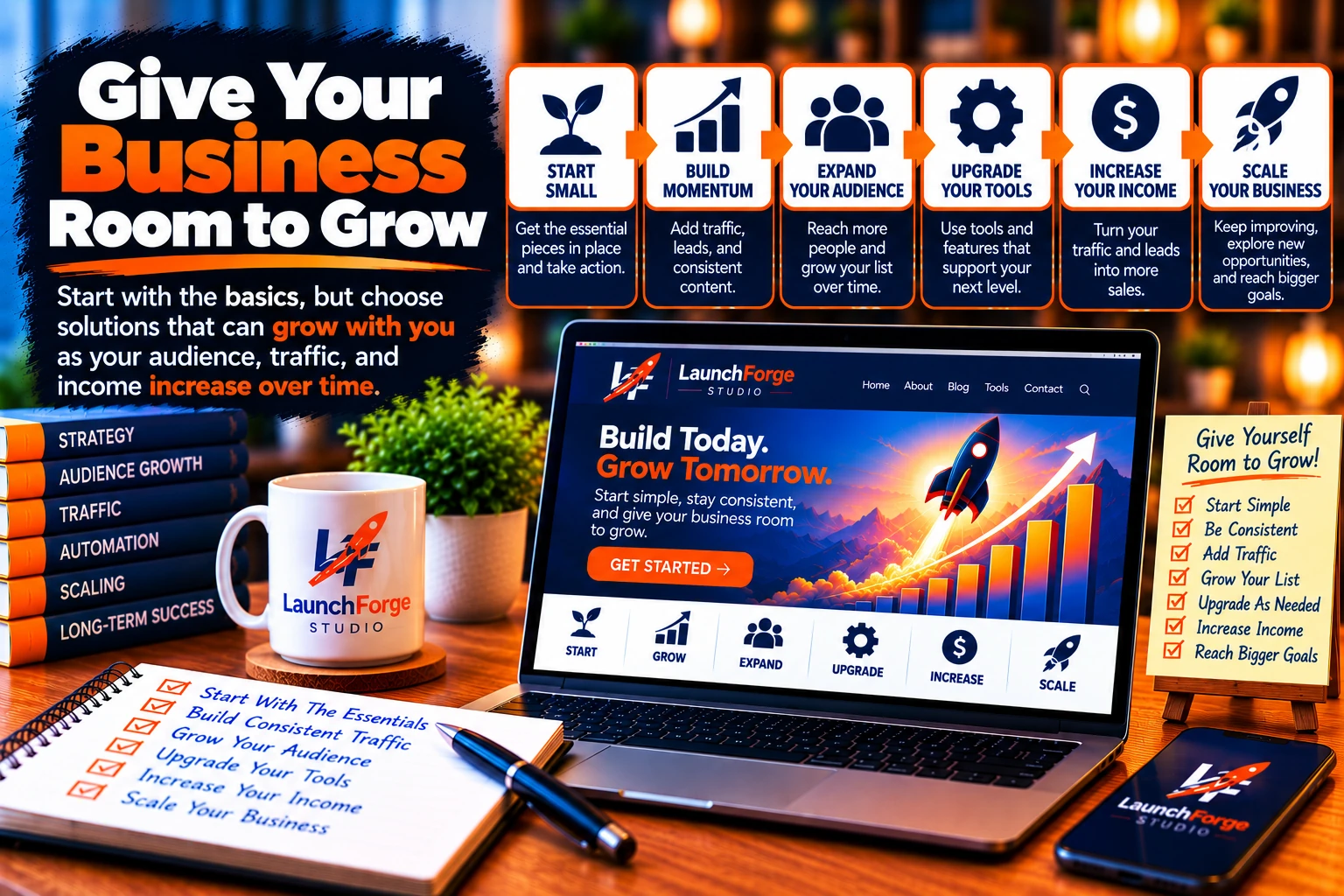
Start with what you need today and give your business room to expand as you learn what comes next.
One of the biggest advantages of starting small is that you don’t have to know exactly where your business will be a year from now.
Your first version of the business may look very different from the version you eventually build.
You may discover that your audience has different needs than you expected.
You may change your offer.
You may find a traffic source that works particularly well for you.
You may decide that a particular tool isn’t worth keeping.
You may discover that something you thought would be important isn’t actually necessary.
All of that is part of building a business.
Your goal isn’t to create a system that can handle everything imaginable before you have your first customer.
Your goal is to create a foundation that can handle where you are right now while giving you room to expand.
As the business grows, you can add more content, additional offers, new marketing channels, more automation, improved analytics, and other systems when they become useful.
That approach also gives you an opportunity to learn before making bigger commitments.
Instead of guessing what your future business will require, you can let your actual experience help determine what comes next.
That’s a much more practical way to build.
You don’t have to have the entire road mapped out before taking the first turn.
You need a starting point, a destination you’re working toward, and enough flexibility to adjust when you learn something new.
Start with what you need today. Build for tomorrow as tomorrow becomes clearer.
Your Online Business Startup Checklist
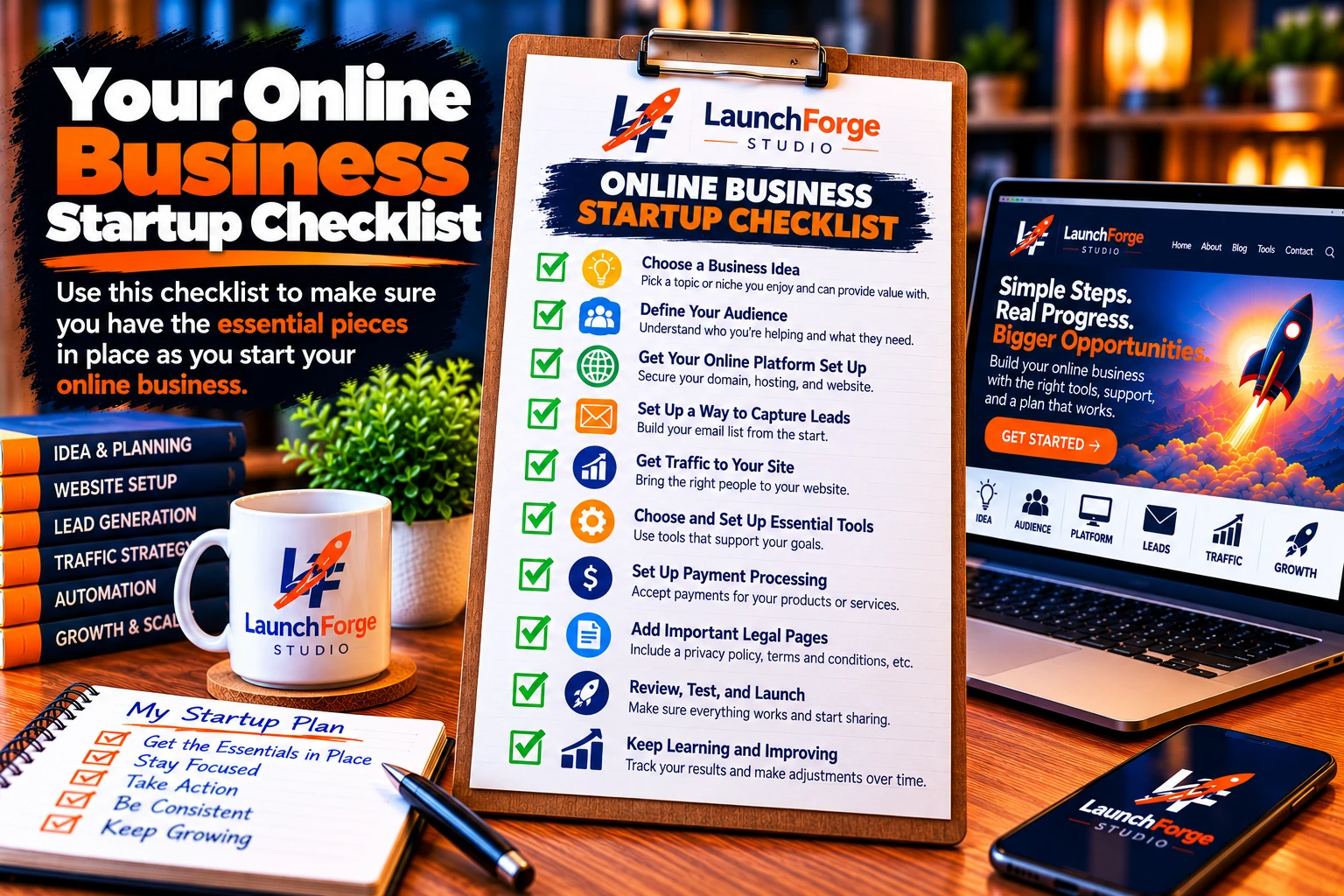
Use this checklist to make sure the essential pieces of your online business are in place before you move forward.
If you’ve made it this far, you don’t need to remember every detail we’ve covered.
Use this checklist as a simple way to look at the pieces of your online business and identify what you have in place and what still needs attention.
Business Foundation
- Choose a business idea or model.
- Identify the audience you want to reach.
- Understand the problem or need you’re trying to address.
- Define what you’re offering.
- Decide what you want your business to accomplish.
Online Presence
- Choose a business name.
- Secure an appropriate domain.
- Set up your website or other primary online presence.
- Create the essential pages your visitors need.
- Make sure your site works well on mobile devices.
- Give visitors a clear path to the next step.
Lead Generation and Follow-Up
- Create a way for visitors to contact you or join your list.
- Consider creating a useful lead magnet.
- Set up an email list if it fits your business model.
- Create a simple follow-up process.
- Provide useful information instead of sending nothing but promotions.
Marketing and Traffic
- Choose one or two traffic sources to start.
- Create useful content where appropriate.
- Use social media if it makes sense for your audience.
- Consider paid advertising only when it fits your goals and budget.
- Track where your visitors are coming from.
- Pay attention to what those visitors actually do.
Business Operations
- Understand the business requirements that apply to your situation.
- Set up an appropriate way to accept payments if you’re selling directly.
- Keep track of business income and expenses.
- Understand your applicable tax, registration, and licensing responsibilities.
- Add additional systems as your business grows.
Technology
- Choose tools based on actual business needs.
- Avoid paying for software you don’t currently need.
- Look for opportunities to simplify your technology stack.
- Learn the tools you’re already using before adding more.
- Review your expenses periodically.
Most Important of All
You don’t have to check every box before you begin.
Some items will become necessary only after your business starts operating.
Your business model may determine which systems you need.
Your audience may influence which marketing channels make sense.
Your growth may create new requirements that weren’t relevant when you started.
That’s normal.
The purpose of this checklist isn’t to create another giant to-do list that keeps you from launching.
It’s to help you see the major pieces of an online business so you can decide what matters now, what can wait, and what you may not need at all.
Final Thoughts: You Don’t Need Everything to Get Started

You don’t need everything figured out before you begin. Start with what you need, take action, learn, and build from there.
So, what do you actually need to start an online business?
You need a business idea or model you can build around.
You need to understand who you’re trying to reach and the problem you’re trying to help them solve.
You need something useful to offer.
You need an online presence where people can learn about your business.
You need a way to attract people to that business.
And if building relationships with potential customers is part of your model, you need a way to capture leads and follow up with them.
Beyond those fundamentals, the exact pieces will depend on the business you’re building.
That’s why I don’t think there’s a universal checklist of software, subscriptions, and services that every new entrepreneur needs to purchase.
Your business should determine the tools you use.
Not the other way around.
You can start with a simple foundation and add additional pieces as you discover what your business actually requires.
Maybe you’ll need more automation.
Maybe you’ll need additional traffic sources.
Maybe you’ll need a more advanced sales process.
Maybe you’ll need specialized software to handle a particular part of your business.
You’ll learn those things as you build.
And that’s really the point I want you to take away from this guide.
Starting an online business doesn’t mean having everything figured out before you begin.
It means putting enough of the right pieces in place to take the next step.
Build something useful.
Get it in front of people.
Pay attention to what happens.
Learn from the experience.
Improve the parts that need improvement.
Then keep building.
You don’t need a mountain of technology.
You don’t need a perfect plan.
You don’t need to know exactly where the business will be five years from now.
You need a solid foundation and the willingness to keep learning.
That’s how LaunchForge Studio continues to evolve, too.
The business, website, content, tools, and systems have all developed over time rather than appearing fully formed on day one.
So if you’re sitting there wondering whether you have enough knowledge, enough tools, enough money, or enough experience to begin, don’t let the idea that you need everything stop you.
Figure out what you actually need for the next step.
Build that.
Then take the next step.
Ready to Build Your Online Business?
You don’t need to piece everything together before you begin.
Profit Hub System brings many of the essential tools for building, marketing, and growing an online business together in one platform, giving you a place to start with the essentials and expand as your business grows.
If you’re ready to take the next step, see what Profit Hub System can help you build.